2 months ago
59
2 months ago
59
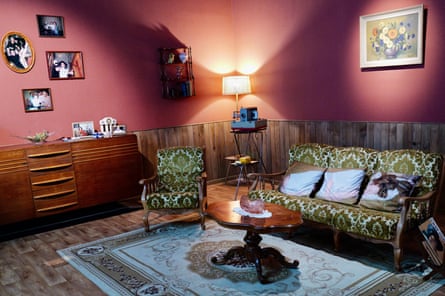
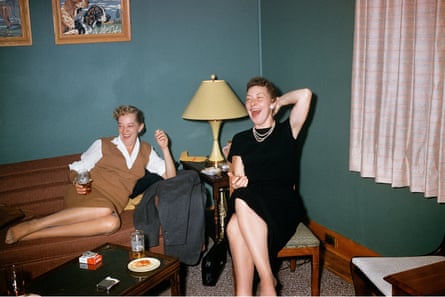
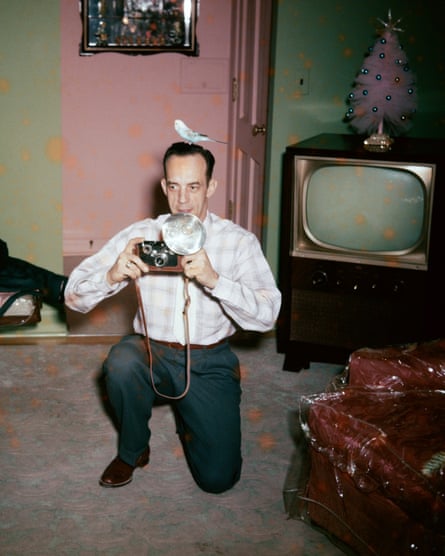
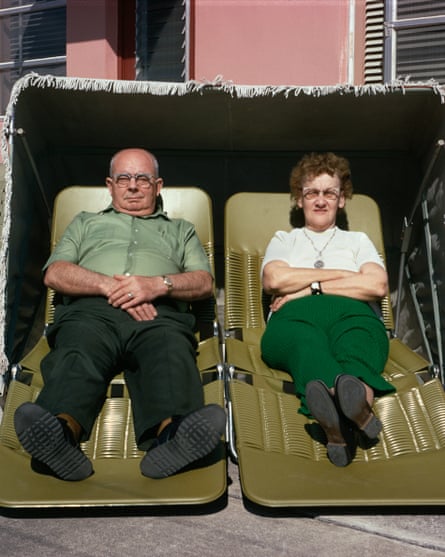
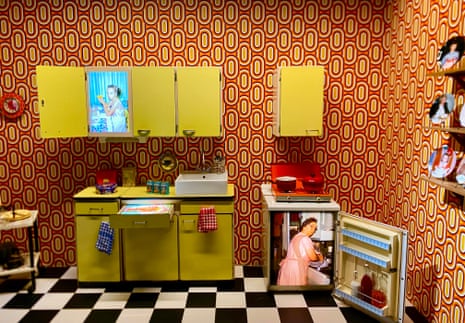
Where better to be in the midst of Belgium’s biting winter but in the warmth of Lee Shulman’s creation, The House. Cloaked in cosy mid-century nostalgia, the staging of this flagship exhibition at Hangar Gallery sets a fitting scene for Shulman’s collection of found photography, The Anonymous Project. The playful curation features all manner of family snaps from holidays to birthday parties, and sees characters peeping out of kitchen cupboards or lounging on the beach, photographed through the window of a caravan. The effect is a seductive step into the past, even if only the past of your dreams.
-
All the furniture used in the staging of The House has been sourced from online websites
-
An image from the Anonymous Project, a collection of found photography
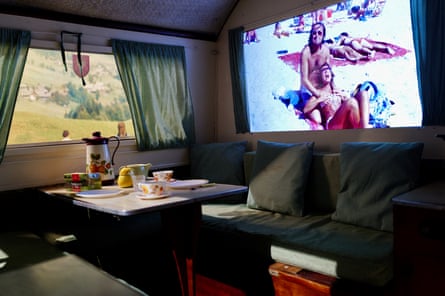
All the furniture used in staging the exhibition has been sourced from secondhand websites. The 1950s caravan, for example, cost only 200 euros and has now travelled further around the world than it did in its heyday, exhibiting at museums and shows.
-
A peep inside a 1950s caravan positioned in the exhibition reveals families holidaying at the beach
-
Much of the collection has been received as donations
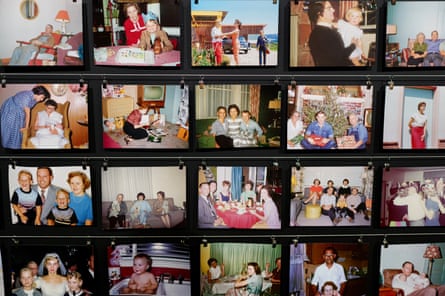
Shulman began collecting in 2017 when he bought a random box of vintage transparency slides and found himself drawn to the wonder of the people he discovered and the window into their lives, often funny, surprising or tender. Cataloguing and then exhibiting the pictures has become an artistic endeavour to give meaning to something once forgotten and breath new life into old memories.
-
The collection has flourished thanks to donations of colour photography since it began in 2017
Since the collection began it has grown in size and reputation. In the first year it included 400,000 slides and archiving them was an epic task, but Shulman, a self confessed obsessive, delighted in the task. To him, each one is a miniature painting.
He found the images touched something deeply personal. “They bring back my own memories of home life, the comfort, the boredom, the tension, the routines. The feeling of being safe while at the same time wanting to escape.”
“A home absorbs life. It holds arguments, love, silence and waiting. Long after people have gone, the memory remains in the walls. The House is my way of looking back, and trying to understand where I come from and what home still means to me.”
-
Mid-century textiles and design play their part in creating atmosphere in The House
Upstairs Hangar gallery takes a deeper dive into the nuances of family life. Brazilian photographer Danilo Zocatelli introduces his own complex relationship to his parent in his powerful project Dear Father, I believe we found our peace.
It’s a moving story of disconnection from a traditional masculine upbringing in rural Brazil for Zocatelli, who grew up knowing that as a young gay man with a leaning towards queer culture he would never meet the expectations of his father. In fact, Zocatelli testifies “my father would never meet my eye”.
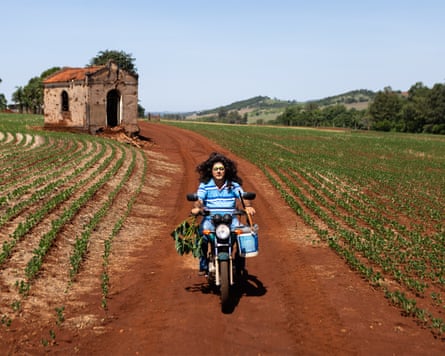
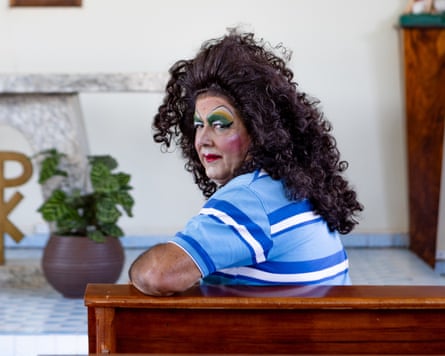
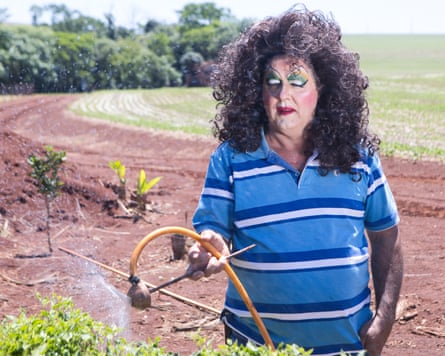
-
Danilo Zocatelli’s project Dear Father, I believe we found our peace
That he persuaded his dad to take part in a project where he would be dressed in a wig and makeup is all the more remarkable. “At first my father treated it as a joke” and his initial requirement was to have the best wig! But as time went on, the two made the most intimate connection through the layering of makeup and collaboration on the portraits. With this understanding and reconciliation, Zocatelli came to realise that his father’s true motivation for playing his part was the love of his son.
Just across the border from Brazil was the destination of French photographer Sylvie Bonnot who ventured deep into French Guiana to meet the local custodians of the Amazon rainforest.
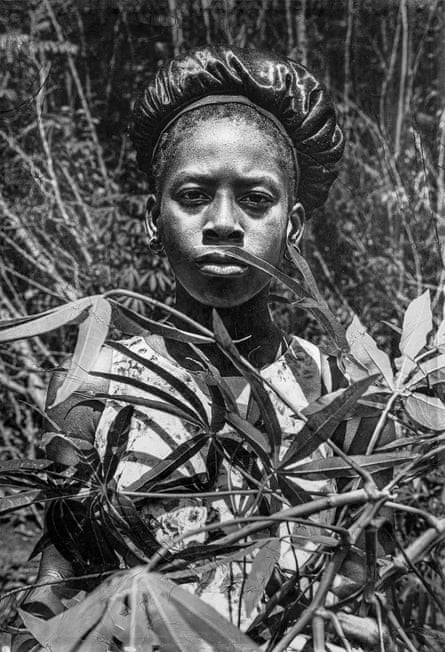
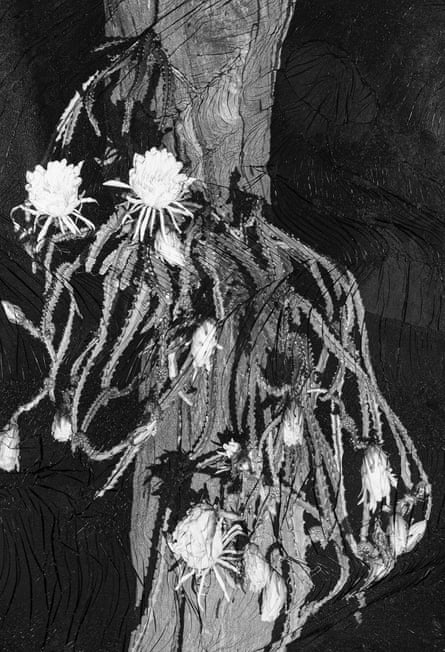
-
Ivanaïssa, left, and Cradle of Moses (Queens of the Night), right, from Sylvie Bonnot’s series The Kingdom of Mosquitoes
The motivations behind her project entitled The Kingdom of Mosquitoes are multifold and deeply personal. Bonnot is concerned with aspects of colonial memory and education on relationships to the living world. She is herself the custodian of a Douglas pine forest in France so has expert knowledge of humankind’s co-dependency on the natural world.
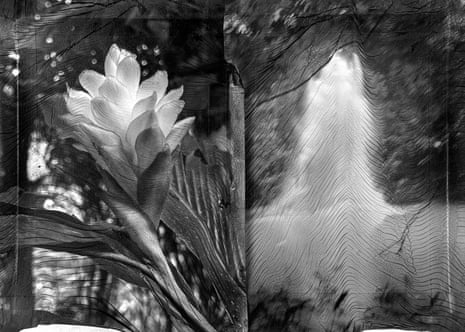
-
Uprisings (Red Ginger), a diptych from Sylvie Bonnot’s series The Kingdom of Mosquitoes
The images Bonnot creates are immersive, layered artworks made using a technique she calls “moulting”, in which she peels the silver gelatin skin from the physical photograph which disrupts the fragile fabric. The effect resembles more an artefact than a photograph. It’s a metaphor for humanity’s interference with the natural world and warns us that we ignore or neglect preservation at our peril.
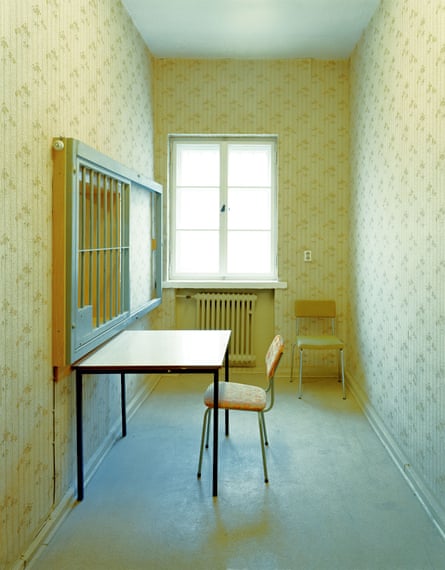
Beyond Hangar, galleries across the city take part in the festival, displaying 52 exhibitions. At KlotzShows, a gallery dedicated to contemporary art, the work by Daniel and Geo Fuchs appears at first glance to be a curious homage to the distinctive aesthetic signature of film director Wes Anderson. But this is no fictitious creation. It is a disturbing reality: a glimpse inside the interrogation centres used by the east German Stasi secret police.
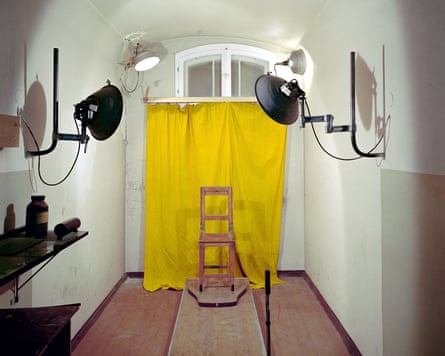
-
The room where detainees would be positioned for their mug shot at Potsdam prison
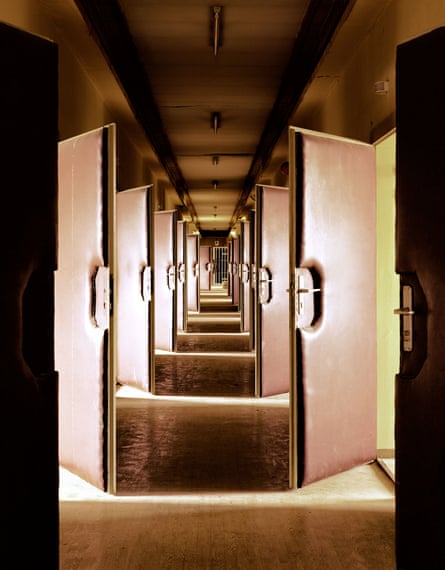
-
Prison Hohenschoenhausen
For the artists, who grew up in west Germany, the Stasi – Secret Rooms project is one of their most important. So many people were imprisoned and psychologically broken by the state for not conforming to the political ideology of the German Democratic Republic during the cold war. The artists’ mission became a deeply captivating experience, to photograph these places in their own artistic way, and thus to preserve them like in a time capsule.
“Some of these places are now memorials, and it often happened during our photoshoots, that visitors, some of them former political prisoners, sat down on the steps and cried deeply. Their suffering, which they still carry within them, could be felt strongly in the room,” they said.
-
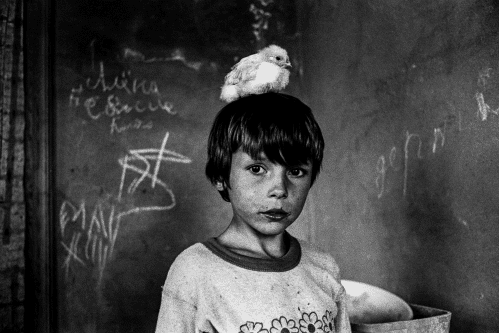
Vova with a chick he was watching over at the Martynenko family orphanage, Odesa, 2001. Vova is now fighting for his country on the frontline.
In the retrospective exhibited at Geopolis, no level of oppression and resistance is left to the imagination. Over the decades during and since the break up of the Soviet Union, the photojournalist Oleksandr Glyadyelov has tirelessly documented the realities of Ukrainian life.
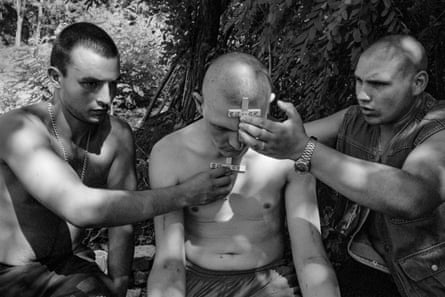
This is the first time the epic body of work has been shown to this extent outside Ukraine. The scenes are a striking visual record of a nation caught between economic turmoil, revolution, war and hope.
-
Rehabilitation Centre “Path to the Creator”. Odesa Region, 1997
-
Street children in Station Square, Odesa, 1997
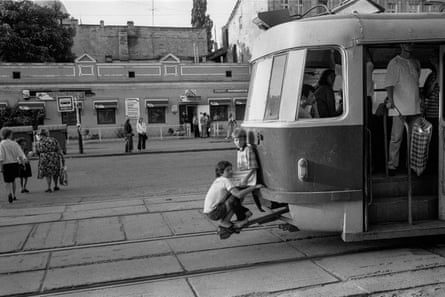
Part of the exhibition focuses on Glyadylov’s images of street children who faced extreme poverty and social neglect in the 1990s. It’s an unflinching record of the social transformation taking place in Ukraine at the time and many of the children he photographed then, he is still in touch with.
-
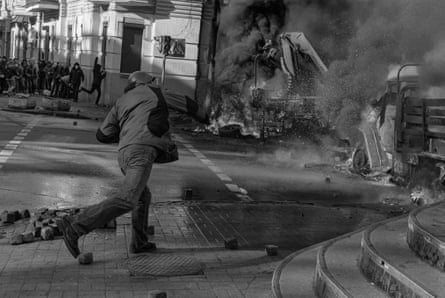
Fighting on Chovkovytchna Street. Kyiv, 2014
Today Glyadyelov is regarded as one of the leading photojournalists in the world. He is a generous guide and mentor to photographers documenting the current phase of the war in Ukraine, including those working on assignment for the Guardian.
-
Photo Brussels festival runs until 22 Feb 2026