1 month ago
54
1 month ago
54
When I started to take photographs about 18 years ago, I was more interested in the aesthetics. Then came a moment when I realised the power of the camera as a tool. On 3 October 2013 there was a huge shipwreck off the coast of Lampedusa. More than 250 migrants from Eritrea lost their lives. I was sent to cover the event, and it was during that assignment that I understood I was interested in telling stories about social injustice, about people’s lives post-conflict.
At first I worked mostly on stories about refugees in Sicily, where I am from, but a few years later I had the opportunity to travel to the Middle East with a friend, the journalist Marta Bellingreri, who is an expert on the region. She was living in Jordan and I joined her there for six months . That is how our project, The Hospital of All the Wars, about the patients at the Médecins Sans Frontières Al-Mowasah hospital in Amman, began.
At Al-Mowasah hospital they treat patients from across the region: Iraq, Gaza, Yemen, Syria, Lebanon. They agreed to let us spend several months there; we would visit three times a week. We knew we needed time to tell the stories of these people, to spend time with the patients, their families, the doctors and nurses. We got to know Manal - she and her mother already knew about our project and we decided to ask if she was happy for us to photograph her.
She is a beautiful, amazing girl. She was 12 at the time. She has suffered severe burns to her arms and face after a missile explosion in Kirkuk in Iraq. She had extensive surgery and needs to wear the mask you see in this picture for around five hours a day, to protect her face from light. You can also see in the room around her the drawings she made, her balloon under her arm. Manal had many friends at the hospital, and loved telling stories, as well as taking part in the many organised activities for children there.
Like many of the patients, she was undergoing long-term treatment and living in the hospital for a number of months. But in many ways she seemed to me like a regular young girl. We had a great connection with her and her mother, and the shoot was like a game with Manal. Her mother offered us Iraqi sweets and biscuits. The portrait was made quite spontaneously. It won an award at the World Press photography prize in 2018.
I am very grateful to Manal and I am still in touch with her and her family – last year I went to visit her in Kirkuk, where she is living with her uncle. She is 19 now.
This portrait affects me particularly powerfully as even today, several years after the work I did in the MSF hospital in Amman, children remain among the primary victims of conflicts. Today more than ever, having recently become a father, I feel this aspect of children’s suffering in conflict zones is increasingly urgent. This is why I will soon be travelling to Beirut with the Guardian to work on a project about children harmed by the ongoing war. A huge number have been wounded in recent months in Israeli attacks.
Of course, this is a subject that is really difficult to photograph. I feel a huge amount of anger seeing children suffer. I try to channel what I see, and the anger I feel, into my work, while always trying to do my best in the hope that these stories can raise awareness among as many readers as possible.
It’s important to keep telling these stories because the moment we stop, and allow them to go unheard, we will live in a world where nobody cares about the suffering of the less fortunate. And that is not a world I want my daughter to grow up in. My hope is that my work, along with that of many photojournalists covering similar issues, can plant small seeds and open small windows of awareness – seeds that might one day take root and build a critical mass.
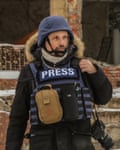
Alessio Mamo’s CV
Born: Catania, Sicily, 1976
High point: Winning two World Press Photo awards. The first in 2018 with this picture of little Manal.
Top tip: Give yourself five years before giving up the job!