1 month ago
54
1 month ago
54
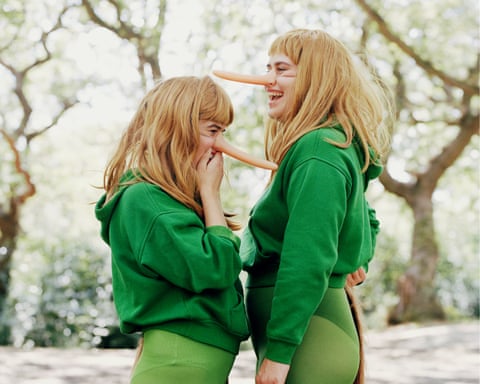
Now on its 167th edition, the Royal Photographic Society’s annual show features moving explorations of kinks, visual disorders … and long-snouted clowns
Who nose? … Anne Marie and Marie (Troll), 2024. Photograph: Kate PetersTue 11 Aug 2026 08.00 CEST
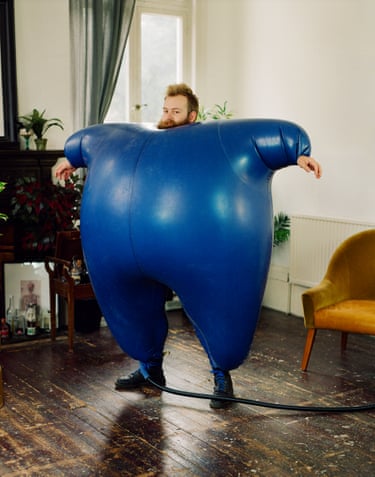
Tom in His Inflatable (and Inflated) Latex Body Suit, Hackney (from the series Flowers)
Robert Coxwell: ‘Flowers is a photography project investigating the clothing worn by queer men in London’s kink and BDSM community. I felt compelled to examine why and how differing fetishes are associated with very distinctive styles and structures. Not being part of the kink community meant I also had to address and overcome some of my own assumptions and misunderstandings.’ The Royal Photographic Society’s International Photography Exhibition is at Saatchi Gallery, London, until 11 SeptemberPhotograph: Robert Coxwell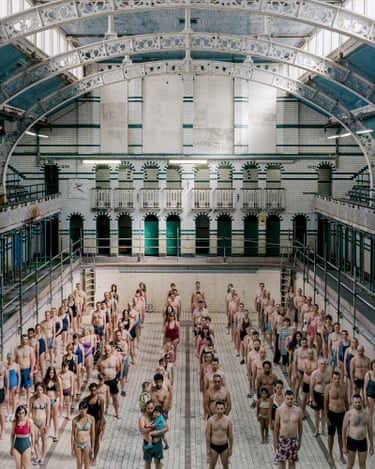
Swimmers
Made in 2014 at Moseley Road Baths, Birmingham, Swimmers portrays more than 100 people standing together against the threatened closure of the Grade II* listed Edwardian public baths. You can read more about this image in our My best shot featurePhotograph: Attilio Fiumarella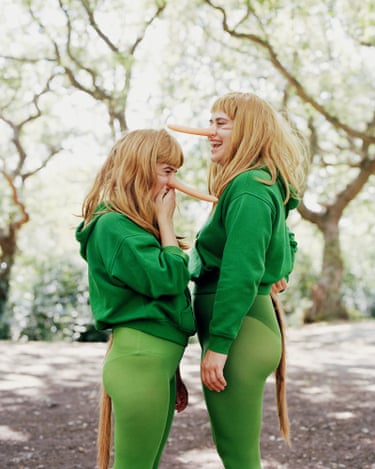
Anne Marie and Marie (Troll), 2024 (from the series Embodied Fictions)
Embodied Fictions explores the relationship between performance and identity through portraits of female and nonbinary clowns. The clown, a figure of contradiction, is both absurd and truthful, offering a way to examine gender, vulnerability and identity by acting as a mirror to society. Masks and costumes transcend disguise: they are tools of expression, granting access to parts of ourselves we rarely reveal. Often positioned at society’s margins, clowns are free to challenge societal expectations and explore diverse ideasPhotograph: Kate Peters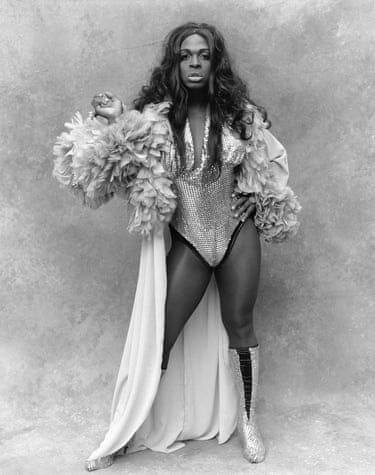
Mona Foot (Nashom Wooden) (from the series Girlfriend)
Michael James O’Brien: ‘When I started Girlfriend in 1991, drag was still an act of civil disobedience. Drag was a strong part of New York and London nightlife in the early 1990s that was both transgressive and transformative. I met my subjects in the clubs and theatres I frequented: Jackie 60, the Copacabana, Mudd Club and Area in NYC; the Black Cap, the Beautiful Bend and Taboo in London. I gained access to various communities through collaboration and complicity. Rapport with a subject is a magical process, like any relationship’Photograph: Michael James O’Brien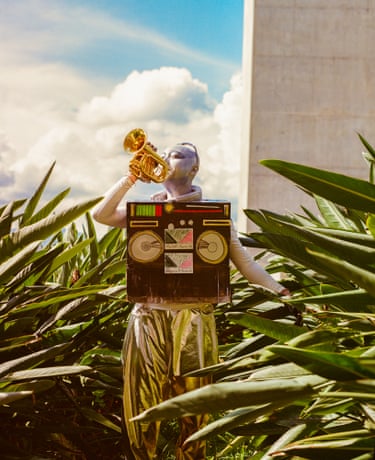
Sound of Silence (from the series Love Like a Monster)
Alex Huda: ‘Love Like a Monster is a documentary and speculative fiction portrait series born from my experience of displacement in Hong Kong. Collaborating with the Void punk counterculture – individuals who embrace nonhuman identities – this work explores identity, mythology and radical self-love’Photograph: Alex Huda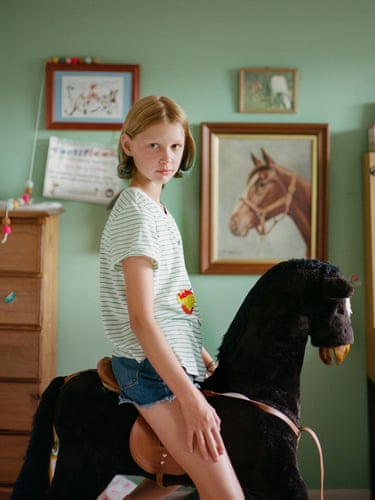
Molly (from the series Eleven)
Eleven is an ongoing series exploring the summer before girls begin secondary school – a brief, transformative space between childhood and adolescence. The work reflects the anticipation and quiet self-discovery that shape this transition, capturing moments of vulnerability, independence and change through a collaborative and observational approach. Eleven is as much about holding on to the fleeting beauty of childhood as it is about witnessing the quiet courage that comes with changePhotograph: Kat Green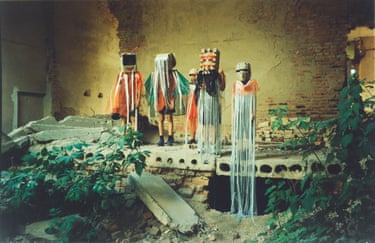
5 Superheroes
5 Superheroes depicts children displaced from eastern Ukraine, wearing self-made superhero costumes during a project trip with the NGO ArtHelps. Growing up amid war demands extraordinary resilience and real superhero strengthPhotograph: Thomas Mandl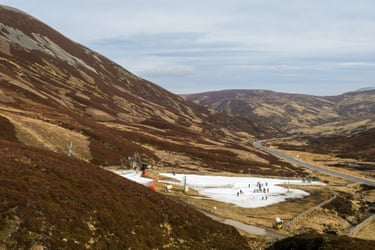
Glenshee Ski Centre. Date: 3 March 2025. Time: 10.52am. Temperature: 4 Degrees Centigrade (from the series Unseasonably Warm)
Unseasonably Warm is a documentary photography project exploring the visible impact of climate change on Scotland’s skiing industry. Developed through repeated visits to the Lecht 2090, Glenshee and Cairngorm Mountain ski centres over several years, the series explores how the climate crisis reshapes livelihoods, tourism and mountain environments – highlighting the complex material presence of the climate crisis within Scottish winter landscapesPhotograph: Alexander Williamson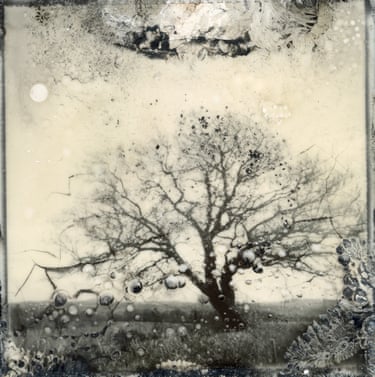
The Retinopathy Forest
Siân Cann: ‘The Retinopathy Forest is an ongoing series of polaroid photographs created in response to my diagnosis of proliferative diabetic retinopathy. The images, decayed in saltwater, echo the drifting bubbles, grain-like interference and branching veins that have become part of my visual landscape. Balancing beauty with unease, the work explores the paradox of altered sight and invites reflection on the fragility of perception. The damaged photographs become both record and metaphor, embodying the vulnerability of vision itself’ Photograph: Siân Cann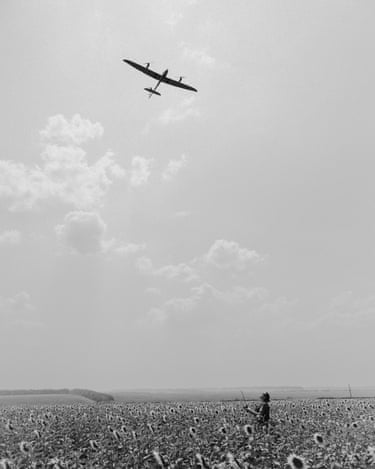
Recon Drone (from the series Kozak)
In collaboration with the 35th Marine Brigade, Kozak is an ongoing photographic project exploring the lives of Ukrainian soldiers stationed on the frontline. Focusing on daily life within the combat zone, the work examines how warfare disrupts the relationship between people and place. Homes, streets and landscapes once tied to memory and identity are transformed by conflict, leaving soldiers caught between their former lives and the reality of warPhotograph: David Hadland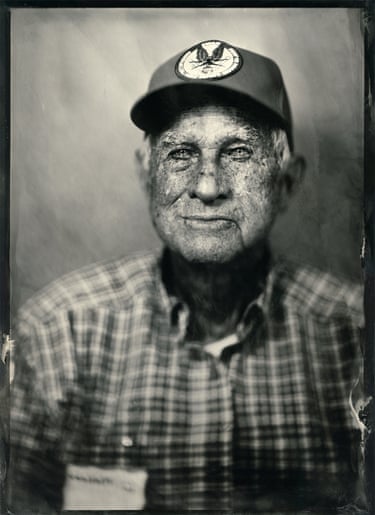
Dr Gil, Uravan Town Physician (from the series Reconstructing Uravan)
Reconstructing Uravan is a collaborative project examining the erased town of Uravan, Colorado, which supplied Marie Curie with radium and later processed uranium for cold war atomic programmes. In the 1980s, residents were relocated, and the buildings were buried. Central to the project are wet-plate collodion tintype portraits of former residents. Uravan’s dust marked the plates, which were washed with water from the river still flowing through the townPhotograph: Abbey Hepner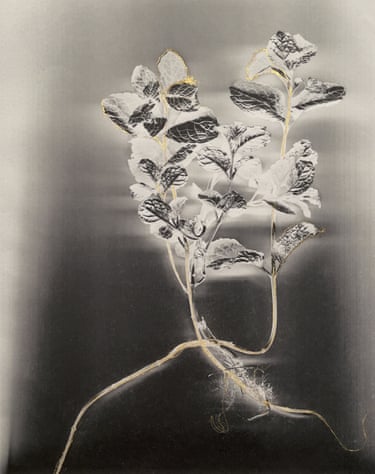
IPE 167 award: Mentha (from the series Seeds of Strength and Resilience)
Seeds of Strength and Resilience explores the history and future of reproductive rights, asking: how have recent restrictions affected women’s autonomy, and what will the future hold? At the heart of this history is the ancient practice of herbal abortifacients. The work photographs botanicals used in these practices, printed on kozo paper – delicate yet strong, a metaphor for women navigating this issuePhotograph: Marcy Palmer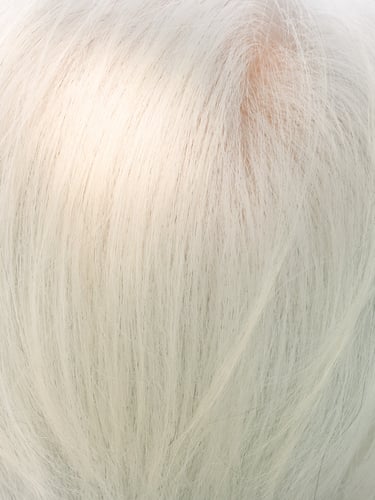
Under 30s IPE award: Stand Still (from the series The Stars That Don’t Look Back)
The Stars That Don’t Look Back explores the intimate and private memories shared by three generations of women living in Taiwan. Integrating family archival photographs, historical events and Taiwanese literature, this project serves as an invitation to understand how women navigated difficulties and trauma during a time of colonial chaos and terror. Like a spider’s web, strong after the rain, Léa Chen encourages viewers to search for a glimpse of inner peace in the safety net woven by women throughout historyPhotograph: Léa Chen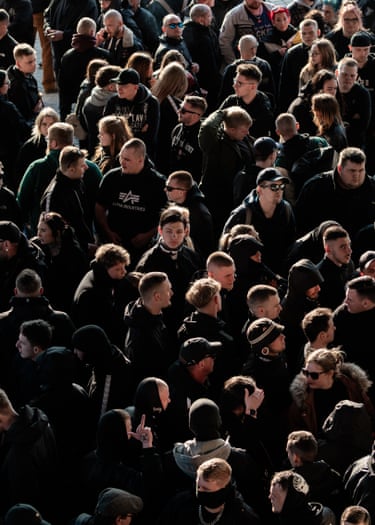
Nazi demonstration at Berlin’s Ostkreuz station (from the series One of Us)
One of Us is a photography series confronting the rise of fascist and nationalist ideologies in contemporary Germany. The title reflects Jeremy Knowles’s complex position within far-right spaces. As a photographer, he is an observer. Simultaneously, his whiteness (and the presumption of German nationality it affords) allows him to move through and assimilate within political gatherings underpinned by anti-migration rhetoric with relative anonymity, despite being an ausländer (foreigner) himselfPhotograph: Jeremy Knowles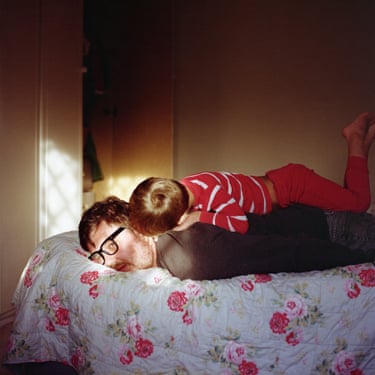
A Bed of Roses (from the series Raising Doron)
Tom Dryden-Kelsey: ‘Raising Doron is an exploration of the quiet, profound moments that make up everyday life as an adoptive father. Through intimate observation, I document the routines, gestures and small rituals that bind a family together – bedtime stories, shared meals, the pauses between chaos and calm. These moments, though seemingly ordinary, are rich with meaning, carrying both joy and the weight of hope’ Photograph: Tom Dryden-Kelsey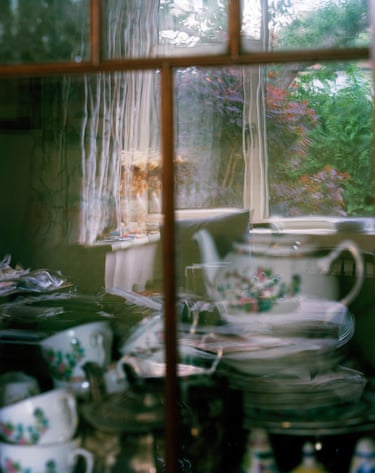
Playing Inside and Outside (from the series You Are My One and Only)
Oliver Woods: ‘As I grew up, mum would say to me: “You are my one and only.” Yet these words of love bore a burden of loss. My younger brother and sister had died as infants from a rare genetic condition. I stopped being the eldest and became an only child. I felt as though I was neither. After mum and dad died, I photographed the house I grew up in to tell this story. I wanted to examine everything in our home, as if looking for something. Perhaps all I want to say is that once I was a brother’Photograph: Oliver Woods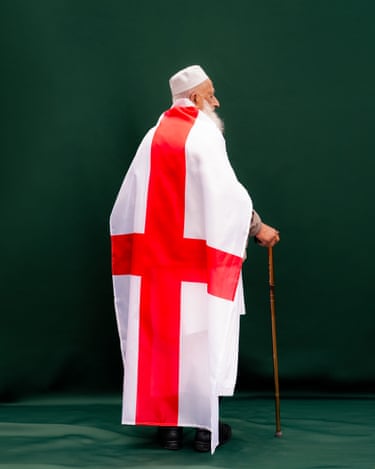
The Three Lions (from the series Babaji’s Britain)
Shizza Majeed: ‘Babaji’s Britain centres on my grandfather, Ghulam Abbas, a Pakistani man who migrated to Britain in the early 1960s. Now in his late 80s, he carries an identity shaped by both Pakistani and British cultures. Through a series of portraits created in collaboration with him, we explore how more than 60 years of life in Britain have shaped his sense of self. From stereotypes to lived experiences, this work playfully visualises how he has held on to his cultural roots while embracing aspects of British life’Photograph: Shizza Majeed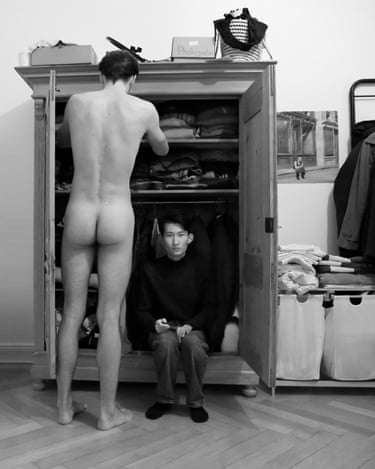
Sitting in the Closet (from the series Ephemeral Intimacy)
Jeremy Chih-Hao Chuang: ‘Ephemeral Intimacy delves into the blurred boundaries of connections on dating apps and the individual exploration of love. As a south-east Asian growing up in a conservative big family, I was taught to conform to societal expectations of heteronormativity. However, my journey of self-discovery began when I turned to dating apps to explore my own identity. I photographed men I met online, visiting their living spaces and capturing vulnerable moments’Photograph: Jeremy Chih-Hao Chuang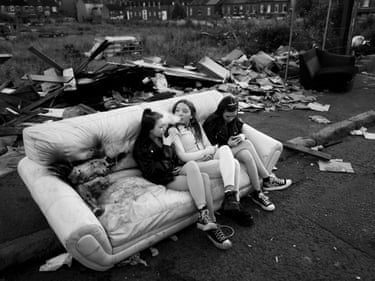
Girls Sitting on a Couch Dropped at a Pavement on Ravenhill (from the series Youth of Belfast)
This photo essay shows that kids in Northern Ireland often suffer the same problems no matter if they live in Protestant or Catholic neighbourhoods. Young people want to overcome the old patterns and live a life as they know it from other parts of Europe today. But they still live in a place where violence, distrust and lack of perspectives is omnipresentPhotograph: Toby Binder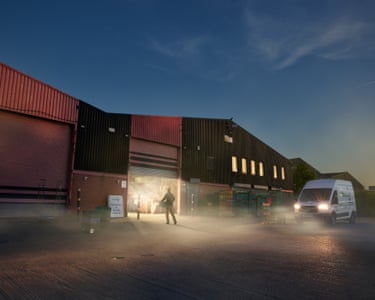
Foodbank (from the series Beacons of Refuge)
Beacons of Refuge shines a light on the spaces where organisations provide shelter, support and hope to those who need it, such as a food bank supporting 1,500 people a week and a refuge providing emergency accommodation to women and children who need a place of safety. These illuminated structures stand as beacons in the darkness, symbolising the warmth that embraces those who reach out in times of crisisPhotograph: Felicity Crawshaw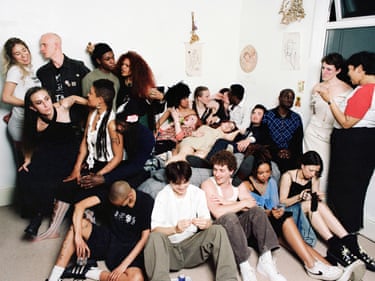
Compression
This is a series of group portraits that envision an overpopulated world through the lens of youth, serving as a reflection on the climate crisis. The portraits reveal a forgotten generation of young people against the backdrop of constricted space. Inspired by religious paintings from the Renaissance period, and motivated by the human nature of a natural longing for connection, the sitters slip into the absurdity of individual character forced into collective belonging, a chaotic interplay of personalities that dance between romance and disorderPhotograph: Timon BensonExplore more on these topics