3 months ago
69
3 months ago
69
In autumn 2022, Giorgi Gagoshidze was in the middle of making a documentary film about the unravelling of the Soviet Union when he experienced his own personal system collapse. After returning from filming in Tbilisi to Berlin, where the 42-year-old Georgian artist lives, he was suffering from shortness of breath. An X-ray revealed that both his lungs had filled with water. He was told to get a taxi to the German capital’s Charité hospital straight away if he wanted to live.
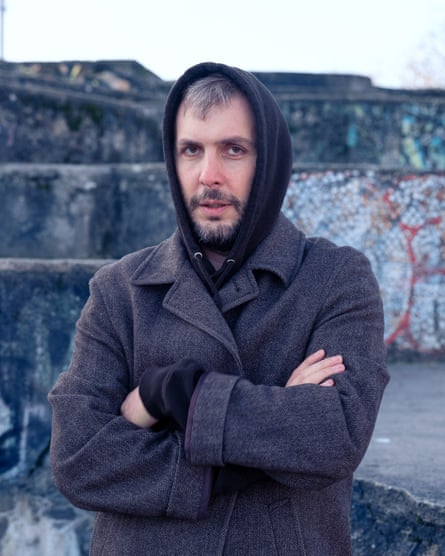
Gagoshidze was diagnosed with T-cell lymphoma, a rare, aggressive and fast-growing form of blood cancer in an advanced but curable stage. A brutal cocktail of chemotherapy followed by an eight-month hospital stay in isolation was his only shot at survival.
“Everything just collapsed,” he recalls. “And the art world is very merciless. It can devour you faster than cancer.”
Yet this week, barely three years on from his diagnosis, Gagoshidze’s documentary, Graft Versus Host, will have its premiere at the Berlin film festival. Just 31 minutes long, it is nonetheless packed with ideas, juggling archive footage, personal reflections and DIY computer graphics in a style reminiscent of English documentarian Adam Curtis or German video essayist Hito Steyerl, under whom Gagoshidze studied at the Berlin University of the Arts.
Visually chaotic, its historical vision is remarkably lucid. Because while the cancer physically immobilised him, his diagnosis also opened up his mind to understanding the events in the eastern bloc in his lifetime in new ways. “My treatment plan quite accurately mirrored the Soviet collapse and its post-transition plan,” he says.
In Gagoshidze’s adopted home city, the post-1989 economic re-integration of the two Germanies is often framed in terms of an annexation of the socialist east by the capitalist west – the title of one acclaimed book on the subject is The Takeover. But from Georgia, the shift from one system to another looks more complex.
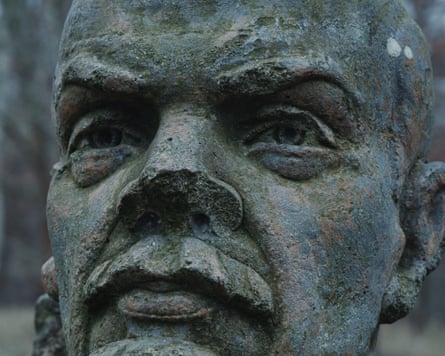
In 1973, the first secretary of the Georgian Communist party Eduard Shevardnadze had launched an economic experiment in the western village of Abasha, whereby farmers were allowed to keep a portion of their harvest’s surplus crops or sell them for personal profit.
“As the economy was declining, the Communist party was looking for ways to stimulate the workforce and decided to introduce a limited form of ownership,” Gagoshidze says.
The Abasha experiment was a success: the village’s agricultural output rocketed and solved food shortages, triggering administrative reforms around Georgia and boosting the reformist image of Shevardnaze, later a foreign minister under Mikhail Gorbachev.
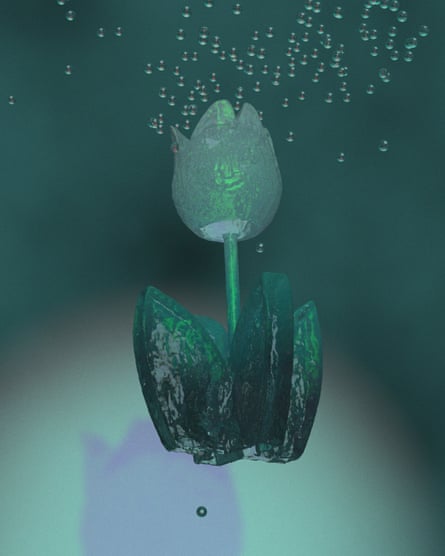
When Gagoshidze carried out interviews about Abasha in Georgia, he found that not just officials but also his own relatives were still full of nostalgia about the country’s former status as the eastern bloc’s economic vanguard.
Yet at the same time, he says, “Abasha paved the way for the Soviet Union’s collapse”, by creating a new breed of illegal enterprises with access to state-run facilities. Known as tsekhoviks, these underground entrepreneurs built a shadow economic system based on corruption. It meant that when the Soviet system collapsed, it could not be reformed step-by-step but tipped straight into a turbo-charged variant of capitalism.
“When the Soviet Union collapsed, everything collapsed”, he recalls. “I remember one day my mum took me to the supermarket and all the essentials were there. The next time she took me, she had to beg the people working for anything edible whatsoever, because the shelves were empty. And then we got back home and there was no gas, no hot water, nothing.”
In Graft Versus Host, Gagoshidze likens this moment to his own course of radiotherapy. “Introducing a new immune system in a host is only viable when cancer cells have been successfully suppressed,” he says, “just like the transition required full privatisation for the functionality of the proposed new economic system”.
His treatment came in three steps, and wiping out the cancer cells in his system was the easier part. The more challenging procedure was to introduce a new immune system – via a bone marrow transplant – and for his body to adapt to the system.
Gagoshidze got the bone marrow transplant from his father, which meant the tissue type was only half-matching his own and resulted in the disease that gives his film its name, graft-versus-host-disease or GvHD, where the newly transplanted immune system starts to fight its recipient’s.
“It’s like a permanent civil war in the body,” he says. Medication was crucial to stop the fighting. “The role of the medicine was to keep my new immune system dizzy so it didn’t kill me off. But post-Soviet countries did not have any medication to stop the system fighting with itself: we had an immune system transplant without any form of regulation.”
More than three decades on, the country remains stuck in the adaptation phase. “Nowadays, Georgian farmers are free to keep all the money from their business themselves, but they no longer have the technology and equipment being provided by the state, and they have to find new markets for their crops outside Georgia.”
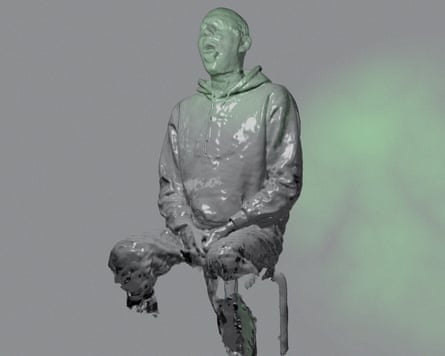
The country seceded from the Soviet Union in 1991 and was granted EU candidate status in 2023, but its bid was effectively halted a year later over severe democratic backsliding. The former model reformists are lodged at the back of the queue. “It’s a loop that never ends, a constant state of catching up but never arriving,” says Gagoshidze. “It’s a vicious circle.”
His personal situation is looking more hopeful, at least. The artist’s graft-versus-host-disease was relatively mild, and doctors tell him that if his health remains stable until the autumn, he can consider himself cured. “The doctors are happy, and if they are happy, I am happy.”