2 months ago
61
2 months ago
61
In many ways, Alex Pretti and Renee Good could have been any of the dozens of Minneapolis residents I met last week. Among them were teachers, store clerks, Uber drivers, charity workers and clergymen – a patchwork of humanity withstanding what many have called the Trump administration’s siege on their city, which began in December last year and has led to 3,000 arrests, two fatal shootings, and routine rights violations in an operation defined by government brutality.
What the administration has attempted to laud as the largest immigration operation in US history has instead become a fully fledged crisis, and the sharpest test of American democracy under Trump’s second term.
The resistance here goes well beyond activism and protest, as thousands of residents organise, and document what’s going on. As my colleagues have been documenting for weeks, acts of solidarity between neighbours in the frigid cold range from mutual aid to ICE (Immigration and Customs Enforcement) watch patrols.

Pretti, a 37-year-old intensive care nurse, was shot and killed seemingly after rushing to protect a woman as she was pepper-sprayed by Border Patrol agents on Saturday morning. Good, a 37-year-old mother of three, was observing ICE activity near her home when an agent opened fire earlier in January.
But what happened in the minutes preceding these two fatal shootings has effectively played on repeat throughout this mid-sized city as the Trump administration continued to escalate – rhetorically and physically – despite signs of a partial climbdown in the past 24 hours. Wild and false allegations of “domestic terrorism” are levelled against ordinary citizens, and thousands more immigration agents, many of whom lack experience and training, surge through the streets.
Minneapolis has long been a target city for rightwing political agitation, known as a focal point for the Black Lives Matter movement and where residents cherish the area’s Somali-American population, who are frequently maligned in the conservative press. The marked increase in force and ferocity is palpable here – beyond what I have witnessed recently in other ICE-ravaged cities such as Chicago and New Orleans. Teargas and pepper spray are a common sight on residential streets. Children and adults are snatched, sporadically, from their homes. Many local businesses report a downturn in profit as people stay away from work. What is happening here goes beyond immigration enforcement alone. It is an attempt to force compliance among the broader populace.
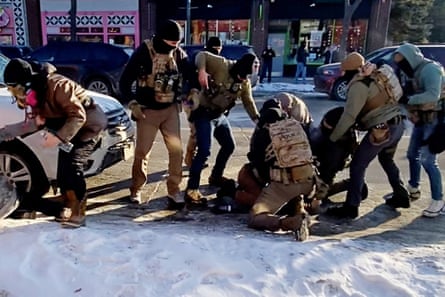
Most interactions I observed between residents and agents were charged and tense. Last Monday, six days before Pretti was shot, I watched a swarm of a dozen ICE agents operating in the city suburbs where their black Swat fatigues stood out against the white snow.
They surrounded a car in which a driver named Joaquin and his passenger, Gloria Espinoza, sat in shock. They had been pulled over on a quiet street lined with trailer homes. American citizens for more than 30 years, they later told me they believed the agents had no cause for stopping them other than the colour of their skin.
“They were racially profiling,” Espinoza says, adding that the officers taunted her and her partner as the couple filmed the agents conducting their background check. “You’ll get your 15 minutes of fame,” she says they told her.
The agents formed a small phalanx as they ran the couple’s documents. Police lights flashed. Masked officers grimaced as I watched.
Word had already got out, and civilian observers arrived in seven separate vehicles, honking horns, blowing whistles and documenting it all on video. They surrounded the scene, calling in details to other observers over the phone, and asking questions of the agents, who looked away sheepishly.
A young man shouted from the roadside, flicking the agents off. “I can’t even go out to eat with my family because of this shit,” he told me, irate and undeterred.
No one was arrested this time and the agents began to ebb away. Espinoza, who owns a local lawn care business, was incensed. “What did they get out of me? Nothing.” There is a sense, however, that this could have ended in a variety of other ways – that state-sanctioned violence could have been triggered in a split second.
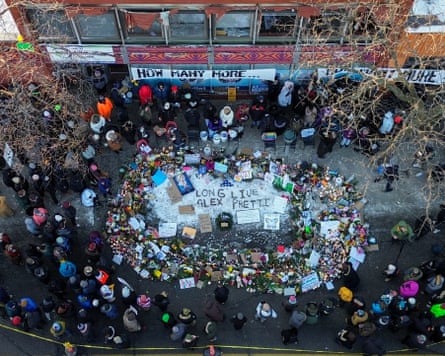
Minneapolis has long been a crucible. Only five years ago the city became a litmus test for the American justice system, after the murder of George Floyd, who died in 2020 under the knee of a city police officer, a short distance from where Good and Pretti were killed. In the aftermath, unrest quickly led to community organising, and the last time I came here in 2021 it was not uncommon to see local and state politicians mingling on the frontlines of protest, or to witness thousands of residents arriving in reclaimed community spaces to mourn and create.
Most of those political leaders – from the city’s mayor, Jacob Frey, to the state attorney general Keith Ellison – remain in office to this day. And so too does an organising infrastructure among swathes of the population.
In south Minneapolis last week, I met Patty O’Keefe, a 36-year-old environmental nonprofit worker who has lived here for more than 14 years. “We don’t bend the knee to authoritarianism,” she says. “We have a strong resistance muscle that is rooted in a place of love and caring for each other.”
O’Keefe is one of the thousands of volunteer ICE watchers who patrol the streets scanning for immigration activity. We rolled around her neighbourhood as she and her partner Mitch Ditlefsen, a musician, followed tips on an encrypted chat group, and sent in the number plate details of cars they suspect could be ICE vehicles. (My own rental car was flagged a number of times due to an out-of-state plate.) It is not uncommon to see half a dozen observers on a street corner known to attract ICE attention.
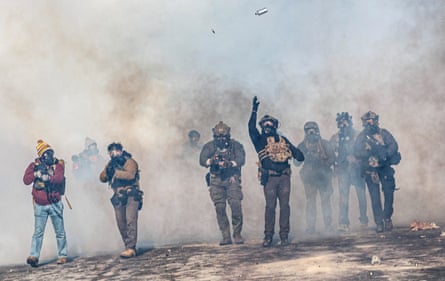
A few weeks ago, O’Keefe was tracking an ICE convoy with another volunteer, when a group of three agents set upon her vehicle. One squirted pepper spray into the vents of her car, and then smashed the two front windows, hauling her out for arrest.
She was “taunted and mocked” by the officers who held her. “One of them said: ‘You guys have got to stop obstructing us – that’s why that lesbian bitch [a reference to Renee Good] is dead,’” she recalls.
She was taken to an ICE building near the city’s airport and held for eight hours in a special section marked for US citizens. She heard the cries of other detainees awaiting deportation and was forced to beg for water. Then she was released without charge.

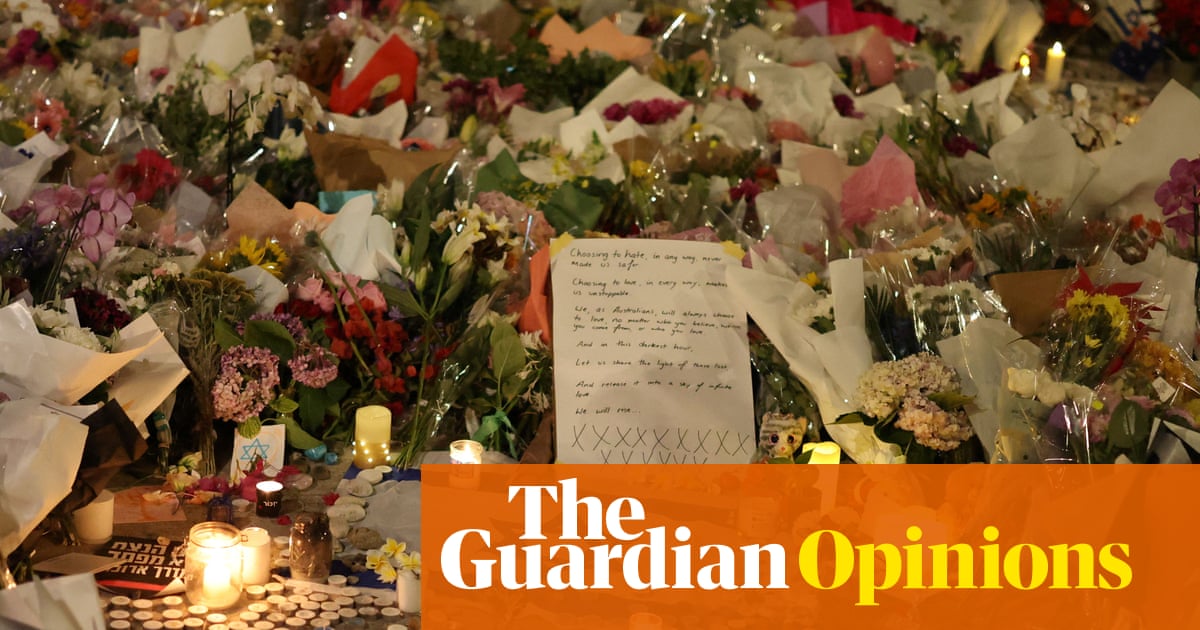
O’Keefe views the episode as an act of deliberate intimidation, but she remains steadfast. We make a stop at the site where Good was shot dead. A small group of people hold vigil as the temperature drops below -20C and snow begins to cover the hundreds of bouquets laid where she died.
“She could have been any one of us,” O’Keefe says. She wipes fresh snow off the memorial. “But that doesn’t mean that we stop doing the work. It motivated a lot more people to get involved, and that is a testament to the bravery of the people here.”
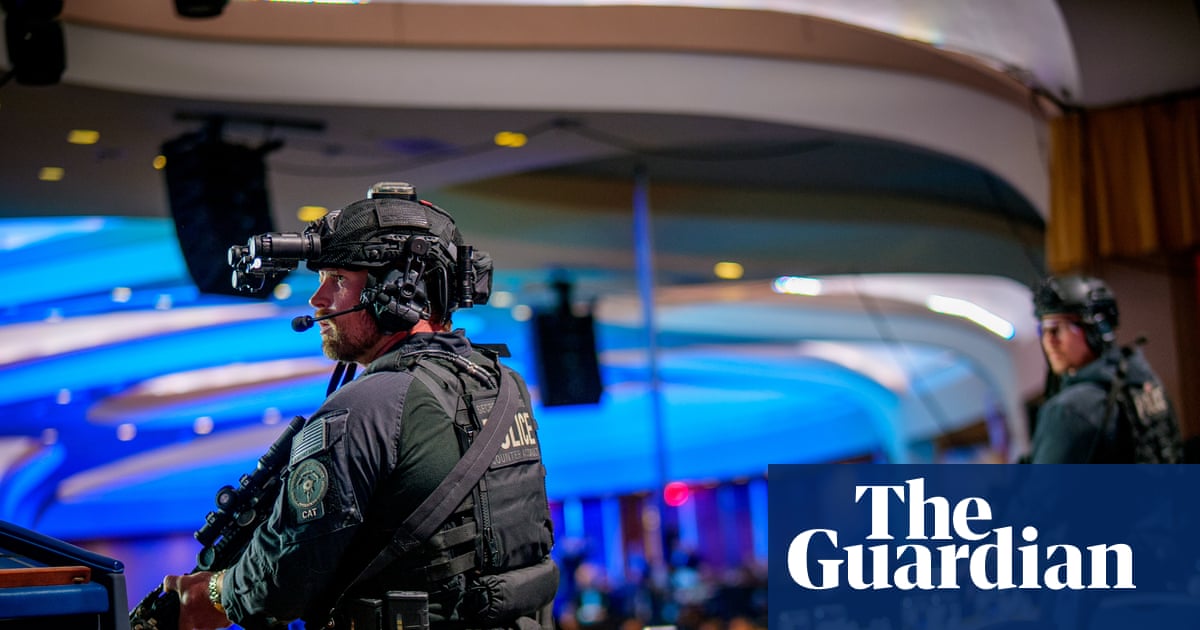
I take a drive out of the city, about 150 miles north to the small township of Esko near the shores of Lake Superior. Towering snowdrifts line the icy highway, and the wind pushes fine powder in undulating patterns across the asphalt. I am there for a Republican gubernatorial candidate forum, hosted by the local GOP in Carlton county, which swung red for the first time in almost a century in the last presidential election.
Minnesota has not voted for a Republican president since Nixon in 1972, despite Trump’s false claims that he has won the state in all three of his elections. This staunch progressive tilt has made me wonder whether conservative politics here might have a degree of nuance lacking on the national stage. There is, unfortunately, little evidence of that.
A crowded field of candidates take turns on stage, rebuking the peaceful protests and community opposition in the state they wish to govern. “President Trump, if you see and hear this, I’m asking you to act on the Insurrection Act now,” says GOP candidate Phillip Parrish, encouraging the president to effectively declare war on Minnesota. “Do not wait. Get it done.”
Although Trump has threatened to invoke the statute, which would initiate the deployment of military troops in the city, he has so far steered clear and on Sunday acknowledged federal agents will leave the city “at some point”. Nonetheless, in the wake of Pretti’s death he has continued to target the state’s Democratic governor, Tim Walz, with a litany of falsehoods.
Among the assembled voters, about 200 people, there is little empathy for the fatal shooting of Good, an unarmed woman killed in her own neighbourhood. “Mothers of three can be terrorists as well,” says one, repeating falsehoods promoted by senior officials in the Trump administration. “It happens everywhere.”
“She chose to be in that place and it wasn’t a good decision,” says another woman.
I speak with gubernatorial candidate Brad Kohler, a former UFC (mixed martial arts) fighter who tells me he is attempting to run his race as a moderate. But within the first 30 seconds of our conversation he brands the entire state’s sizeable Somali-American population as “less than 70 IQ” – a racist trope repeated perpetually by Trump himself.
When I push back, he attempts to retract: “I apologise, that’s not what I meant. It’s just that they’re not aware of the American ways.”
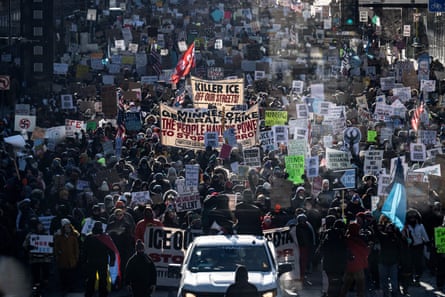
It is the normalisation of this racism that has made Minnesota such a potent target for the administration. A 2022 social services fraud case, prosecuted by the US justice department under Joe Biden, involving a group that included some Somali-American defendants, has since been regurgitated and twisted by a host of local leaders and young, rightwing YouTubers – pushing unfounded allegations of pervasive fraud.
Although most of the roughly 80,000 Somali residents of Minnesota are US citizens, the Minneapolis neighbourhoods with a high density of Somali residents have been repeatedly targeted by ICE.

On a trip back to the city I visit Fartun Weli, who runs a local nonprofit servicing families and women in the Somali community. Like many of the early Somali migrants to Minnesota, Weli arrived here in the early 2000s as a refugee fleeing civil war. She brings up the slurs emanating from the White House with tired disbelief. “Anyone who understands basic humanity would not be insulting an entire community that way.”
We take a tour of a local Somali mall, where dozens of storefronts are closed and some vendors tell me they have not made a sale in over a month, with customers staying away in fear. Throughout much of our conversation, Weli attempts to grapple with a basic question that many in the US and much of the world seem to be asking: is there a single rational justification for any of this?
“I’m just asking how and why,” she says. “But there is no answer.”
We are standing just a few blocks from where Pretti is gunned down a few days later.
Continue following all of the Guardian’s on-the-ground reporting from Minneapolis here: theguardian.com/us-news/minneapolis