2 months ago
60
2 months ago
60
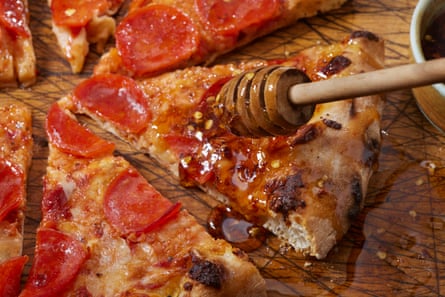
When hot honey started popping up on restaurant menus about five years ago – drizzled over pizza perhaps, or used as a glaze for meat or halloumi – it seemed novel; something unusual and exciting to try. Word soon got out, particularly among gen Z, about its “swicy” (sweet and spicy) appeal, and the product has “gone a bit crazy over the last couple of years”, according to Laurence Edwards, owner of Black Mountain Honey, which has seen its hot honey sales shoot up.
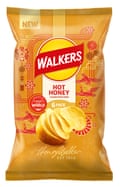
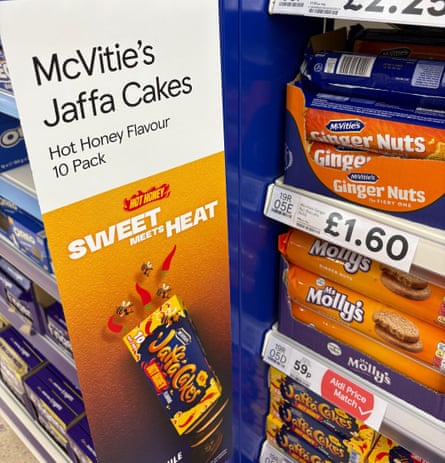
Like salted caramel, its forebear in the world of food trends, hot honey – generally made by adding or infusing chilli to honey – now seems to be everywhere. Not only can you buy supermarket own-brand versions, but products such as hot honey Jaffa Cakes, hot honey Kellogg’s Crunchy Nut cereal and, most recently, hot honey flavoured Walkers crisps, have now come into existence.
“It’s a bit of an accolade being on a Walkers crisp packet,” Edwards says. He hopes hot honey’s moment in the spotlight will mean that beekeepers like him will benefit from “some of that mainstream attention” and see a rise in interest in their industry and products.
Ben Lippett, chef and co-founder of Dr Sting’s hot honey, is less optimistic: “Are we reaching peak hot honey? Maybe we are,” he says. “I’d be lying if I said it didn’t make me slightly nervous when I see larger businesses and corporations using hot honey.” He’s concerned that the market will become flooded with lower-quality versions of hot honey, which could put people off it. “When anything becomes popular, people will make the product and try to cut corners to get a better margin,” he says. “And I can tell you from experience that making money selling honey is very difficult because it’s a very high-cost raw ingredient” – hence a 280g bottle of Dr Sting’s retailing at £8.99.
Cutting corners in honey production has been a point of contention in recent years, with the prevalence of “fake honey” bulked out with sugar syrup exposed by the European Commission in 2023. But while pure honey is covered by honey regulations, meaning it should be “free from organic or inorganic matters foreign to its composition”, flavoured honey is not. “You can be less certain of what’s in hot honey,” says Diane Drinkwater, president of the British Beekeepers Association (whose personal view is that “by adding chilli you’d be ruining [honey’s] natural deliciousness”).
Edwards is aware, too, that the influx of hot honey products could lead to more “fake honey”, and he “would just advise anyone to do the checks” by reading the ingredients list to make sure they’re getting hot honey made with proper honey, “because it is a much better product”.
Whether or not people go for the premium or budget versions, Lisa Harris, co-founder of Harris and Hayes food and drink consultancy, doesn’t think we’ll be seeing the back of hot honey any time soon – she believes it will just become ubiquitous and begin to plateau.
“Now when I see salted caramel on a menu, it doesn’t excite me,” Harris says. Hot honey is heading in the same direction, she says: a tried and tested staple of gastropub menus and pizzerias, that, once upon a time, seemed exciting. No doubt innovative chefs and food companies are already searching for the next viral flavour combination – but for now, swiciness reigns supreme.