3 months ago
70
3 months ago
70
When the forecasts for this week started to roll in, my mind immediately drifted back to Australia’s black summer.
I had taken my daughters down to the pool in our estate in western Sydney, hoping for a brief reprieve from the relentless heat. The Gospers Mountain fire was raging in the Blue Mountains, but on that particular day the smoke didn’t seem too bad.
We were in the water for no more than five minutes when ash started falling from the sky. The delicate black flakes landed gently on top of the heads of my young children, a poetically quiet omen for their future.
Fast forward six years and south-eastern Australia is in the grips of another heatwave – the worst since 2019-2020. Both Melbourne and western Sydney will reach temperatures in the low 40s, towns in regional Victoria and New South Wales even higher. Canberra – where I live now – is experiencing consecutive days in the high 30s.
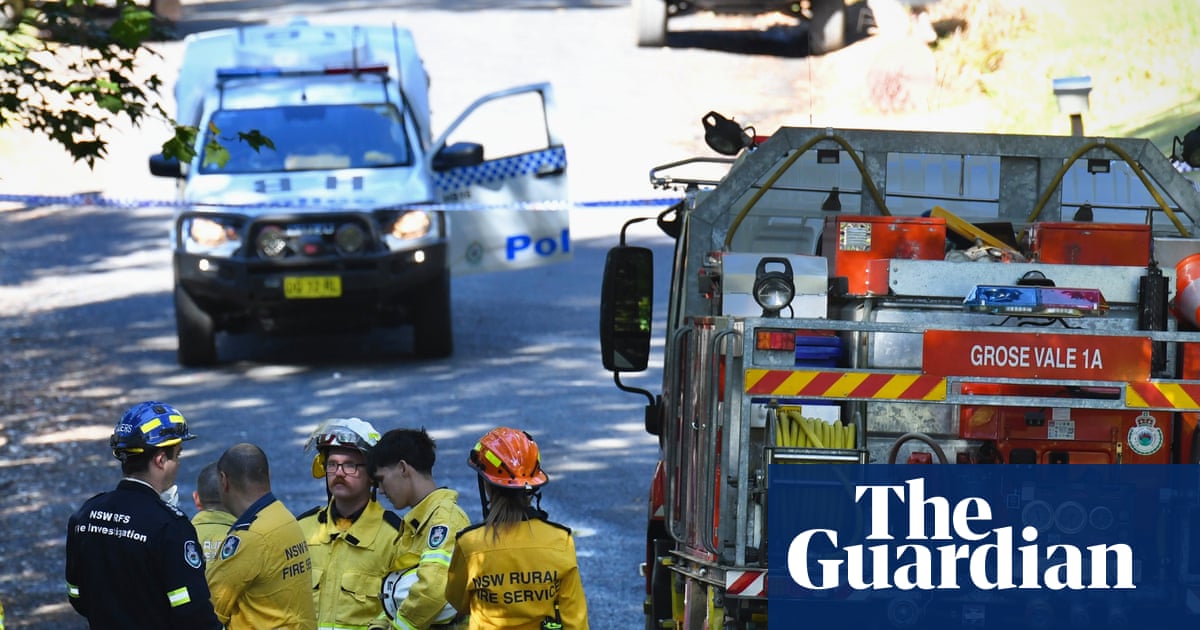
Heatwave conditions are severe to extreme for large swathes of South Australia, Victoria, New South Wales and the ACT until Saturday. From Friday, strong winds associated with a cold front will push across Victoria and New South Wales, an exceptionally dangerous set-up for fire weather, reminiscent of the 2009 black Saturday fires.
Mercifully, some of the conditions leading up to this heatwave aren’t as bad as in 2019 or 2009. The main difference is that we are not in a multi-year drought, meaning that fuel has not dried out to the same extent. We also now have a national fire danger index and, as a population, are generally more aware of how to prepare for impending fire danger.
Maybe, hopefully, these factors will be enough to prevent a devastating fire event like those that followed previous severe heatwaves, despite significant fires already burning in Victoria. But we must not be complacent.
We cannot talk about such an extreme heatwave without talking about the health impacts. I want to be very clear here: extreme heat kills. In fact, extreme heat kills more Australians than all other natural hazards combined.
We have been somewhat lucky to not experience a heatwave as severe as this for over five years. While the triple-dip La Niñas helped induce disasters of a different kind, they also silenced the increasing pulse of extreme heat, at least temporarily. The rainfall they brought recharged moisture levels in the land surface, breaking the inextricable link between drought and extreme heat. However, recent drier than normal conditions in the south-east have permitted this link to start re-forming, albeit not to the same intensity (yet) as black summer.
And then there is the elephant in the room we wish we could ignore – climate change.
The link between heatwaves and climate change is very clear – as the global average temperature climbs, so too will the frequency, duration and intensity of heatwaves, even if the global average temperature increases by just 1 or 2C. This is not only the case for Australia, but virtually everywhere else on the planet. In terms of how climate change drives extreme weather, the physical link between global average temperature and heatwaves are among the most well-studied and well-understood in the world.
In short: we know climate change drives heatwaves, and we know we will see more of them in the future. And while it is too early to know the explicit influence of climate change on this particular heatwave, my guess is it will be very substantial.
Reaching net zero emissions – whenever that might be – would offer some hope. By stabilising atmospheric greenhouse gases from anthropogenic sources, global average temperature might stabilise. However, any real benefits would probably not be felt for at least 100-200 years. Recent research indicated that Australian heatwaves will continue to rise – albeit more slowly – for at least 1,000 years, and delaying net zero by just 5-10 years results in substantially worse heatwave regimes for centuries to come.
We have now reached a critical point where although imperative, net zero is no longer enough. We must also adapt.
Effective and permanent adaptation goes hand-in-hand with net zero and must be legislated. Public awareness and education is also important. And it is critical we increase investment in public health dramatically, as many more will require life saving care during heatwaves in the coming decades.
Once again, I find myself thinking about our brief moment in the pool during black summer. My daughters had no idea what was happening around them, and in that moment, I was grateful. But as they grow, they are becoming more aware of the world they are inheriting. I am careful not to burden them, however questions are increasingly being asked about drought, fires, heatwaves, and climate change.
They deserve answers. And if, along with their peers, they are to face future heatwaves head on, we must do better.
-
Sarah Perkins-Kirkpatrick is a professor of climate science at ANU