4 hours ago
7
4 hours ago
7
Last month, the Guardian published a feature about the demise of the monoculture. It suggested that streaming services, personalised algorithms and the declining influence of radio and television meant we now live in a world where stardom isn’t as universal as it once was. It used Sam Fender and Olivia Dean’s single Rein Me In as an example: here was a song that spent a record-breaking 23 weeks at No 1 yet hadn’t attained anything like the ubiquity you would once have expected: to judge by social media, plenty of people seemed to have never knowingly heard it.
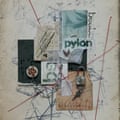
If you were looking to advance this theory, you might alight on the career of Beatrice Laus, the 26-year-old British-Filipino singer-songwriter better known as Beabadoobee. To a certain cohort, primarily female and in their late teens and early 20s, she is not just a huge star, but a genuinely iconic figure. The latter is an over-used adjective in 2026, but if social media abounds with tutorials advising female fans how to copy your style and imitate your makeup – if you can be personally held partly responsible for the 2021 outbreak of adolescent girls drawing fake freckles on their faces in imitation of your own – then it probably fits, whether it discomfits Laus or not. The lyrics of Satellite, the closing track on her fourth album Pylon, suggests it does: “I give the generation a new infatuation,” she sings. “If only I knew how to cope with the times.”
Laus’s sound has always been rooted in 90s alt-rock – grunge and its various US indie offshoots, shoegaze, Elliott Smith – sprinkled with a hefty pinch of pop nous. The latter gives her a distinct point of difference from her source material: Laus is less of straightforward pasticheuse than you might expect someone who once released a song called I Wish I Was Stephen Malkmus to be. She’s also spun these once-underground influences into mainstream success. Her biggest hit, a collaboration with Canadian rapper Powfu called Death Bed (Coffee for Your Head) has been streamed more than 2bn times. Her last album, 2024’s Rick Rubin-produced This Is How Tomorrow Moves, entered the UK charts at No 1, while its follow-up arrives boasting an impressively starry range of guests: Paramore’s Hayley Williams, Deftones’ Chino Moreno, Matty Healy and George Daniel of labelmates the 1975 and Turnstile’s Brendan Yates among them. Her forthcoming UK tour is housed exclusively in arenas: the O2, Madison Square Garden. And yet, one suspects most people outside said cohort would struggle to name – or hum – a single song by her.
Such is the way of popular culture these days, and Laus is evidently doing very well for herself. So well, in fact, that Pylon’s lyrical themes include those hardy perennials of the successful rock star, the dislocation of life on tour (the title track comes replete with images of endless roads “in a place that I don’t know the name”), and fake friends attracted solely by your celebrity (the Williams feature Nothing to Prove). If that sounds a little remote for an artist whose success is to some extent founded in talking directly to an audience not much younger than she is about stuff that matters to them, then it’s expressed in snappily relatable terms. “Hold me like a screen, disconnected from reality,” she sings on Pylon. And, besides, there’s plenty here that feels more universal to her fanbase’s lived experiences. “Growing up just means to fuck everything up again,” protests Switchblade, a neat fixing of the confusion of early adulthood, while Sun Has Set rounds on a frenemy in brutal style – “we’ll never be friends, I mean we’ll never pretend – fuck that” – over a heaving, strikingly bloody guitar riff.
after newsletter promotion
The ferocious storm she raises on the latter track is telling. Released in the wake of her support slot on Taylor Swift’s Eras tour, This Is How Tomorrow Moves leaned into her pop side, but Pylon turns in the opposite direction. There are still plenty of bright melodies to be had, not least on the disarmingly pretty Spark, and Laus’s voice naturally tends to cooing charm, but the guitars come drenched in caustic levels of distortion and the riffs they play are brawny or jagged. The album continually deploys a sweet-to-sour pivot that’s impressively well-judged: the dreamy bedroom-pop mood of Despite That is obliterated by sulphurous fuzz; shards of noise and gusts of feedback blow through Powerline, a duet with Yates; Write Me a Letter starts out mistily autumnal and ends up livid. Only the too-toothsome Estranged gets the balance wrong.
It’s strikingly confident, as is her treatment of her celebrity guests: you’re aware they’re present, but always in a supporting role, with no doubt who the main star is. But then, why wouldn’t Laus be confident? As has already been established, she’s doing very well for herself, albeit in a very 2020s kind of way. Pylon offers a compelling argument that Beabadoobee’s reach should be broader.
This week Alexis listened to
The CJP Band – We Must Believe
A friend’s enthusiasm belatedly alerted me to We Must Believe: dizzily uplifting jazz-infused disco-funk that hails, improbably, from the New Forest.