1 month ago
52
1 month ago
52
All around us, every day, hundreds of conversations are taking place in languages we don’t understand, or even, in most cases, notice. Birdsong is one you would probably recognise, and you may have heard of honeybee “waggle” dances. But what about the spider tuning their web to listen for prey, or a waft of arousing perfumes emitted by a passing beetle? At any moment you may be walking right through a whole critical dialogue – and have absolutely no idea.
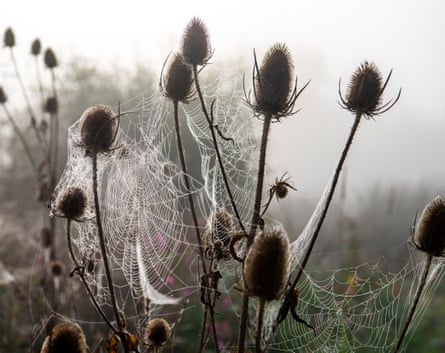
To delve into the world of invertebrate communication about food gathering, coordinating nest building, defending a territory, attracting a mate, and babycare is to realise just how smart and sophisticated they are. Spiders, for example, can “hear” vibrations on the silken strands of their web using sensors on their legs. With their legs and body weight, the spiders will adjust the silk strings, as we would a guitar string, to change its pitch, pulling, loosening or reconnecting strands to adjust how it sounds. In fine-tuning the silk they can know just who is walking on it – a possible mate to woo, a fly for feasting on or maybe a larger bug on the lookout for prey.
Many invertebrates use complex ranges of scents – called pheromones – to chat. Moths can mix a heady cocktail of the perfect perfumes to waft around to attract a mate, while ants lay chemical trails to guide their sisters to food sources. Some burying beetles share parenting and will chat using chemical scents, as well as touch, caring for their larvae in the lovely carcass nursery they’ve made.
Mimicry is another comms tool used by bugs – often to deceive in many complicated ways. You would probably recognise the hoverfly that mimics the yellow and black stripes of the wasp to fool predators, such as birds, into not eating them as they would a wasp with its sting. But the extremes are quite astounding in colour, appendages and structures. Spiders and moths mimic ants in shape, smell and movement so they can live and eat in an ant nest rent free. Several insects mimic bits of a tree to avoid being eaten. Others, such as the preying mantids, can appear perfectly like the flowers they are waiting in, all the better to lie undetected and pounce on unsuspecting prey.
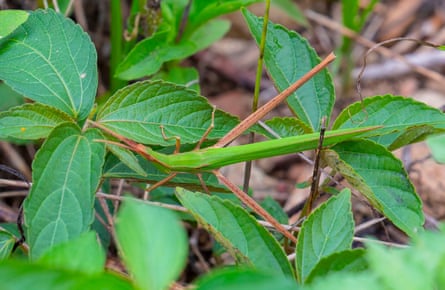
Personally, I’d love to hear the two-tone song of the butterfly caterpillar that also allows it to live undetected in an ant nest. They’ve already tricked the ants, by mimicking ant baby smells, into carrying them into the nest; once installed, they will make noises so similar to ant larval noise that they get fed and protected by unsuspecting ant workers.
And it’s not just invertebrate talking to invertebrate; trees, for example, communicate with bees, using colour and ultraviolet light to attract and guide them to pollinate flowers, also using chemicals, electricity and their own seasonal changes to tell bees what they need to know.
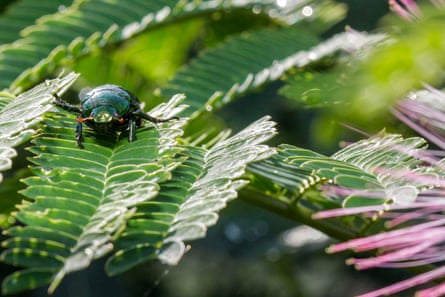
Some plants beckon bugs, such as crab spiders, to attack other bugs that are attacking them, and the relationship between the fig tree and the fig wasp is so intimate it is hard to fathom. Every type of fig tree has a unique perfume smell to call its own wasp species. The tiny female wasps crawl through a hole in the fig flower – which is more a whole bunch of flowers in a protective sack – often having to lose her wings to get through and bringing pollen from another tree with her. A whole wasp life cycle will then occur inside what you will eventually eat as a juicy fig.
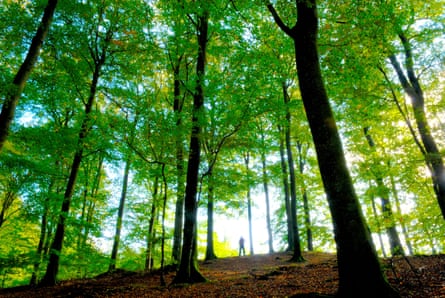
The invertebrates around us have evolved these relationships over millions of years, finding ways to inhabit their niche better and in collaboration with each other and the rest of the world. And it’s not all about cooperation and living together nicely. Much communication – from pugilistic ants to worms biting each other – is about status, repelling predators, winning mates and protecting territory, babies or food.
Scientists are still discovering the incredible detail of so many more conversations and relationships without which chaos would ensue, but sadly, when we interfere with these conversations, with a road, a chemical, climate change, we cause serious problems – for ourselves as well as the wildlife.
Now they don’t, as far as we know, write poetry or use email. But the camouflaged art of a butterfly’s wing, the head-banging of a beetle’s love calling, or the messaging between termite and its farmed fungus, should make anyone think twice about the superiority of human communications.
-
Vicki Hird is strategic lead on agriculture at the Wildlife Trusts and author of Rebugging the Planet and a new book out in 2027 on bug communication.