2 months ago
62
2 months ago
62
Last week I discovered that an article I wrote about the England cricket team has already been copied and repackaged, verbatim and without permission, by an Indian website. What is the appropriate response here? Decry and sue? Shrug and move on? I ponder the question as I stroll through my local supermarket, where the mackerel fillets are wreathed in metal security chains and the dishwasher tabs have to be requested from the storeroom like an illicit little treat.
On the way home, I screenshot and crop a news article and share it to one of my WhatsApp groups. In another group, a family member has posted an AI-generated video (“forwarded many times”) of Donald Trump getting his head shaved by Xi Jinping while Joe Biden laughs in the background. I watch the mindless slop on my phone as I walk along the main road, instinctively gripping my phone a little tighter as I do so.
Increasingly, by small and imperceptible degrees, we seem to live in a world defined by petty theft; petty not in its scale or volume but by its sense of entitlement and impunity. A joke, a phone, an article, the island of Greenland, the entire canon of published literature, a bag of dishwasher tablets: everything, it seems, is fair game. How did we get to this point, and where does it lead us?
Perhaps we should start on the internet, where technology has essentially legitimised and embedded stealing into our shared digital culture. Aggregator websites, viral meme accounts, screenshots, copy and paste, the abundance and ubiquity of the feed: all these serve to blur the relationship between the creator and creation, sweeping up our ideas, thoughts and pictures into a common buffet. It feels frictionless, victimless, even empowering. The rewards for virality are high and the penalties almost nonexistent.
And so when the first generative AI models started training themselves on billions of items of scraped content – copyrighted writing, music and art – in a sense they were simply following in an established tradition. There was, writes Karen Hao in her book Empire of AI, “a culture among developers to view anything and everything as data to be captured and consumed”. John Phelan of the International Confederation of Music Publishers describes it as “the largest intellectual property theft in human history”.
But there are no police on the scene, no screaming sirens, no bounties and “wanted” posters. If big tech wants your stuff, and governments around the world want to let them have it, there is no emergency number to call, just a fog of obfuscations and plaintive wailing about the viability of the business model. Please, my family is starving. My family loves to eat private photos and personal data. Also, my family is allergic to copyright law.
But, of course, the internet did not invent all of this. Theft itself is as old as time, perhaps one of the oldest human behaviours of all: a strategy of adaptation and learned imitation driven above all by asymmetries of power, wealth and opportunity. Often it gets justified in the same terms. Inequality creates thieves on both sides, not just one. It cements thievery as one of the defining principles upon which society is run. The street thief and the colonial empire-builder are thus bound by a common understanding of the rules of play, a kind of anti-honour code, in which acquisition is rebranded as a form of victorious conquest.
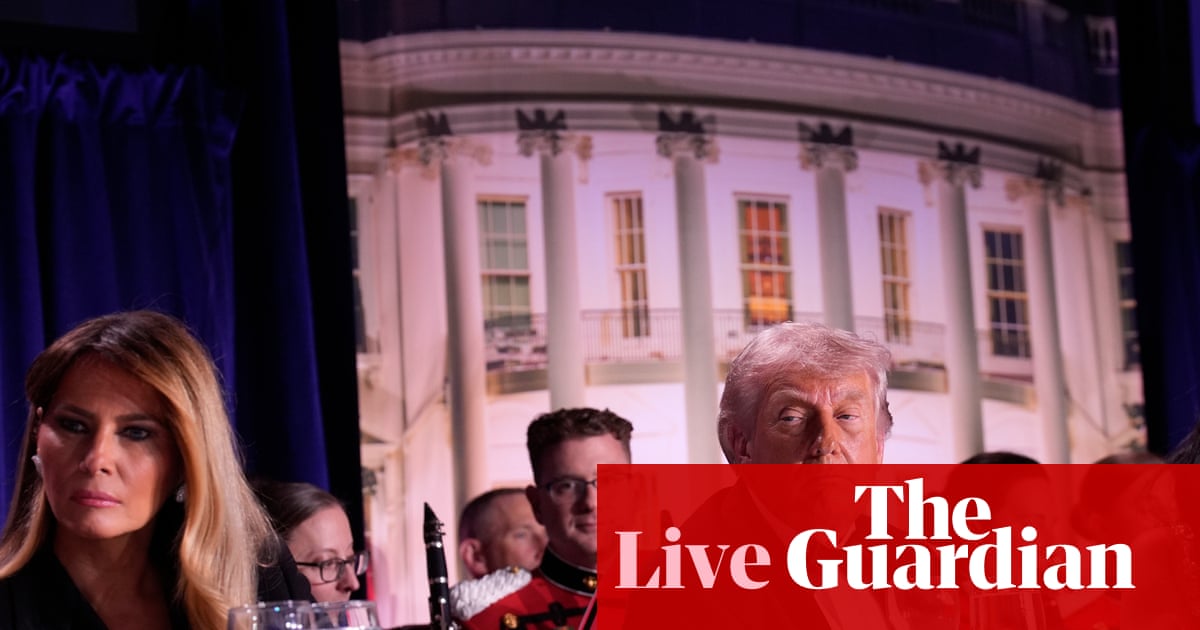
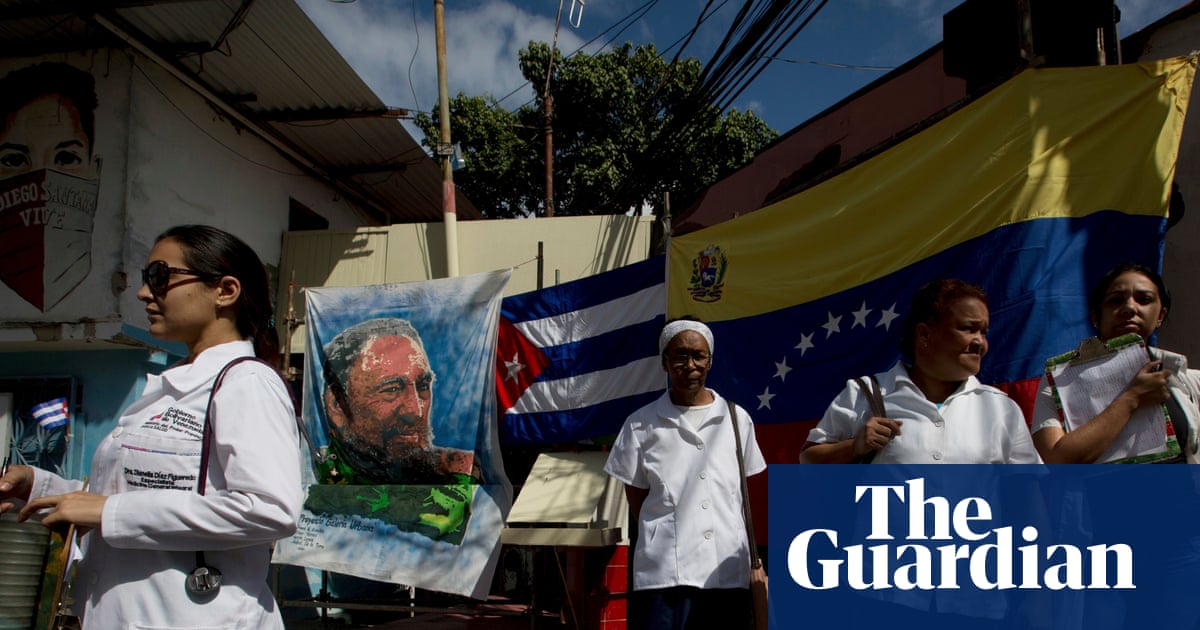
Perhaps it is no surprise that this culture is defined most strongly by a US president who boasts of his ability to grab whatever he wants, from a Venezuelan oil tanker, to classified documents, to a frozen Atlantic island, to a woman’s private parts. Donald Trump represents the doctrine of coercive acquisition as a kind of founding principle. His plan for the Vegas-style reconstruction of Gaza, unveiled by Jared Kushner at Davos last week and rich in AI imagery, reads like a kind of kleptomaniac wet dream.
Naturally he has been abetted by the fact that on a global level, the taboo over naked territorial land grabs – from Crimea to the West Bank – has largely been eroded. In a world of heightened securitisation, the theft of land can simply be spun as a tool of survival. For Trump and many of his fellow autocrats, the new age of neocolonial expansionism is simply an extension of natural law, the spoils of being strong in a world of the weak.
In these small learned increments, a world is remade along stolen lines. And on a deeper level the age of theft seems to express something vital about how we see others as fellow members of a species, about how we regard rules and conventions when our leaders appear to find them less relevant than ever. When entire countries are built on stolen labour, when entire peoples are forced from their land so it can be turned into something resembling a casino, suddenly watching Everton v Leeds United on a pirated stream feels like a comparatively innocuous crime.
In some of my more idle dystopian daydreams I used to wonder what might happen if Google or WhatsApp simply decided one morning to take all your emails and messages hostage, and demand a life-altering ransom for their release. Does this seem so dystopian now? If personal boundaries are now a chimera and ownership is simply hard power by another name, at what point does mass theft begin to resemble an unanswerable business case?
“[A] great embarrassing fact [that] haunts all attempts to represent the market as the highest form of human freedom: that historically, impersonal, commercial markets originate in theft.” A great line, albeit one stolen from David Graeber, whom I like to think would have appreciated the irony. In the meantime, all we can really do is grip our phones a little tighter, put watermarks and firewalls around our creative output, vote for parties that will address inequality rather than aggravate it. And in a small polite voice, ask the shop assistant if they wouldn’t mind unlocking the mackerel fillets when they have a moment.