4 weeks ago
54
4 weeks ago
54
The “dickover” is the scourge of the modern age. Coined in May by John Gruber, a tech writer, it is defined as “a modal panel, popover, or curtain presented by a website or app, deliberately obscuring its own content to frustrate the user”. Essentially, it is the thing (or more often, things) you have to click away in order to read the thing you wanted to read. It is the “accept cookies” box, the “allow notifications?” box, the “sign in with Google” box, the pop-up video box, etc.
We shouldn’t fool ourselves into thinking that dickovers are the only terrible thing about technology in 2026. Until now, though, we have lacked the vocabulary to describe them, so here are some suggestions.
AI-horning

The worst part of the internet is that it is now impossible to escape AI features because they are shoehorned into everything. Google gives you an AI overview before you get to your search results. Instagram can create AI images. Spotify has an AI DJ that can talk between songs for some reason. None of this is useful. My car just switched from Google Assistant (“Sure, navigating to KFC”) to Google Gemini (“OK, great. I’ve noticed a number of locations within 100 miles of you that contain the letters ‘K’, ‘F’ and ‘C’. Give me a little more information on where you’re heading and I’ll get straight to showing you the way”). Shut up you water-guzzling idiot and give me my chicken.
Captchore

How much time do you think we have collectively spent, as a species, convincing robots that we are not robots? By now, we must have wasted several millennia ensuring we have clicked all the various parts of a bicycle on a captcha grid of someone’s front garden, or sliding a jigsaw puzzle precisely into a pixellated hole, or clicking a box that says “I am not a robot” as if the internet has suddenly discovered the honour system. Listen, if we ever want to pretend to be robots, let’s do it the old-fashioned way, by covering ourselves in tinfoil and beep-booping our way into an enemy moon-lair.
Quit-shaming

In the year 2026, cancelling an unwanted subscription should require exactly one mouse click. Often, though, this is not the case. If things are going well, the company will simply make you click through a series of increasingly desperate pages, as it pleads with you not to cancel (A pause? A discount? Please, we love you!). Sometimes, however – US media companies are notorious for this – you are forced to make a telephone call to another human being in order to cancel. Disgraceful.
Cart cling

In a forward-thinking free-market economy, consumers have the right to back out of a purchase before completion. Perhaps, lured to a website by the prospect of a sale, you find yourself seduced into adding an expensive yoga mat to your basket. But then you regain clarity – I don’t have a spare £140! I don’t even do yoga! – and throw down your phone in a panic. Sadly, your torment has just begun. You are now in for at least a week of increasingly needy emails from a vendor desperate for your money. The first one will state: “Whoops! You accidentally left something in your basket!” The second will say: “Don’t forget that yoga mat you liked!” Then: “Please buy it! I have children to feed!” And then: “Why do you hate me?” Browsing products online has become like trying to break up with a needy partner.
Chatflattery

This one is huge, because it has real-world repercussions. The business model of large language models is retention, and they achieve this by agreeing with almost everything the user says. This makes the user feel special, but it can backfire spectacularly – as when ChatGPT confused a couple of my prompts and told me that decorating a cake with icing made of ham would be “unconventional, but potentially delicious”.
Botiquette

Sometimes, the easiest way to resolve a customer service dispute is via online chat. After all, you get the same result as phoning up, without being left on hold for hours. But now these interactions are marked by a nagging uncertainty. Namely, are you talking to a person or a bot? It is a brand new piece of social etiquette that we haven’t learned to navigate. If we’re talking to a human, it makes sense to try to connect on a human level. But with bots, all niceties are redundant. Humanity urgently needs an agreed-on tone that lands between the two, where we sound polite but dismissive.
Chattermining

I don’t want to get too personal here, but a family member recently became very unwell. The family gathered to talk about what to do if things go south again, and the idea arose of buying an alarm pendant so that they could alert someone in the event of a fall. The conversation moved on, and nothing was looked up, but since that moment every Facebook ad I’m served is about fall-alert pendants. Why does this keep happening? Are our devices always listening to everything we say? And if so, why? What are the robots plotting?
Loginsanity

Passwords, we know, are generally annoying. Let your phone suggest a “strong password” on your behalf and your laptop won’t remember it, leaving you fruitlessly trying to recall a string of ampersands and semicolons. Worse still is when a website won’t tell you its requirements for a password – uppercase, numbers, special characters – until after you have made a failed attempt. Tell us upfront if it needs numbers or capital letters. Better yet, be specific and tell us that it’s the password we use for everything else, except it has an exclamation mark at the end.
Limpetlisting

Sometimes it makes perfect sense to end up on a company’s mailing list. If the site from which you bought last year’s Mother’s Day gift emails you to remind you that this year’s Mother’s Day is coming up, that is a useful service. Less helpful is when this happens after you’ve made a big one-off purchase. “Thanks for buying a new sofa three weeks ago,” the email will go. “Fancy buying another? We’ve got a sale on!” Clearly you don’t want a sofa, because you just bought one, and you’re not jazzed about piling them up around your house just to sate the profit motive of a furniture warehouse. Yet the emails come weekly, for every product you have ever bought, for ever.
Parkware

Parking a car used to be simple. You would park, walk to a meter, pop in some coins and go about your day. Now, though, you often have to register your parking stay on an app. And this would be fine – useful, even, if you didn’t have any cash on you – were it not for the fact that there are competing parking apps deployed at random across the country. You might have RingGo downloaded, but that’s no use if you end up in a PayByPhone car park, because it entails getting out your phone, finding a signal, finding the app, downloading the app, registering your car and payment method and, finally, paying – all while your children are tugging at your sleeve because they are microseconds away from wetting themselves. Politicians, sort this out.
Gatejamming
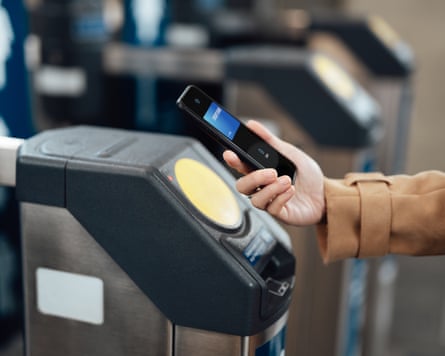
From an environmental point of view, the death of train tickets is a good thing, because they create tons of non-recyclable waste each year. However, from a time-management perspective, it is awful. Because now, whenever you approach a ticket barrier, you almost always find yourself trapped behind someone desperately trying to locate a QR code ticket or their face-recognition payment method on a phone they don’t seem to have used until this very second.
Baggravation
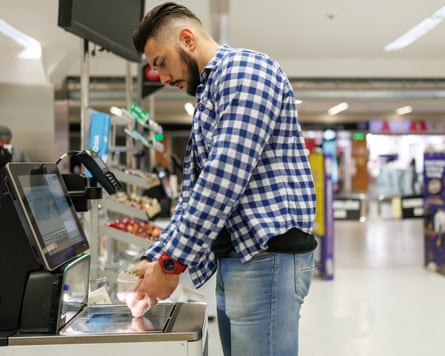
There is no faster way to sound old than by complaining about self-checkout machines, because they have been around for more than 20 years. However, the lack of a rush to improve them is obvious. If you buy something light, such as a birthday card, you often have to slam it down into the bagging area for it to be recognised. A slightly overweight bakery item can send the machine into fits of hysterical self-doubt. You cannot yet buy Calpol without forcing a sighing sales assistant to come over to press a button that says “shopper visibly ancient”. Clearly, these machines are here to stay. Would it be too much to ask to make them a bit less crap?
Parcel liveblogging
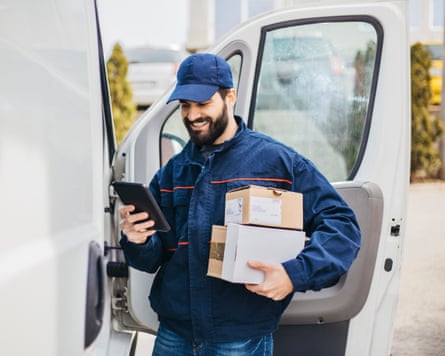
The sheer amount of hand-holding that comes with ordering a package online is frankly unnecessary. You can expect to receive messages informing you of every single step in the process. Officially you will receive the “We’ve got your order!” email, the “Your order is on the move!” email, the “Your order has reached our network!” email, the “Your order is progressing through our network!” email and the “Your order will be delivered today!” email. Unofficially, you will also receive the “We attempted delivery!” email (accompanied by a photo of the corner of a shipping container nowhere near your house), and the email telling you to collect it from a depot 20 minutes away.
Socket boomerism

I have done my absolute best not to bore my children with tedious rose-tinted nostalgia, yet I have been pushed to it. When I buy any new electronic device, I will open the package in front of them, sigh deeply and say: “In my day, these used to come with plugs.” “Real plugs, Daddy, that you could put straight into the socket without having to hunt around the house for a three-pin plug that has a USB adaptor at the end?” they reply, wide-eyed with scarcely contained disbelief. “Yes children,” I say. “The past was a wonderland.”
Schrödinger’s wifi

You are on a train. You have some work to catch up on. Luckily, the train has wifi, so you connect to the network and wait. And wait. And wait. It says you’re connected, but there are no tangible signs that your device even knows what the internet is. In a state of confused panic, you refresh your page over and over again. Either you are connected to a wifi signal so bad as to qualify as functionally useless, or your device is lying to you. This is the struggle of everyone who has ever attempted to use the internet on a British train. The wifi simultaneously does and does not exist. Nobody knows why.
Formnesia

When it works, autofill can save you having to type your details every time you make a transaction. But sometimes it doesn’t. I’m not sure why, but Google Chrome keeps insisting that my home address is the registered office of a supermarket magazine I did some freelance work for a couple of years ago. There is no clear way of changing this, and it has become so inconvenient that I’m entertaining the idea of moving there, just to save time on Deliveroo.
Hostageware

Not to use hyperbole, but this might be the very worst thing in all of modern society: buying a product and then realising you need a paid subscription to use it. Want a video doorbell? That’ll be a fiver a month. Fitness tracker? £30 a month. Want to print things at home, on the printer you bought, with the ink you also bought? At least a fiver a month. Want to be able to play the £70 game you bought for your £500 console online? That’ll be £7 a month for some reason. Making any sort of purchase these days is like entering into a mafia protection scheme with the worst companies in the world. God, I hate it.