2 months ago
52
2 months ago
52
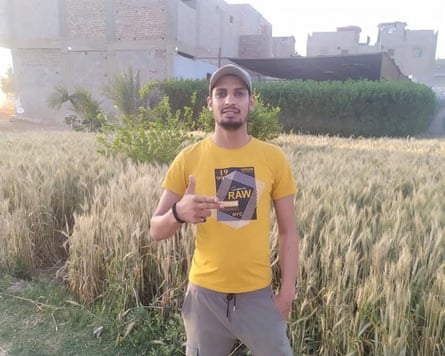
In his four years on death row, Essam al-Shazly’s mother was his only contact with the outside world. During their daily calls she would calm his fears, control her own tears and listen to his hopes of returning home.
Speaking from the family home in Hurghada, a tourist resort on Egypt’s Red Sea coast, she says he would tell her, “Mom, I talk to you because I want to forget what I’m going through. Don’t ask me anything about prison.”
Right up until the end, she thought Shazly, 28, would escape Saudi Arabia’s “horrifying” surge in executions under the rule of the crown prince, Mohammed bin Salman. Last year saw a record 356 people put to death in the country.
“I was always thinking about the day he would come back,” she says. “I was going to take him around in the car and show him all the places he once knew. I was planning to buy a new dress for that day too.”
Shazly had been found in the Red Sea off the west coast of Saudi Arabia near a floating car tyre that officials say contained amphetamine pills, opium and heroin. His mother says he had been thrown into the water by smugglers.
“He thought it was a minor issue and just prison. He called me, crying: ‘Mom, they’ve sentenced me to death.’ He was terrified.”
Shazly’s mother, who wishes to remain anonymous as many critics of Saudi Arabia’s policies have faced threats and abuse after speaking out, says that far from being a drug trafficker her son fished for a living and was coerced into smuggling, then forced into a confession by Saudi officials. She says his death sentence was “unjust” and had expected a reprieve.
“The fault lies with the judge; don’t they have any mercy at all? Drugs are harmful it is true, but you caught a carrier, he is not a dealer,” she says. “Punish him for that.”
While Saudi Arabia tries to project a benign international image through hosting major sporting and cultural events, including 2034 World Cup, the execution of hundreds of mostly impoverished foreigners for non-violent drug crimes has gone largely unnoticed and unreported. In some cases, they were sentenced to death for trafficking drugs in return for the promise of just a few hundred dollars.
His mother says the families of those on death row receive little help from their embassies and cannot afford to pay for lawyers to argue for more lenient sentences. “We are poor and live day by day,” she says.
Human rights groups describe their trials as “deeply flawed” and “involving confessions extracted under torture”.
Shazly had once told his mother of a dream he had: people were trying to kill him, but he had miraculously escaped. “This is a message from God that he will save you,” she told him.
But after his appeal failed, Shazly told his mother not to hire a new lawyer. “Keep this money for my sisters. If I am destined to die, I will die,” he told her.
On 16 December, she had been waiting for his daily call, but when her phone rang, it was not Shazly. It was his cellmate.
“He [his cellmate] told me that the guards had come and taken Essam at eight o’clock in the morning and that his last words had been a request for forgiveness from his family; me, his father and his two sisters. He told me to pray for him.”
Shazly spent his final days in one of the country’s most notorious prison blocks, in the northern Saudi city of Tabuk. So many people transferred there were executed last year that inmates nicknamed it the “death wing”. Shazly told his mother they went for days without seeing daylight. “Mom, we don’t see the sun,” he told her.
In December 2024, there were 33 Egyptians on the wing, including Shazly, all facing execution for non-violent drug offences. Just over a year on, just six are alive.
Up until the end, his mother says she held out hope that her son would have his sentence commuted to a prison term. “I was counting the days, thinking that if he is not executed this year, then maybe there is hope.”
A plea for clemency, filed as late as last November, highlighted serious inconsistencies in his confession. In one statement, Shazly said he was unaware of what was in the baggage found next to him in the sea; yet in another, he appeared to describe the quantities and contents of the drugs.
His clemency petition also noted that Shazly had suffered from severe depression and had been admitted to a mental health facility in Egypt before being arrested by Saudi officials. His mother says he had temporarily been admitted to hospital while in Tabuk after refusing to eat the meals provided at the prison.
“I think, for a while, he wasn’t eating at all. He told me afterwards, when he had got out of hospital and recovered a little, that he wanted to die.”
As she mourns her son’s death, there will be no final chance for his mother to say goodbye at his funeral. The legal action charity Reprieve says Saudi Arabia does not return the bodies of those executed or inform families of their burial place.
Saudi officials said last month that they would continue to impose the “severest penalties prescribed by law against drug smugglers and traffickers, given the loss of innocent lives, the grave corruption it inflicts on youth, individuals and society, and the violation of their rights”.