1 month ago
56
1 month ago
56
Drone footage of dozens of stingrays in the ocean off New York has captivated beachgoers and marine enthusiasts, offering a rare bird’s-eye view of a species that scientists say has visited the area for decades.
The footage was captured last Friday off the coast of Southampton on the Long Island peninsula by Joanna Steidle, a Hamptons-based professional drone pilot known for her aerial ocean shots. It shows cownose rays gliding through the water en masse near the surface.
Describing the rays in a separate drone shot last week, Steidle said on Instagram: “While filming these I can feel my heartbeat and breathing align with their wings flapping....it is in these moments I feel completely connected and present.”
The sighting raises the possibility that the species is migrating farther north and appearing in the area more consistently as ocean temperatures rise, or could simply indicate that increased drone use is making everyday wildlife activity more visible to the public, various experts said.
The video appears to show hundreds of cownose rays swimming in a group that some refer to by the collective noun “fever”, as in a fever of rays. The species is a large, migratory elasmobranch, a subclass of cartilaginous fish, named for their distinctive high-lobed head resembling a cow’s nose. With wing spans stretching up to 3ft (1 meter), the shy and non-aggressive cownose ray feeds mostly on bivalves, including clams and other bottom-dwelling prey.
The rays typically arrive in Long Island waters in the warmer months, following water temperatures that suit them as they migrate north from the Chesapeake Bay, the mid-Atlantic estuary, and other waters farther south.
As ocean temperatures rise rapidly around the world, driven largely by climate change, scientists say, warmer waters could be contributing to changes in the timing and range of the rays’ migration.
Speaking about the sighting, Dean Grubbs, associate director of research at Florida State University’s coastal and marine laboratory, said: “This occurrence probably does represent a northern shift in the migration due to temperature. Historically, there would be some cownose rays that would make it up to Cape Cod or so in small numbers during warm years, but the big schools would terminate the northern migration around Chesapeake Bay. Now, as ocean temperatures warm, the northern migrations of a lot of species are shifting further and further north.”
Grubbs pointed to blacktip sharks as a precedent for a northward shift. While that species was rarely seen north of North Carolina in the 1970s, he said, it had become common in Virginia and Delaware by the 1990s and is now frequently found in New England during warm summers.
Ryan Wallace, an assistant professor of environmental studies and sciences at Adelphi University, said cownose rays generally prefer water temperatures 70-79F (approximately 21-26C), meaning New York’s warm, coastal waters could drive them to migrate north earlier in the spring and remain in the region longer.
“Water temperature kind of dictates that timing, and so that can then trigger – as the drone footage had captured – these large fevers, which can be hundreds, even thousands in some cases,” Wallace said.
Cownose rays, however, are not new to Long Island.
“The cownose rays are very common, often in very large groups, along beaches of Long Island, New York and Long Beach Island, New Jersey, in the surf and also in the quiet bay waters behind the barrier islands for at least the last 25 years,” said Thomas Grothues, associate research professor at Rutgers University, in New Jersey. “They are ‘newly’ discovered by beachgoers every year and are frequently mistaken for sharks because their wingtips protrude,.”
Matthew Ajemian, associate research professor at Florida Atlantic University’s Harbor Branch Oceanographic Institute, said cownose rays have been documented in New York’s waters since the 1800s. While there may be more public sightings, he said, researchers must also consider how advances in drone technology have changed the way wildlife is observed by the general public and experts alike.
“People are seeing them, I think, more frequently [in real life and online]. We also have to be aware of our observer bias too, because it’s so much easier for us to capture these types of things [nowadays],” Ajemian said, adding: “We have drone technology, which really helps with some of the capacity to see things that are relatively rare, although I guess the correct term for its abundance within New York is ‘uncommon’.”
Echoing Ajemian, Kevin Weng, an associate professor at College of William & Mary Virginia Institute of Marine Science, said drones are particularly valuable for observing cownose rays from above, but researchers need to account for where and how often those observations are made.
“Drones, amazing. What we need to understand is the distribution of observation effort,” he said.
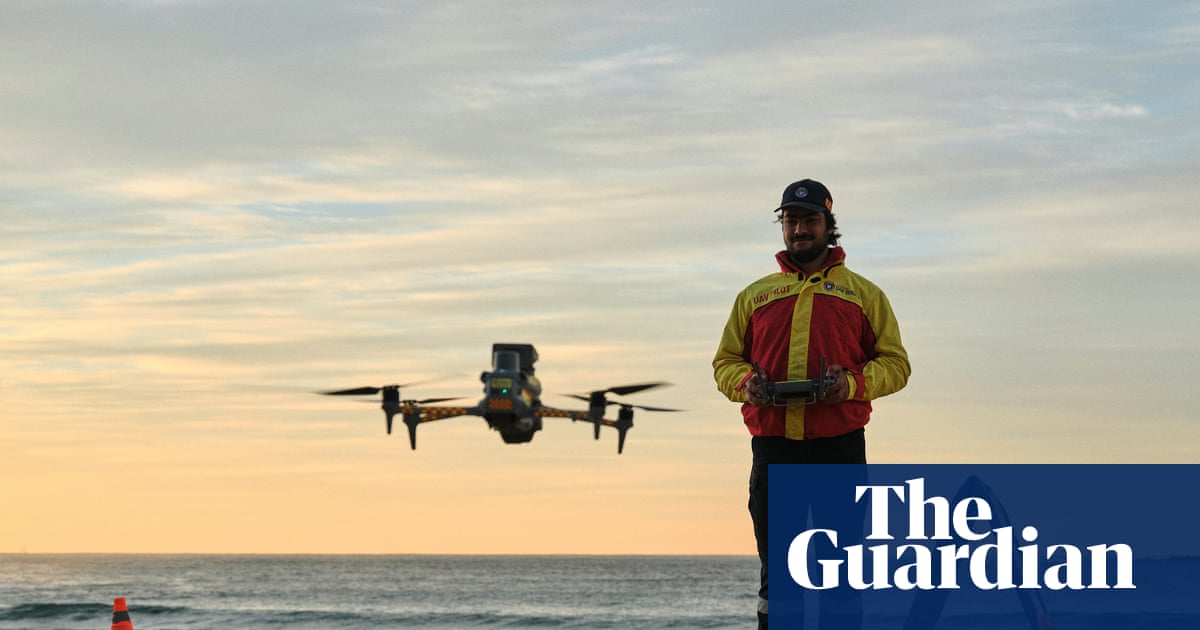
Still, researchers say drones offer a valuable new tool for studying cownose rays, especially when it comes to estimating their size and movement.
“Drones are definitely giving us views and a perspective we haven’t seen before for a lot of species. Estimating population abundances for cownose rays is particularly difficult because they travel in such large schools. I think aerial drones may be a useful tool for estimating abundances of species like cownose rays that do spend a substantial amount of time near the surface,” Grubbs said.