2 months ago
62
2 months ago
62
A hillside “battery” outside Plymouth in Devon has begun generating electricity using a first of a kind hydropower system embedded underground.
The pioneering technology means one of the oldest forms of energy storage, hydropower, can be used to store and release renewable energy using even gentle slopes rather than the steep dam walls and mountains that are usually required.
The design means the principles of hydropower could be used as a form of “long duration energy storage” in many more locations across the UK, and the world, than traditional hydropower dams. The projects could be quicker and cheaper to build too.
Engineers at RheEnergise built the project to mimic the UK’s traditional hydropower plants, which have powered the grid for decades by using electricity to pump water uphill when power supplies are abundant, and later releasing the water back down through turbines to generate electricity when supplies are short.
But instead the company’s “high-intensity” hydro project uses a mineral-rich fluid, which has more than two and a half times the density of water, to create the same amount of electricity from slopes that are less than half as high.
Stephen Crosher, the chief executive of RheEnergise, said the government-backed project was able to consistently meet its goal of generating 500 kilowatts, or enough electricity to power 400 homes for a year if run continually, in a vote of confidence for the technology as the company prepared to build commercial-scale projects around the world.
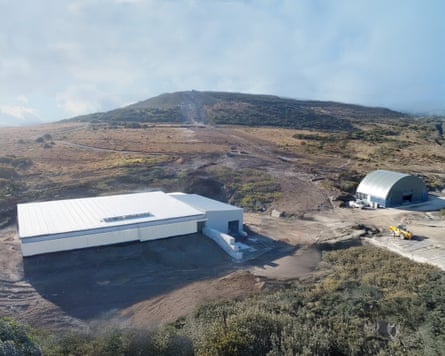
RheEnergise said it was in talks with independent developers in the UK, Italy, Poland, Spain and North America to build the first commercial-scale project within the next three years. It expects to partner with larger utilities to develop larger projects in the 2030s, when widespread use of renewable energy is expected to make long-duration storage options highly sought after.
The UK government has made more than £69m in funding available to develop long-range storage options and believes that using this technology could reduce the cost of meeting net zero by helping to manage variation in wind and solar power output by storing extra-low carbon generation for longer periods of time.
This could reduce the amount of fossil fuels needed to top up electricity supplies when renewable energy is low, and reduce how often the system operator is forced to pay wind and solar farms to stop generating when their output threatens to overwhelm the grid.
Patrick Vallance, the minister for science, innovation, research and nuclear, said: “Storing energy will play an increasingly important role as we transition to clean power. RheEnergise’s first-of-a-kind system has the potential to strengthen our future long duration energy storage capabilities. Scaling up innovations like these is essential as the UK’s energy demand grows and we move to a clean power system that we control.”