2 months ago
37
2 months ago
37
Genna Freed should have been in the mood to celebrate. On a cloudy November day in 2022, her mother, Julie Newman, was about to complete her final round of radiation, after being diagnosed with breast cancer in September. The whole family, a close-knit bunch, was gathering with balloons and signs.
But Freed, then a few weeks shy of her 31st birthday, was carrying a secret. Spurred by her mother’s diagnosis, she had her first mammogram a couple days earlier, and it had turned up a suspicious spot. Now she needed a second, diagnostic mammogram, and likely a biopsy. She found herself walking a surreal sort of tightrope, caught between relief that her mother’s treatment was over and fear that she might soon be starting her own.
“I went to the radiation center that morning, celebrated my mom having her last radiation treatment, had breakfast with everyone,” she recalls. “And then quietly went back to the medical campus, to the building across the street, to have my next set of scans and imagery done.”
Two weeks later, on 9 December 2022, Freed learned she had an early form of breast cancer called ductal carcinoma in situ (DCIS). Telling her mom, she says, was excruciating: “I just remember being like, I don’t want to give her this news, but I also cannot keep this from her.” Just three months out from her own diagnosis, Newman, now 68, was shocked. “It was like a kick in the stomach,” she says. “I couldn’t believe it.”
How double diagnoses can affect families
Newman pivoted from patient to caregiver, helping Freed’s husband with the couple’s two-year-old daughter while Freed recovered from her double mastectomy. Then Newman learned she needed a second lumpectomy, and Freed checked on her frequently; Newman set up a meal train for Freed from her recovery chair. It was a relentless rush of role-switching, says Freed, based on who was feeling better that day: “It felt like we were living through hell.”
Back-to-back cancer diagnoses can have a profound psychological impact, unearthing sadness, helplessness and fear, says Dr Neha Goyal, a clinical psychologist at the University of California at San Francisco’s Helen Diller Family Comprehensive Cancer Center.
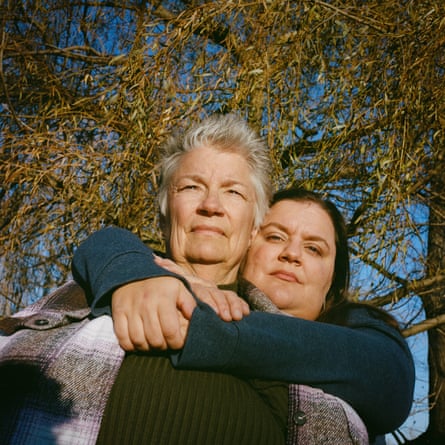
When someone – let alone two members of the same family – is navigating a cancer diagnosis, “there’s such a sense of loss of control”, she says. The people rallying around them may grapple with their own anxiety, grief and exhaustion. “It affected the whole family,” agrees Newman. “It was a very trying time.”
Feeling powerless to protect
Last January, three weeks into recovery from her own double mastectomy, Janet Parks, 62, found out that her 36-year-old daughter had breast cancer. “That was harder than my own diagnosis,” she says. “As a mother, your job is to protect your child at all costs, and I couldn’t do that.”
While the majority of breast cancers occur in women with no family history, “we know that women who have breast cancer in their family have an elevated risk”, says Dr Nan Chen, a breast medical oncologist at the University of Chicago. In fact, having a first-degree relative like a mother, daughter or sister who develops breast cancer almost doubles your risk.
Only 5% to 10% of breast cancers are totally hereditary in that they result directly from a mutated gene – like BRCA1, BRCA2 or others – passed down from parent to child, says Chen. About 15% to 20% are considered “familial”, she says, meaning that while no specific gene mutation has been identified, there is still a family link.
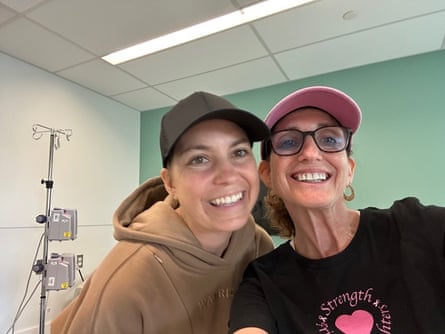
A woman with a BRCA mutation faces a 45% to 85% risk of developing breast cancer by age 70, compared with the average lifetime risk of about 13%. Parks’s daughter, Alicia Schlossberg, inherited the BRCA-2 mutation from her mother; her chance of passing it down to her own daughters, aged 2 and 5, is 50%. “I’m obviously very nervous that this is going to be their reality someday,” she says.
Freed too is concerned about her daughter’s future. She inherited a BRCA-2 mutation from her father’s side, and wants to give her five-year-old daughter the choice to be tested for it when she’s older. The weight of the genetic gamble keeps her up at night, she says: “Am I borrowing all of this worry from tomorrow for nothing?”
Same diagnosis, different experiences
The median age of diagnosis is 62, but breast cancer rates in younger women are steadily rising; about 10% of new breast cancer cases in the United States occur in women under the age of 45.
Younger women tend to be diagnosed when their breast cancer has progressed to a later stage, and with more aggressive subtypes that require chemotherapy. But beyond the practical disparities, getting breast cancer in your 30s versus your 60s is “emotionally and psychosocially a completely different experience”, Chen says.
Lindsey Baker was diagnosed with stage two breast cancer in December 2020 at the age of 35. The week of Baker’s double mastectomy in 2021, her mother, Shelley Pozez, learned she had breast cancer, too.
“It felt like a similar experience, but on a very different path,” says Baker. She was single, lived alone and dreaded the intricacies of dating after cancer treatment; her mother had a supportive long-term partner. Pozez, then 66, already had children; Baker – who inherited the BRCA-1 mutation, which also raises the risk of ovarian cancer, from her father’s side – made the tough decision to remove her ovaries, surrendering her fertility and plunging prematurely into menopause. Pozez was retired at diagnosis; Baker, who was the chief operating officer of two non-profits, worked throughout treatment, bringing her laptop to all 16 rounds of chemo.
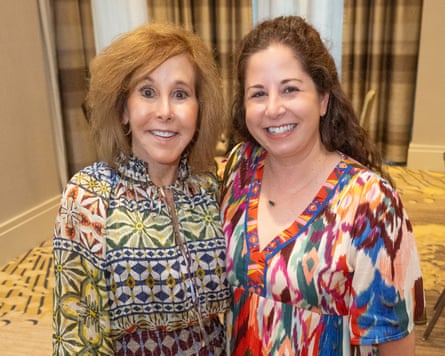
Risk of recurrence is nuanced and depends on various factors. But Baker’s cancer, caught later than Pozez’s, was also growing more aggressively. “I think the chances of mine coming back are higher,” she says. “That still weighs on me differently.”
Baker and Pozez diverged when it came to discussing what they were going through, too. While Baker drew solace from hearing other women’s experiences and sharing her own, her mom “was just a lot more private about it”, she says.
Similarly, Freed is more candid about her cancer journey than her mother. After her mastectomy, she opted for a form of breast reconstruction called aesthetic flat closure. “If somebody’s like: ‘Hey, what does a flat closure look like?’, I’m like: ‘Do you want me to take off my shirt?’” she says. “If my mom were in that boat, she’d be like: ‘You want me to do what now?’”
Sylvia Morrison, 61, handled her breast cancer diagnosis in 2011 the way she’d seen her mother handle one several years before. “She didn’t really talk about it,” she says. “She showed no fear, no concern.” It was only when Morrison’s daughter, Monisha Parker, was diagnosed three years later at age 28 that she recognized that there might be another way.
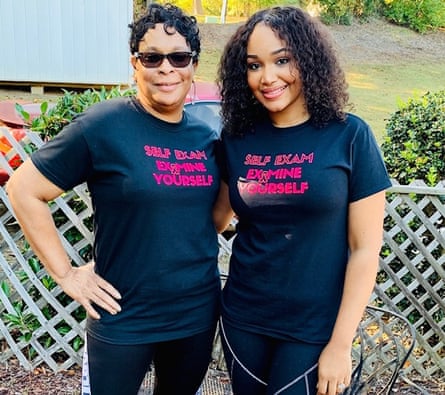
“I was a lot more open and willing to share my story,” says Parker, who started a blog, Purpose Painted Pink, about her experience as a young cancer patient. “I definitely think it’s a generational thing.”
Morrison, whose cancer recurred in 2019, has regrets about her prior stoicism. “I’m still dealing with the mental part of breast cancer,” she says. “I’m over the physical part of it, but the mental part of it I didn’t deal with.”
Watching her daughter’s response to cancer has encouraged Morrison to voice her emotions more often, in all aspects of life: “Monisha dealt with both sides of it, which I applaud her for, because she did something I didn’t do.”
The benefits of mutual support
Morrison worried, would her cancer experience scare her daughter? “But I think it had the opposite effect,” she says. “Once she got over the initial shock, she was able to draw strength because I went through it.”
In the spring of 2022, Allison Mertzman, now 40, was recovering from chemo and undergoing radiation for breast cancer, when she learned that her mother, Susan Pearlman, now 66, had the disease, too. “I was in such survival mode at that point that I was like: ‘Alright, hop on my boat, we’ve got to survive this together,’” she says. “We almost became teammates.”
Already close, the two traded advice, words of encouragement and even post-mastectomy garments. Now that they’re both cancer-free, Pearlman says, she worries every time Mertzman goes in for a scan. “But I also know what that’s like. I feel the same thing,” she says.
Weathering a life-changing illness alongside a loved one can often be “a source of even stronger connection”, says Goyal. At the same time, she cautions, it can also further any existing schism. “It doesn’t take away any underlying issues that may be present, and in fact can amplify them,” she says. “It depends on the dynamic.”
Balancing grief and gratitude
For Freed, facing diagnosis, treatment and survivorship alongside her mother has yielded conflicting emotions. She’s grateful that her cancer was caught early, and that she and Newman are both still here. But she grieves all the losses: her breasts, time with her daughter and a sense of normalcy she’ll never entirely get back. “It’s two very diverging feelings,” she says.
Parks too understands this dichotomy; after all, her diagnosis was devastating, but it also prompted her daughter to visit an oncologist and schedule an MRI, which detected cancer that likely wouldn’t have been seen on an ultrasound or mammogram until much later.
“I see it as a blessing, honestly,” she says.
For Schlossberg, it’s bittersweet that something monstrous had to happen to her mother for something miraculous to happen to her.
“I hate that my mom had to go through this, and I hate that we even see her cancer that way,” she says. “But it really did save my life.”
-
Holly Burns is a writer based in the San Francisco Bay Area