1 month ago
61
1 month ago
61
Have you got the “luteal uglies”? I’m not trying to insult you, merely deploying the latest hormonal buzz phrase on social media, which refers to the phase in a woman’s cycle, two or so weeks between ovulation and menstruation, when she apparently feels at her lowest and most unattractive due to a drop in oestrogen levels.
Women’s hormones have become trending topics and, as someone who only found out what a “luteal phase” is when she Googled it, mid-fertility panic, in her late 20s, I am somewhat in awe of the expertise with which younger women discuss their menstrual cycles now. They’re just so incredibly literate.
Beyond being taught at school about periods and my mum explaining PMT, the impact of hormones on our emotional lives wasn’t discussed much when I was younger. In the “post-feminist” 1990s and early 2000s, female biology was seen as something to be suppressed and overcome, and the emphasis of most sex education was preventing teenage pregnancy. Being on the pill from 14 didn’t exactly put you in touch with the natural rhythms of your cycle, either, though of course it had other benefits (such as preventing the aforementioned teenage pregnancy).
You can understand the rationale, which was that female biology should never hold you back. Yet sometimes that felt like pretending your reproductive system didn’t really exist, or that you should simply push through the more difficult, painful aspects. “My period always comes as a surprise to me,” a friend said recently. She’s not the only one.
There were always girls who diligently marked the days in their diaries, but a large proportion of us barely kept track, unless of course your period arrived very late (prompting an urgent trip to the school nurse). By contrast, today’s young women have access to a plethora of period tracker apps and products, not to mention an avalanche of content pertaining to menstruation, ovulation, the luteal phase and how our hormones can impact everything from our psychological states to our body image to our sex lives. This also applies to postpartum and older women, with topics such as matrescence, perimenopause and menopause being discussed far more widely.
Despite the proliferation of psychobabble and therapy-speak, there’s also some good science. I can’t help but be impressed. Knowledge is, after all, power. I’m glad I was taught that biology doesn’t have to be destiny, but it shouldn’t have meant needing to play catch-up on educating myself about my own reproductive system. Knowing what’s going on in your body and having the language to describe it can have all sorts of psychological benefits. It’s comforting that the negative body image and the tiredness, bloating and other symptoms that come with the luteal phase can be fleeting. There’s a reason you feel this way, so maybe you don’t need Botox, you just need a rest.
And maybe, actually, you don’t want to have an affair, you’re just ovulating, which can increase your libido (or, to quote another friend, cause you to “go a bit feral”) and make you appear extra attractive to members of the opposite sex.
For me, it has been important to understand that a monthly desire to explode my life is probably a mild form of premenstrual dysphoric disorder (PMDD). Knowing this not only helps me warn my loved ones in a “here be dragons” sort of way, but also prompts me to try to take better care of myself instead of deciding to get divorced and move to Crete to become a ceramicist. I don’t think my symptoms are serious enough to warrant treatment, but the increase in online discussion about these issues has helped equip many with the language needed to access diagnosis. Misinformation can be an issue, though, which is why the curriculum needs to catch up.
The fact is, hormones can shape our lives in profound ways. It’s something I explore in my fiction. That is not to say that we should always let them. We must, too, be vigilant. We have seen, especially in the US, how women’s cycles can be co-opted to forward patriarchal, authoritarian agendas, as in the period tracker data scandal, and Maga’s attempts to put women off taking birth control. I’m less worried about women’s willingness to adopt labels than I am about capitalism’s inevitable response to labels: a “fix”, whether that’s a pill that can “cure” the luteal uglies, an app that “tracks” your cycle and sells the data on, or something even more sinister.
after newsletter promotion
Usually, when the mainstream media talks about this subject, it is almost always in a pro-natalist context of women needing better “fertility education” so that they don’t leave it too late to have babies, despite the fact that the biological clock is one of the few things we are very used to being lectured about. That’s why hearing reproductive education discussed in the context of aiding women’s self-understanding, wellbeing and mental health feels so radical.
The information itself isn’t new – I could have looked it up in a textbook – but the way of talking about it is. It’s emancipatory, in that it encourages women to know and take control of their bodies, but it’s also realistic about the reality of living in those bodies. Women of previous generations have also navigated that balance – they weren’t all sold on the notion of “burying the body” – but never so many, all at once. It’s basically a movement, and I am here for it.
-
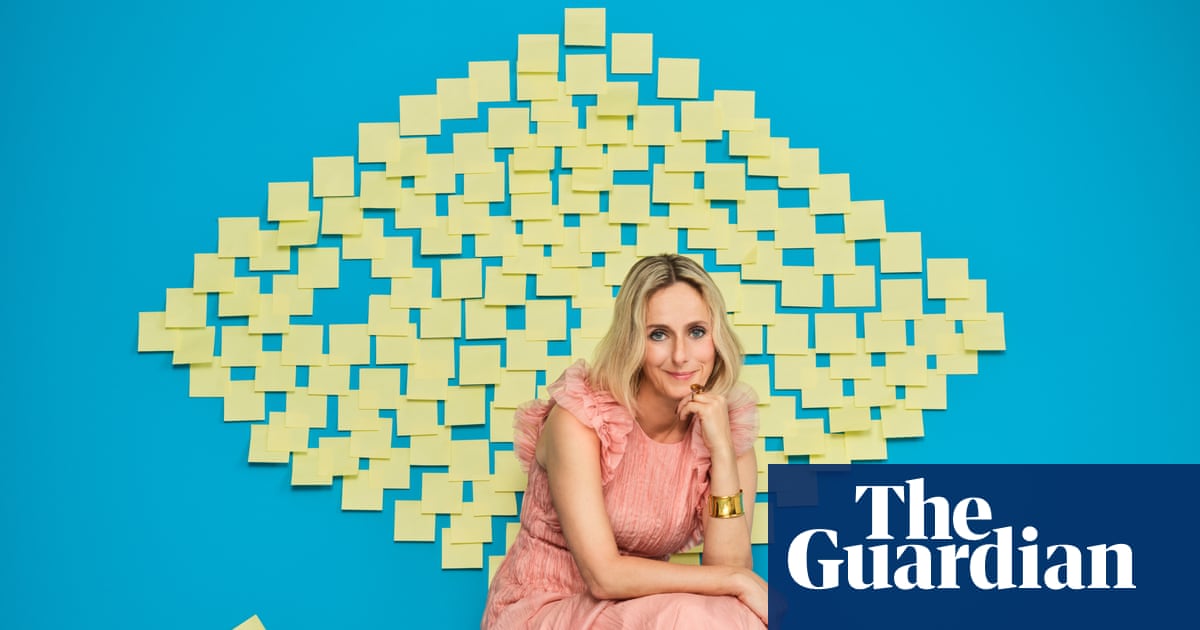
Rhiannon Lucy Cosslett is a Guardian columnist and the author of Female, Nude