3 months ago
59
3 months ago
59
Six years ago, Guadalupe Ayala was left distraught after her 25-year-old son, Alfredo Ezequiel Campos, was taken from his home in Tlajomulco. It was another name added to the list of more than 15,000 people recorded as missing in the western Mexican state of Jalisco. In the state capital, Guadalajara, a major traffic junction plastered with posters of missing people has been renamed the “roundabout of the disappeared”.
There are more than 100,000 missing people in Mexico – one of the tragic consequences of the country’s deadly drug crisis, with most of the “disappeared” believed to be abducted by organised crime groups and drug cartels. The total is likely to be even higher as many people are not reported missing for fear of retribution.
Discovering the fate of missing loved ones can be fraught with danger, with relatives threatened or killed for trying to find their relatives. They can also become dependent on contact with organised crime groups for tip-offs about locations where rival groups have buried bodies.
In an effort to speed up the searches and reduce the risks for mothers such as Ayala, local volunteer groups and state authorities have initiated a new project to help locate burial sites, including using pigs to replicate how vegetation grows on burial sites.
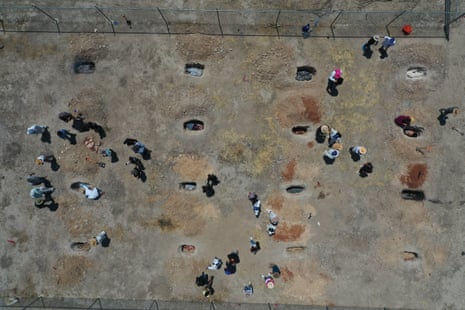
Scores of pig carcasses are being buried across 16 plots on the grounds of the University of Guadalajara – each simulating a different condition in which a real body might have been interred, such as wrapped in a blanket, dismembered, cremated or buried with stones above them. Two plots have been left empty for comparison.
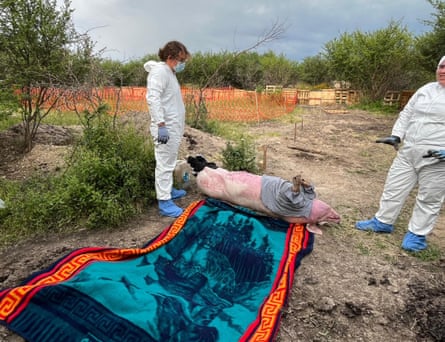
Pigs are used due to their similarity to humans in terms of anatomy, genetics and physiology. Researchers have already noticed differences in the growth of plants across the burial plots, with vegetation appearing straight away above the pigs wrapped in blankets.
“Even though the ground might be dry, the blanket retains water,” says Tunuari Roberto Chávez Gonzalez, from the Jalisco Search Commission, a state agency that organises local searches with relatives and is running the Found project with collectives of mothers and local and international universities, including Oxford University.
At other project sites, the researchers have found sunken earth acts like a dam, capturing more water and leading to more growth, with Gonzalez saying they had recorded 15 different plants that correspond to the presence of bodies.
As well as the pig burial sites, the commission is experimenting with geophysical technology such as electrical resistivity tomography, which can create images of the soil below the surface by measuring variations in voltage, and multispectral cameras on drones, which can detect substances in the soil that often indicate the presence of decomposing remains, such as nitrogen and potassium.
Last year, at a search of an abandoned house in the city of Zapopan, where crime groups had been known to sell drugs, a mothers’ collective had discovered about four bags with remains. The use of an electrical resistance device enabled the Jalisco Search Commission to discover 29 more bags and three full bodies within a few hours.
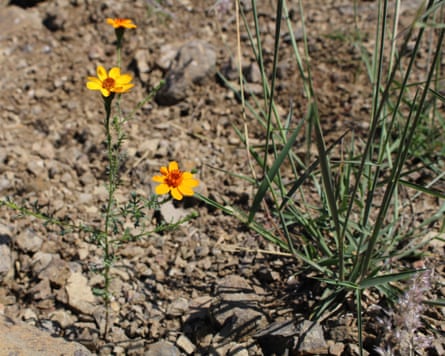
Some mothers’ search groups have discovered that the cartels often dig graves near two specific trees: huisaches, or sweet acacia, and mesquites. These trees are favoured because they provide shade while digging graves but their taproots grow primarily downward, avoiding thick roots that might obstruct the excavation.
Through the use of artificial intelligence and drone flights, researchers now believe they can use such insights to help prioritise search areas and speed up the potential discovery of clandestine graves.
For Ayala, the search for her missing son was brought to a quick but tragic conclusion, aided by the Fundej collective, a group of local mothers and volunteers looking for missing children.
after newsletter promotion
They discovered four arms, with forensic tests showing that one belonged to her son, followed by more body parts over the following months.
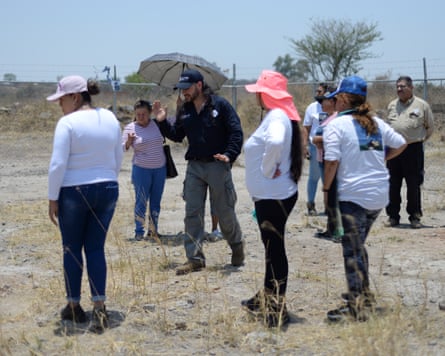
“When you finally find the person and find them segmented like that, that’s the worst nightmare. You get into your head many things,” says Ayala. “You wonder how he was tortured, how was his death?”
The subsequent coroner’s report was a traumatic read. “I never stopped crying when reading it,” she said.
“One of the things that made me cry most was when it said that he had been exposed to the elements, especially to cold, because it showed on the internal organs. Before he died, he was very cold.”
While welcoming the new innovations speeding up the search for the missing, Víctor Hugo Ávila Barrientos, a Jalisco state commissioner, accepts that it does not solve Mexico’s drug crisis.
“Even if I had a thousand searchers, it’s going to keep growing if we don’t prevent [deaths from happening]. But in the meantime,” he says, “we hope to develop the expertise to find those who do disappear as soon as possible.”