3 months ago
72
3 months ago
72
The past year was another one of record-setting heat and catastrophic storms. But across the US, the climate crisis showed up in smaller, deeply personal ways too.
Campfires that once defined summer trips were never lit due to wildfire risks. There were no bites where fish were once abundant, forests turned to meadows after a big burn and childhood memories of winter wonderlands turned to slush.
We asked Guardian readers to share some of the ways these changes have affected their lives this year, and how they’ve tried to adapt.
The Pacific north-west dad: ‘My children have no memories of the winter I grew up with’
Growing up near the Puget sound, Heath Breneman remembers his dad shoveling drifts off the roof of his garage and the powder delicately collected in his pant cuffs after a day spent sledding. He recalled how the snowplows would push enormous piles off the parking lot of his elementary school to create the perfect berms for kids to play on. He can still conjure the satisfying crunch of how it sounded under his boots and the thrill of the chill each year that made warmth feel earned.
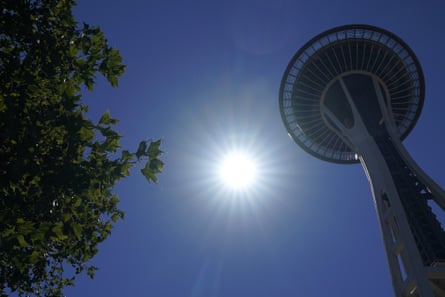
Now he’s a father of four, and his kids haven’t felt the same magic. Temperatures have been steadily rising across the region, with averages expected to climb up to 6F annually by midcentury. Scientists have warned that precipitation will increasingly fall as rain rather than snow.
“My children have no memories of the winter I grew up with,” Breneman says. “The shift to a true two-season climate the past 20 years has been swift and stark.”
He has taken his kids, who now range from their teens to their 20s, places where they can sled, but the enjoyment and life in the moments he associated with winter “is hard to impart”, he says.
“There’s a part of the world you can tell them about,” Breneman says. “But it is like the old guy next to the campfire telling us about the lights that used to be in the skies.”
The Appalachian trial hiker: ‘There wasn’t any water at all’
Maria Martin looked down at the cracked earth with dismay. This was the second dried stream she’d come across on a five-mile stretch of the Appalachian trail, the popular hiking route that stretches across thousands of miles and 14 states that hug the US east coast, where she spent the summer.
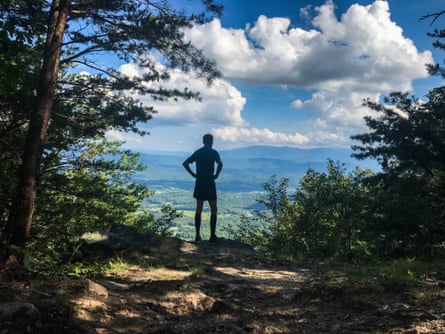
Martin grew up traipsing through the backcountry in the mid-Atlantic, where she says water is typically abundant even in the warmer months. “It is famously very humid and wet,” she says. The concerning conditions stood in sharp contrast to a lifetime of memories of camping in the summers there with her family, filled with sporadic downpours and swimming holes.
But on a hot morning last August, “there wasn’t any water at all. It wasn’t even mud – it was just dirt”, she says, recounting how she had to search the woods for a place to fill her empty canisters. “I heard the same thing from hikers heading north or south,” she adds. “There was one section of the trail that had a nearly 30-mile gap between viable natural water sources.”
Depleted water sources and spiking temperatures aren’t the only climate extremes that have hindered those attempting the renowned through-hike. Parts of the region are still in recovery from the devastation caused by Hurricane Helene, a category 4 storm that struck the south-eastern US in September 2024. Last spring, strong storms pummeled the landscapes and flooded low-laying areas, Martin says, leaving behind the perfect habitat to help mosquitoes thrive. Hordes of the bloodsucking buzzers descended on campers for the rest of the summer, she says, sending them scurrying into tents even before the sun set.
But by that August morning, pools of water were exceedingly sparse. In the span of a few months working for the Appalachian Trail Conservancy, Martin experienced the extremes flipping from wet to dry.
Lashed by the heat and unsure that there would be other options to hydrate, she decided to double back to an area where she’d spotted an outflow from a nearby beaver pond. It wasn’t an ideal source: The water was tinged with orange and smelled like rotting plants. She filtered it twice.
These sharp seasonal shifts are adding urgency to questions about overuse and recreation management in increasingly natural areas. They are also creating new safety issues even for those with much outdoor recreation experience. Water scarcity is a challenge that can turn dangerous quickly for hikers and campers in any environment.
“I can handle it being hot,” Martin says. “But when you can’t get water, that’s something else completely.”
The gardener whose growing season is shrinking: ‘The plants dry up and die’
For the second year in a row, Ky Gress wasn’t able to grow a single squash. A lush home garden fills Gress’s front yard in Sacramento, California, the result of more than a decade of dedication. “Nothing tastes better than perfectly fresh food,” Gress says, adding that she doesn’t use pesticides on her plants and that’s made all the difference.
But the seasons in her community are shifting. With them, the windows to grow things that once sprung to life in the warm, dry northern California enclave are narrowing.
“We can’t plant in the fall like we used to,” Gress says. “The plants dry up and die.” Sometimes it’s the heat that singes her plants past the point of production. Others, an ill-timed hard freeze limits their potential. Lately, she’s noticed that pollinators are visiting less often, even with the scores of plants meant to entice them that line the perimeter of her garden.
To produce the bounty she once enjoyed takes a lot more work and delicate adjustments in timing. She attunes her attention more closely to changing conditions, constantly monitoring soil moisture and sharp spikes or drops in temperature. There’s always a learning curve. Two years ago, her plums were lost to a freeze. Her root vegetables had to be pushed back after summer weather lingered longer. The planting season is growing shorter. “I have had to abandon some plants,” she says.
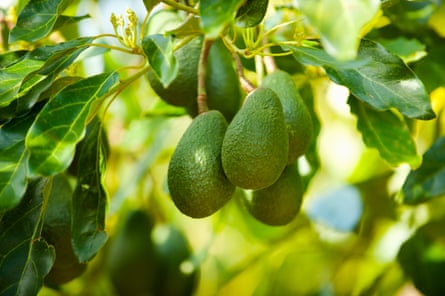
The area where Gress lives was already hot and dry; now bouts of extreme heat and longer periods without moisture have put pressure on plants. The relief once offered overnight, when warmth tends to soften, is disappearing – lows aren’t as cool as they once were.
To expand her garden in changing conditions, Gress has ventured into new varietals, including seeds that are common in northern Africa – cow peas and broad beans, which are drought-tolerant legumes that love warm climates and have thrived in her yard.
“We couldn’t grow avocados in Sacramento – now people have 20ft trees,” she says.
As the conditions shift, it’s become more challenging to produce what she once did. But she’s leaned into the change, adapting to make the most of what otherwise might be a worrying sign. Even when it’s harder, it is always worth it.
“This is what we need, for kids to know the wonder of the garden,” she says.
The wildlife enthusiast mourning the loss of biodiversity: ‘Every year there are less butterflies’
Tim Goncharoff has always loved wildlife. “From deer to birds to the smallest creepy-crawlies,” he says.
Starting when he was a very little boy, Goncharoff would venture into the world to marvel at the butterflies and the birds, all the growing things and the bugs on the ground. “I thought they were all wondrous miracles and I couldn’t get enough of it,” he says.
Over his 70 years, he’s witnessed the brilliant abundance of life in the world around him grow quieter.
“I think a lot of this is about the arc of a long life,” he says, “but I have noticed year by year, that there aren’t so many butterflies. There aren’t so many birds. The variety of species has diminished.”
Roughly 1 million species are threatened with extinction, according to a 2019 assessment from the Intergovernmental Science-Policy Platform on Biodiversity and Ecosystem Services, including roughly 40% of amphibians and a third of reef-forming corals, marine mammals and sharks.
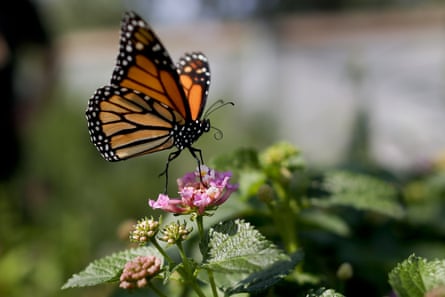
Insects – considered the bedrock to biodiversity and the foundation of most ecosystems on earth – are in rapid decline. About 80% of insect species have yet to be identified and some are disappearing before they can be named.
The Smith’s blue butterfly, which once flourished along the California coast where Goncharoff spent much of his life, has been listed as endangered.
Goncharoff dedicated his years fighting to protect things that were endangered, working as an environmental planner for the city of Santa Cruz, and he says there was always a sense that they were losing ground despite the effort. He hasn’t quit, even though he’s now mostly retired.
He loves to spend afternoons near his home on the Suisun marsh, where the fresh rushing waters of the Sacramento-San Joaquin delta that flood into the salty San Francisco Bay provide habitat for scores of creatures that live on shores and sea.
“I love to go down and watch the migrating herons and egrets and cranes and ducks and geese – it’s just marvelous,” he says. But even along the largest marsh remaining on the west coast, there have been severe declines. “There are times you’d expect to see them and they just aren’t there.”
The animals and plants that he marveled at throughout the years are fading, he says. Goncharoff hasn’t seen a bluebird in years. There are far fewer butterflies.
“I do feel a sense of loss and a feeling of mourning,” Goncharoff says. “But I am determined not to get caught up in that.”
For Goncharoff, the change he’s seen among the landscapes he loves is a call to action.
“There is a lot of damage baked into the system now, but we still have a chance to limit that,” he says. “There’s a lot of good work to be done to keep things from getting worse.”