1 month ago
63
1 month ago
63
After the shock of Sam Neill’s death, I was surprised just how hard the news hit me. I don’t usually take a celebrity death so deeply to heart and yet here I was struggling to stem the weeping. There is no denying he holds a special place in my movie-watching life: he’s Dr Alan Grant from Jurassic Park, for goodness sake. I first saw the Spielbergian masterpiece at the age of five and Neill’s passionate, intelligent and empathetic scientist was the coolest hero my young mind could hope for (when it wasn’t overwhelmed with terror).
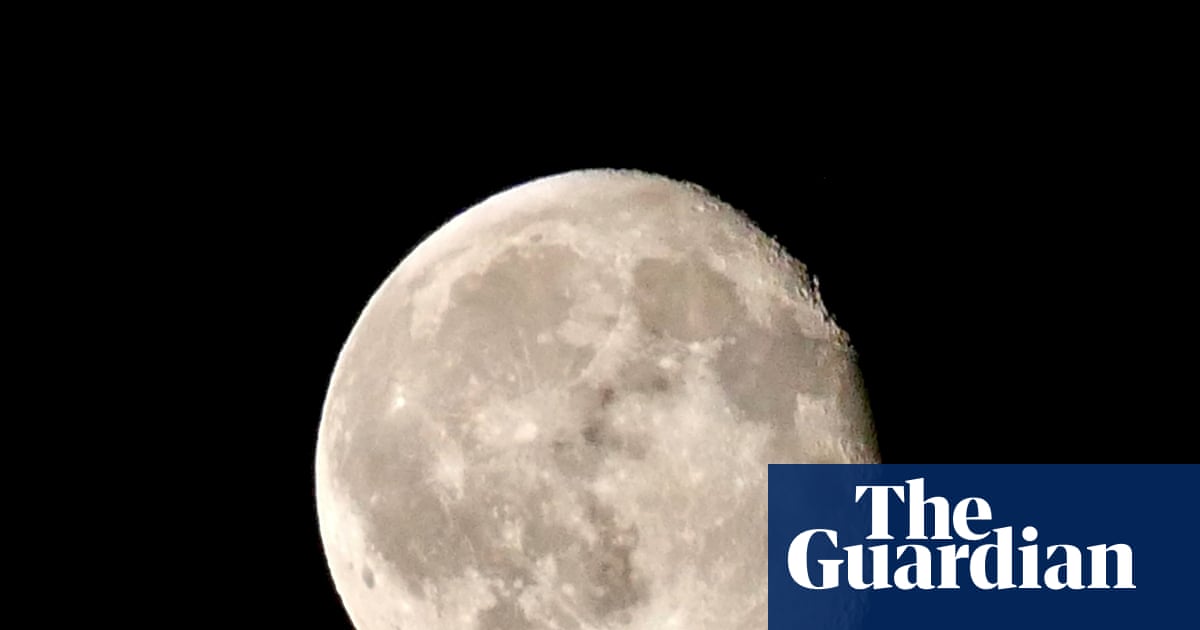
Then, in my early teens, I got introduced to another hero role of Neill’s, the equally passionate, intelligent and empathetic scientist Cliff Buxton, from The Dish. Directed by Rob Sitch, the 2000 based-on-a-true-story drama is a warm hug and a joke from a dear friend. It has a sharp and silly script that belies its charmingly gentle demeanour and it’s about the 1969 moon landing, which has always had the power to get me emotional at the utterance of “One small step … ”
Rather than Houston, the setting is the Parkes observatory in Australia, a towering radio telescope plonked in a sheep paddock. Neill’s pipe-smoking Cliff leads a small team – Glenn (Tom Long), a brilliant but adorably awkward mathematician; the proper Aussie bloke in charge of moving the titular dish, Mitch (Kevin Harrington); and the Nasa man in his horn-rims, Al (Patrick Warburton) – as they track Apollo 11 and prepare to relay the television signals to the world.
While somewhat ragtag-looking, with a habit of playing cricket in the bowl of the telescope, they are a professional unit. (Mitch exclaims as much before hitting a six.) I could spend the whole movie in their company as they expertly navigate their work or chat, tease and bicker, accompanied with sweeping shots of the observatory bathed in sunlight. Combine that with the whirring of hydraulics, flicking of switches in the control room, Classical Gas by Mason Williams on the soundtrack and soaring flourishes from Edmund Choi’s score, and I am soothed by this audio and visual balm.
That, however, is not doing justice to how funny The Dish is. Laughs come thick and fast as we jump, sketch-show-esque, from the “boys at the dish” to a colourful ensemble of characters in the town of Parkes, thrust into the limelight by their tangential involvement in Apollo 11.
One moment men are euphemistically discussing how astronauts go to the toilet using a series of whistles; the next a band has failed to learn the American anthem so plumps for the Hawaii Five-O theme; then over to the dish’s over-officious security guard worrying that his mother will confiscate his Nasa-issued revolver. Bumbling his way through it all (and accidentally calling his wife “the lemon” on account of her yellow dress) is Parkes’s mayor Bob, impossible not to love thanks to a standout performance by Roy Billing.
For me, The Dish is as quotable as Airplane!, Young Frankenstein and the criminally under-seen What’s Up Doc? Growing up with three older sisters, I got to watch many movies before I should have – I mentioned Jurassic Park at five, in the cinema no less – and we’d regale each other with our favourite lines. “You’ve just bullshitted Nasa” in our best Aussie accent was a regular. Ever since my eldest sister died a few years ago, The Dish will always allow me to relive the time I made her snort by mimicking Glenn when, getting a joke far too late, lets out a shriek and mutters the punchline: “Carrier pigeon.”
Only now, though, do I come to the true magic of The Dish: how the humour gives way to unashamed sentimentality. If Neill is the beating heart – having lost his wife a year earlier, Cliff’s determined and avuncular strength provide the most poignancy – then the spine comes from archival footage of the Apollo 11 mission peppered throughout. It’s as if we’re there in July 1969 watching the television or listening to the radio alongside the awestruck faces of Parkes. On reaching the finale of the moon walk, the significance of this world event is captured beautifully.
This utmost earnestness for the subject matter without taking itself seriously is a blend that I find irresistible about The Dish. So when it ends with the words of President Nixon to the Apollo 11 crew – “For one priceless moment in the history of man, all the people on this Earth are truly one” – and Wings of an Eagle by Russell Morris taking us into the credits, I am left grinning, watery eyed and wondering when humanity will feel that way again. No pressure, Artemis.
-
The Dish is available to watch on HBO Max and Stan in Australia