3 weeks ago
131
3 weeks ago
131
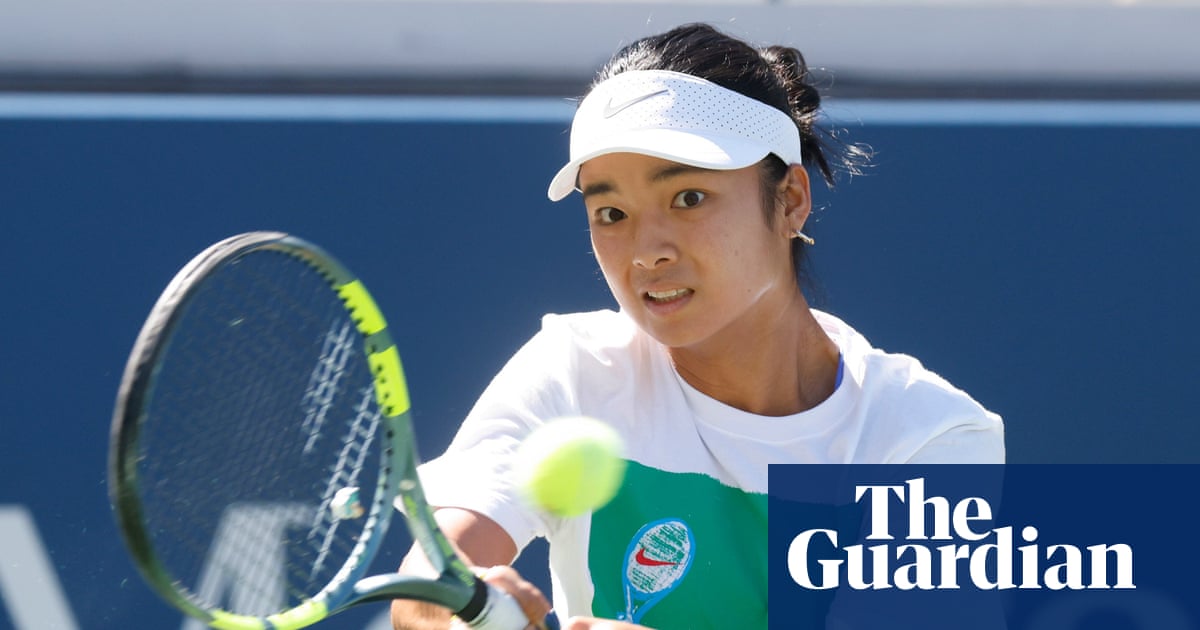
Amanda Anisimova can see the signs now. It is just over three years since the American announced she would be taking an indefinite break for mental health reasons. A brilliant junior, she was a semi-finalist at the French Open in 2019 and seemingly destined for the top, only for her world to be rocked by the sudden death of her father, Konstantin, a few months later. Struggling for motivation and burned out, in May 2023, she revealed she would be stepping away from the sport.
It turned out to be the best decision she ever made. “I learned how important it is to have a great balance on and off the court,” Anisimova says in an interview from New York, ahead of the US Open, where she will try to go one better than last year and win her first grand slam title.
“That’s something that I used to not prioritise so much: how to recharge myself and take time for myself, prioritise my wellbeing off the court. In the past, it was really just a lot of tennis and I didn’t really know how to incorporate those small breaks for myself. I think that’s a big reason why I reached such a breaking point and needed to take that time away from the sport.”
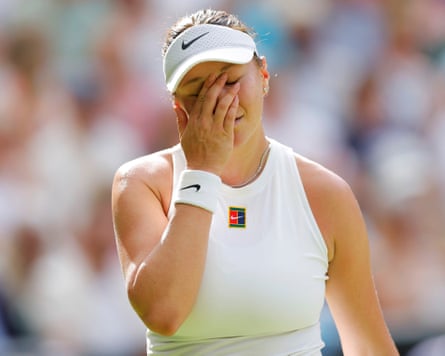
Three years on, Anisimova is better able to feel when things are becoming too much. For a top tennis player, with a tour that’s an 11-month grind, there are not many obvious opportunities for lengthy breaks, but Anisimova finds time for herself. If she is not feeling it on the practice or match court, she takes herself away.
“I feel like I’ve become so much more self-aware now of when I’m anticipating or feeling like I’m reaching that point where I don’t feel as excited or as motivated,” she says. “Those signs are much more alarming to me now, and I catch them a lot earlier than I did before.
“Before, sometimes I felt like that was a normal thing, but now I know that’s not a normal thing to experience or go through. At least not to let it keep happening. It’s obviously normal to get tired or burnt out, and we all have days where we don’t feel like doing the things we need to do. It’s about how to manage that and navigate that. I think that’s been the biggest thing that I’ve learned, and that’s helped me tremendously as an athlete.”
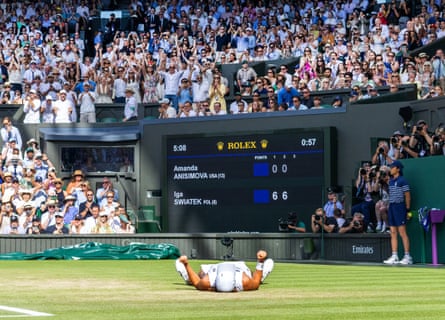
Anisimova finished 2025 at No 4 in the rankings, a remarkable achievement, not least because of what happened to her at Wimbledon. After beating Aryna Sabalenka in the semi-finals with a brilliant performance, she crumbled in her first major final, frozen with fear, her feet stuck, her racket arm feeling like it weighed a ton. The result was a 6-0, 6-0 thumping by a ruthless Iga Swiatek and an unwanted place in the history books as the first woman to not win a game in a Wimbledon final in more than a century.
Many players would never have recovered from the experience but Anisimova’s time away has helped her to see the bigger picture. As painful as the day was, reaching a first grand slam final was a huge milestone. “I try to have a lot of perspective, and I think that really grounds me in a lot of situations,” says Anisimova, who was speaking as an ambassador for Pure Leaf Iced Tea.
“When I take maybe 10 minutes for myself to just kind of reset and think about what it is I’m going through and have that perspective in mind, then I think that really helps me sometimes. And it’s not something that I really had when I was 20, 21.”
after newsletter promotion
Her resilience is remarkable. She took revenge on Swiatek at the US Open to reach a second consecutive major final and pushed Sabalenka hard in the title decider. She won her fourth WTA Tour title in China and ended 2025 by making the last four at the WTA Finals. After hitting No 3 in January, a wrist injury stopped her momentum but she looks back on form, a quarter-final run in Cincinnati setting her up nicely for the US Open, playing at home in a tournament and on a surface she loves. “I feel like I found some rhythm on the court again,” she says. “I’m looking forward to the US Open. Feeling good. It’s my favourite time of the year by far.”
With perhaps the best backhand on Tour, Anisimova has the firepower required of a major champion. Her timing could be very good, too, with many of the leading contenders for the US Open looking vulnerable, including defending champion Sabalenka, whose form has dipped in recent months. Coco Gauff won in Cincinnati but there is an opportunity for someone to come through. One of the best players yet to win a major, there is pressure on Anisimova to deliver, but she enjoys pushing herself.
“I have that eagerness and that motivation to achieve my dreams and win a grand slam one day,” she said. “A lot of the things that it takes to get there, it’s not as pretty or as glamorous as people think. But I also love a challenge, and that’s why I am where I am today. I’m a pro athlete, and you don’t get to the place where you are without being uncomfortable. I think it’s just embracing that. You’re going to be uncomfortable 90% of the time, but I’m so driven by my goals, so that definitely makes it easier and more enjoyable for me.
“It’s always been a dream to win a grand slam. You don’t really think about your dream as winning a [WTA] 1,000. It’s always the biggest thing you can win, whether it’s a grand slam or the Olympics, which both are huge dreams of athletes. For me, it was always the US Open. I think there’s just something about winning a grand slam that completes a tennis player’s life.”