4 weeks ago
41
4 weeks ago
41
Bill Veeck had a track record for designing some of the most elaborate marketing promotions during his four stints as a Major League Baseball owner, including an exploding scoreboard in 1960. But his most outlandish publicity stunt was sending 3ft 7in inch pinch-hitter Eddie Gaedel to the plate at a game 75 years ago Wednesday.
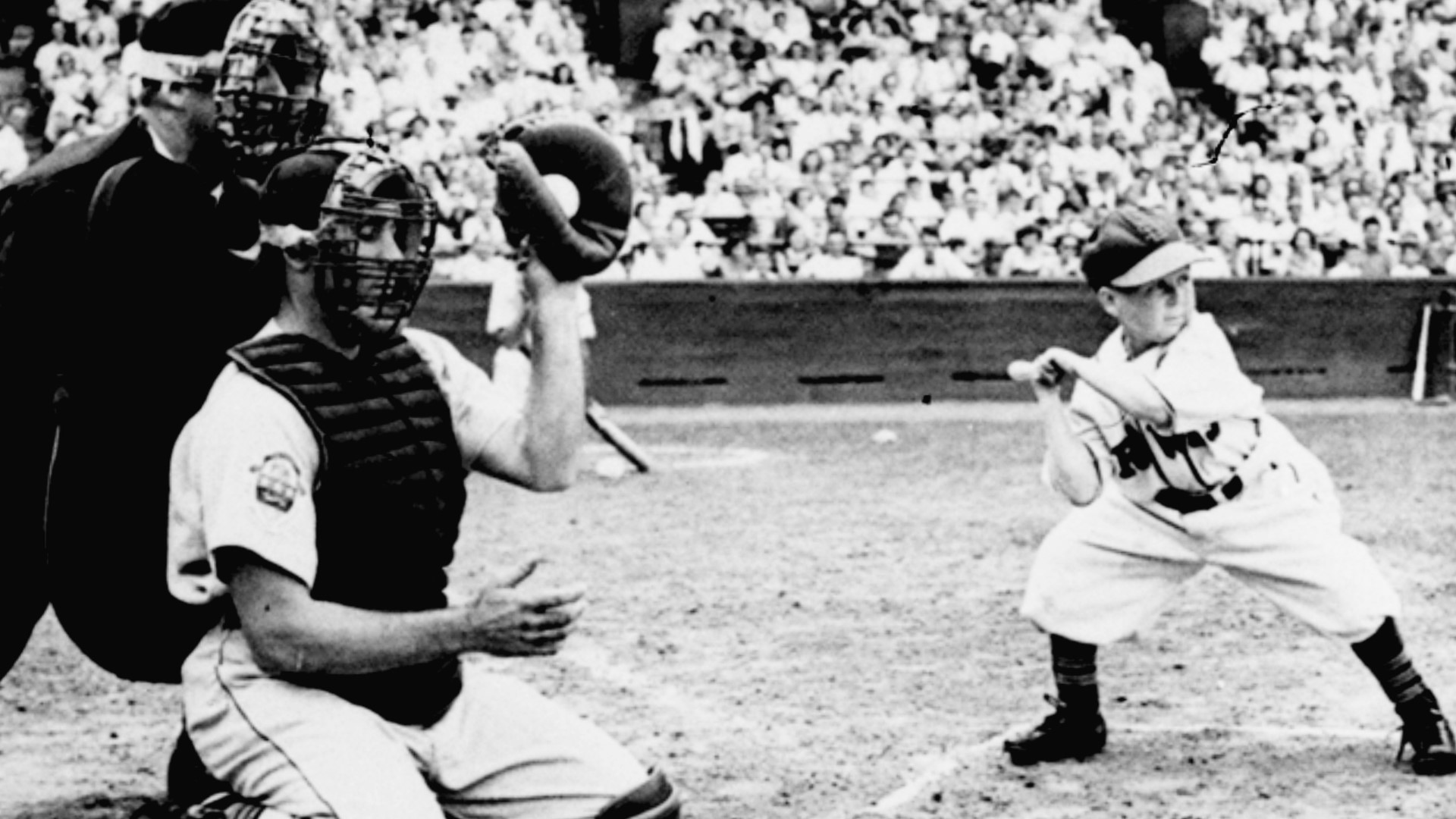
Sporting uniform number 1/8, Gaedel was greeted with a standing ovation at Sportsman’s Park in St Louis as he came to bat in the second game of a doubleheader on 19 August 1951 for the St Louis Browns. A famous AP photo shows Detroit Tigers catcher Bob Swift sitting on his knees with a ball in his glove, towering over Gaedel and his tiny strike zone. Not surprisingly, he walked on four pitches, and was immediately lifted for a pinch-runner.
“Detroit Tiger pitcher Bob Cain walked the first St Louis Brownie to face him today – he didn’t know what else to do with him. He was a midget,” the Associated Press reported in a story that ran in newspapers across the country.
Many baseball traditionalists clutched their pearls about the stunt – more about undermining the seriousness of the national pastime, than out of any concern about exploitation, which would surely derail such a promotion today.
Years later, Veeck (rhymes with wreck) stood by the stunt, in words that would cause people with modern sensibilities to cringe.
“Were it in my power to turn back the clock, I’d never send a midget to bat,” he said. “No, I’d use nine of the little fellows, including the designated hitter.”
In Veeck’s defense, he used similarly politically incorrect language to describe himself. The owner, who got around on a wooden leg after a second world war injury that cost him his right leg below the knee, insisted on calling himself a “cripple”.
At the time of the Gaedel stunt, Veeck was a new owner of the sad-sack Browns, looking to inject some life into a franchise that always played second-fiddle to the city’s more popular baseball team, the Cardinals. In fact, after winning their only single American League pennant, in 1944, the Browns lost the World Series to their crosstown rivals.
Veeck had a much better run in his first stint as an MLB owner, when he ran the Cleveland Indians (now Guardians) in the late 1940s. In 1947, he became the first AL owner to sign a Black player, Larry Doby, just three months after Jackie Robinson had broken the color barrier with the National League’s Brooklyn Dodgers. In 1948, Cleveland won the World Series – still the last one in franchise history.
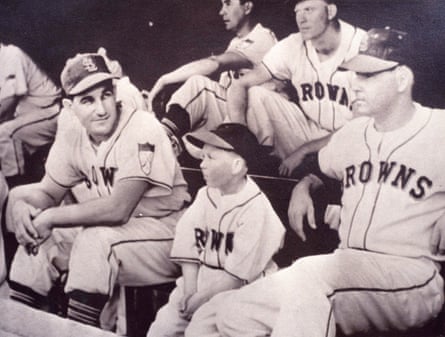
But the Browns were another story. By 1951, when Veeck bought the team, they were coming off back-to-back seventh-place finishes in the eight-team AL. At the time of the Gaedel promo, they were in dead last.
To goose attendance, Veeck had earlier announced a celebration would take place at the team’s 19 August doubleheader to commemorate the 50th anniversary of the league. More than 18,000 fans came out – a huge crowd for a team that averaged less than 4,000 fans a game, also last in the league.
But nobody knew about the unorthodox headliner.
Between games of the doubleheader, the Browns featured a procession of vintage 1901 cars and a one-man show by Max Patkin, known as the “Clown Prince of Baseball”. There were other promotions that afternoon, including free beer to every adult at the ballpark, acrobats and a band featuring legendary pitcher Satchel Paige on drums. And the icing on the cake, so to speak, was Gaedel emerging from a giant papier-mâché cake. Still, his place on the roster was a well-kept secret.
Veeck paid Gaedel, who was identified in news coverage as a 26-year-old stunt man from Chicago, $100 for the baseball gig. That was serious money back then: nearly $1,300 in today’s dollars.
Gaedel wore a jersey that belonged to the team’s 9-year-old batboy, Bill DeWitt Jr, the son of team vice president Bill DeWitt. Today, DeWitt Jr is the 84-year-old owner of the Cardinals.
The team’s regular center fielder, Jim Delsing, was initially upset at being out of the starting lineup for the second straight game.
“What’s going on?’’ he asked manager Zach Taylor, as Delsing recounted to Murray Chass of the New York Times in a 2001 story to mark the 50th anniversary of the stunt.
“Relax,” Taylor responded, “you’ll find out.”
Four pitches later, Delsing came on the field to pinch-run for Gaedel.
“I trot over there, he gets off the bag, pats me on the derriere, says good luck and walks back to the dugout. That was the last I saw him,” said Delsing, who died in 2006 at the age of 80.
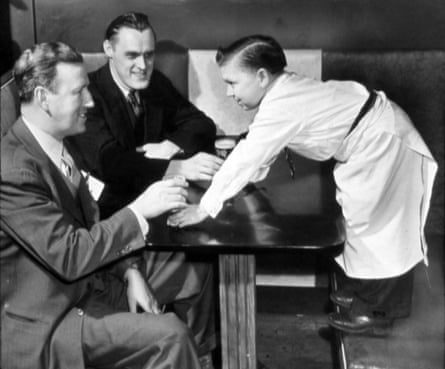
Gaedel entered the game in the bottom of the first inning as a pinch-hitter for leadoff man Frank Saucier. Umpire Ed Hurley initially tried to block Gaedel from coming to bat, Saucier recalled in a 1982 interview with the Times.
“Why, you can’t play in this game,” the ump told him.
Then the Brown’s manager, Zack Taylor, came out from the dugout.
“He’s under contract,” Taylor said.
“Let me see it,” Hurley said, and Taylor showed it to him.
So Gaedel got his at-bat, but it turned out to be the proverbial cup of coffee. Two days later, AL president Will Harridge voided his contract.
Still, the stunt man made the most of his time in the limelight.
“When he went down to first base, he stopped two or three times and took his hat off, and bowed to the crowd,” said Saucier, who died last year at the age of 98. “‘When he came back to the dugout, I said, ‘Eddie, you really kind of clowned that up a bit, going to first, didn’t you?’
“And he said, ‘Man, I felt like Babe Ruth.’”
Gaedel’s walk didn’t have much of an effect on the game. The Tigers won the game 6-2, to complete the doubleheader sweep.
Veeck had another zany promotion less than a week later, when he invited fans to make strategic decisions, such as whether to steal, bunt or play the infield in. Dubbed “Grandstand Managers Night”, it had fans vote by applauding choices posted on placards, in an early version of crowd-sourcing decisions.
Taylor, the manager, sat in a rocking chair with his feet up, sipping a drink.
It actually worked. The Browns beat the Philadelphia Athletics that evening, just one of 52 victories for a Browns team that had the worst record in baseball that year.
The Browns lasted just two more seasons in St Louis, before moving to Baltimore to become the Orioles in 1954.
By then, Veeck had sold the team, but he would return with two stints as owner of the White Sox, in the late 1950s/early ‘60s, and 1970s. After selling the team a second time, he would sit in the bleachers at Wrigley Field, to watch the Chicago Cubs, where his father had been team president early in the 20th century.
Despite owning a lifetime MLB pass, Veeck spent his own dough on the bleacher seats.
“I pay for my tickets so I can complain,” he said.
-
Frederic J Frommer, a sports and politics historian who has written for the Washington Post, the New York Times, the Atlantic and other national publications, is working on a book on ‘70s baseball.