4 weeks ago
43
4 weeks ago
43
Trailblazing producer Christine Vachon bestrides the world of US independent film-making like a colossus. She has championed idiosyncratic American cinema for more than 35 years, scoring hits such as the romcom Materialists, which starred three superhero actors (Dakota Johnson, Pedro Pascal, Chris Evans) and grossed $108m, alongside curiosities such as Zola, a strippers’ road-trip comedy based on a string of viral tweets.
Vachon got her start in the early 1990s. Her often scandalous movies – from Poison (gay prison sex) and Swoon (gay child killers) to Happiness (paedophile dad) and Kids (delinquent teens) – dominated the cultural conversation decades before boutique studio A24 had sold its first tote bag. Her production outfit Killer Films, which she founded in 1995 with Pamela Koffler, has as its logo a cartoon bunny with a target for a body, mischievously evoking the company’s blend of irreverence and danger. “I don’t think we’ve ever made a movie that somebody hasn’t been offended by,” Vachon said in 2000.
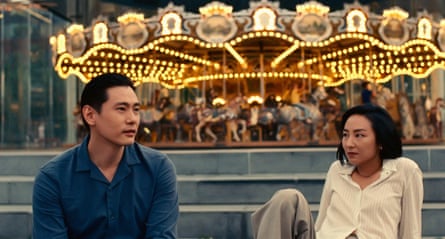
Times change. Back then, Killer was on the brink of respectability thanks to Boys Don’t Cry, for which Hilary Swank won an Oscar for playing the murdered transgender man Brandon Teena. In 2024, Materialists director Celine Song’s gorgeous but conspicuously uncontroversial debut Past Lives became the first Killer film to receive a best picture Oscar nomination.
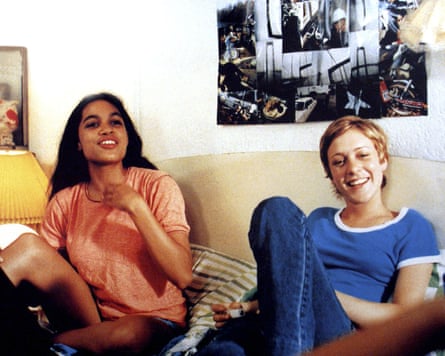
It has been a while, then, since Killer was the industry’s scrappy outsider. “I sometimes say we’re the adults in the room,” Vachon tells me. Now 63, the tousle-haired, New York-based producer is speaking from a terrace overlooking the sea in Trouville-sur-Mer. She is visiting family here before heading to the Edinburgh film festival for the world premiere of Killer’s latest production, Pretty Babies. Written and directed by newcomer Tyler-Marie Evans, it follows two aspiring teenage actors who run off to Los Angeles, seduced by the glamour of old Hollywood, only to slide into sex work. It is rather as if Thelma and Louise’s road trip had taken them to David Lynch’s Mulholland Drive.
What makes Pretty Babies a Killer film? “We love to encourage stories that feel personal and provocative and have something to say,” says Vachon. “It was not as if Tyler’s script was utterly original in terms of the issues she was dealing with. But she approached them in an original way. She has a real point of view and she can speak about her work very well.” She can indeed: at a recent screening, Evans explained that she intends the movie “to show that sexually objectified young women ask themselves the same questions as Dostoevsky”.
It is a confident, eye-catching debut but the likelihood of a controversy equal to Kids, which had viewers clutching their pearls at the sight of skateboarders having unprotected sex, appears slim. Would a new Kids have that effect now? “If you made the 2026 version, it probably would be shocking,” Vachon says. “Or you might say: All you’ve got to do is go on TikTok.”
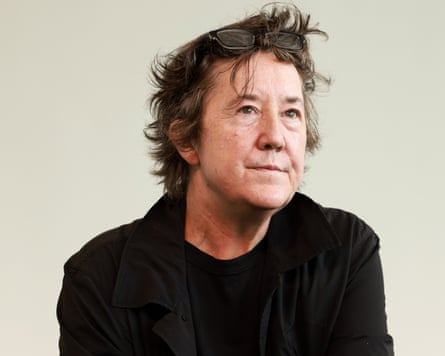
Pretty Babies fits the template by heralding an emerging talent. “One of the things we can do with a first-time film-maker is put our weight behind a project to give assurances to the financiers,” says Vachon, who produced the feature debuts of, among others, John Cameron Mitchell (Hedwig and the Angry Inch), American Psycho director Mary Harron (I Shot Andy Warhol) and Todd Haynes (Poison), whom Vachon met at Brown University in the late 1980s.
Haynes’s debut, which interweaves three tales of transgression including a prison love story complete with graphic expectorating scene, won the grand jury prize at Sundance in 1991. That put Poison on the radar of rightwing US politicians with an axe to grind.
“The film had received a National Endowment for the Arts grant,” says Vachon. “That triggered an eruption in Congress: ‘Your tax dollars are being used to fund a movie about homosexuals spitting in each other’s mouths and touching each other’s dicks!’ Suddenly there were lines around the block to see the film. Yes, the controversy helped. But what really helped was an under-represented audience getting to see itself on screen. It taught me that if you make a movie for the right amount of money for a specific audience, and only they show up to see it, you can still make your money back.”
She has produced all Haynes’s work since then including the melodrama Far from Heaven and the forthcoming De Noche, which recently finished shooting. This drama about a volatile cop (Pascal) and a schoolteacher (Danny Ramirez) who flee 1930s LA together for Mexico has a stormy history. The project was the brainchild of its original star, Joaquin Phoenix, who brought to Haynes the idea of a gay, sexually-explicit period love story; the director then co-wrote the screenplay with Jon Raymond. Sets were built in Guadalajara, the crew assembled. Five days before shooting was due to begin in August 2024, Phoenix pulled out. Variety magazine estimated at the time that losses “could exceed seven figures”.
Did Vachon have any inkling of trouble ahead? “You know, I really didn’t,” she sighs. The reasons for Phoenix’s departure have not been made public, though an unnamed source told Variety that the actor got “cold feet”. Vachon took to social media to quell tittle-tattle: “If you are tempted to finger wag or admonish us that ‘that’s what you get for casting a straight actor’ – DON’T. This was HIS project that he brought to US.’”
She is reluctant to discuss the details today, and won’t speak on the record about whether Phoenix will receive a credit on the movie he co-created and then sabotaged. “Look, I don’t know what happened. He decided he didn’t want to do it. And, you know, I went to Guadalajara with a mop.” For a while, the film was dead in the water. “It was the passion of Todd and Pedro that allowed us to move forward.”
after newsletter promotion
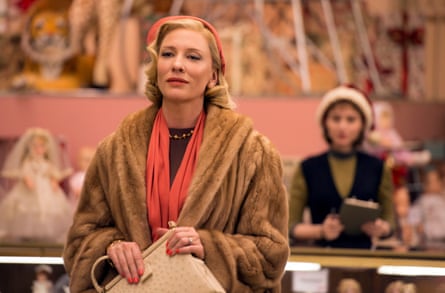
Business often overrules personal enmity in Hollywood. Even after Harvey Weinstein reportedly viciously insulted Haynes for refusing to partner with his company Miramax on Far from Heaven, Haynes and Vachon still teamed up with him on the kaleidoscopic Bob Dylan biopic I’m Not There and the lesbian romance Carol. So would Vachon work with Phoenix in the future? “I don’t know. That’s a difficult question to answer. I’m not sure Joaquin would want to work with me again.” She makes it sound as if she gave him hell – or will do when she sees him.
The film historian Peter Biskind has written of Vachon’s “formidable temper” and claims she “was reputed to have terrorised the British crew” of Haynes’s 1998 glam-rock odyssey Velvet Goldmine. “That is so not true!” she protests. “I was terrorised by them. A lot of the crew were old-school. We had a female director of photography, Maryse Alberti, and only now do I realise what she went through. Essentially it was: ‘We don’t want to work for this woman.’ Every day, I had to gird my loins.”
She admits she had “a bigger temper” in the 1990s. “But I didn’t mind if people thought that, because it was so hard to be a female producer. You were damned either way: if you had a temper, you were a bitch, and if you didn’t, it meant people could walk all over you. Whereas if you were a man and you showed any sign of anger, you were commended for being tough.”
Producers rarely become household names unless, like Weinstein, they are also criminals. The job can even be a source of derision, as anyone who has sat with an impatient cinema audience through interminable company logos and producer credits can attest. Pretty Babies lists three producers: Vachon, Jordan Wagner and one of its stars, Ashley Benson. No fewer than 36 other names – executive producers, associate producers and so on – clutter up the end titles.
The question of who is entitled to a credit is, says Vachon, “a source of distress and consternation and real knock-down, drag-out fights. A movie like Pretty Babies has an unproven director and a provocative subject matter. If somebody’s willing to put their money at risk, a credit tends to be what they want in exchange.”
I remind her of a line from David Mamet’s movie-business comedy State and Main: “An associate producer credit is what you give your secretary instead of a raise.” In return, Vachon signs off with another gag about the slippery, deal-making, belt-tightening line of work to which she has devoted her life. “How many producers does it take to change a lightbulb?” she asks. The answer: “Does it have to be a lightbulb?”