3 months ago
70
3 months ago
70
Wali Malik no longer has to worry that a rightwing bureaucrat – or influencer – will decide his research is “woke”.
He doesn’t have to fear government retaliation for speaking his mind or following the science wherever it may lead. And like others who have left a polarized United States for the calmer pastures of Austria, he need not fear his lab being decimated because the president decided he wants to deport the people who work there.
“There is a lot of excitement in Vienna,” said Malik, a specialist in lab robotics. Last Spring, then living in Boston and working as a consultant for biomedical research labs, he was recruited to lead the development of robotic infrastructure at Aithyra, a life sciences research institution, founded in 2024, that seeks to incorporate artificial intelligence in all aspects of scientific development.
When he got the call about a position in Vienna, Malik had already begun to see the impact of Donald Trump’s assault on higher education and scientific research. He saw friends and family fall victim to mass layoffs at the National Institutes of Health (NIH) and National Science Foundation, while his own work slowed as federal grants were rescinded.
He had never been to Austria, but the decision to leave the United States wasn’t hard.
“I saw the writing on the wall,” Malik explained. “It took trust for the US to become a scientific powerhouse. It took 70 years – and was destroyed within six months,” he said.
And if the American electorate is willing to do this, he asks, who’s to say it won’t do so again in the future?
Austria is the not the only country seeking to benefit from dysfunction in America. Just weeks after Trump took office, three prominent anti-fascist historians at Yale University – Jason Stanley, Marci Shore and Timothy Snyder – were offered and accepted positions at the University of Toronto. Institutions across Europe also last year began offering “scientific asylum” to US-based researchers, with France’s Aix-Marseille University receiving more than 500 inquiries about its own campaign to lure American academics.
Eva-Maria Holzleitner, Austria’s Minister of Women, Science and Research, described the US’s self-inflicted attack on academia as both “really shocking” and a setback to “the scientific community as a whole”.
But it is also an opportunity for Austria to pitch itself as “a safe haven for science and research and innovation”.
Her ministry has sought to lure at least 50 academics from the US within a year, half through an initiative that fast-tracks hiring for professors and half through a fellowship program for early- and mid-career researchers. A ministry website targeting researchers in the US also advertises funds for students who “are formally or de facto denied the right to education” due to their ethnicity, gender or “civic engagement”. That comes after the Trump administration has arrested and sought to deport students, such as Mahmoud Khalil and Rümeysa Öztürk, who campaign against US support for Israel, and to restrict on-campus support and gender-affirming care for transgender people.
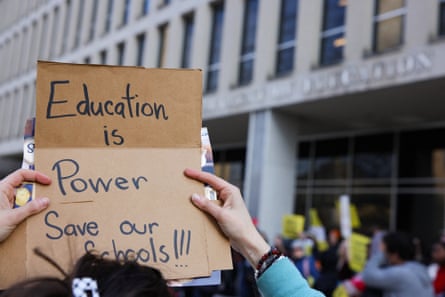
The Trump administration has waged an all-out war on what it portrays as the liberal bastion of academia, including by rescinding grants previously authorized by Congress. All federally funded research must now reflect his rightwing ideology and avoid any mention of race or gender.
Meanwhile, recent scenes of masked federal agents seizing immigrants and US citizens from the streets have also helped convince many foreign-born researchers that they are no longer welcome in America.
On 4 July 2025, the Austrian Academy of Sciences announced its first-ever fellowship program targeting academics of all nationalities at US institutions using money originally seeded by the Marshall Plan. Two months later, it announced 25 recipients, each of whom receives €500,000.
“Thank Trump for this brain gain,” the academy’s president, Heinz Fassmann, said in a statement at the time.
Officials say that although it is modest, the program sends an important signal that Austria is a stable democracy affirming its commitment to science without ideological diktats.
Even those who previously left Austria for often higher-paying opportunities in the US are considering a return to Europe, according to Alexandra Lieben, a professor of international relations at the University of California, Los Angeles, and president of AsciNA, the association for Austrian scientists and scholars in North America. Most of AsciNA’s roughly 1,400 members have been affected by funding cuts, she said.
“There was a real shock among everybody, and a paralysis that went along with that. That has subsided,” she said. Even long-term residents are exploring exit plans, she said.
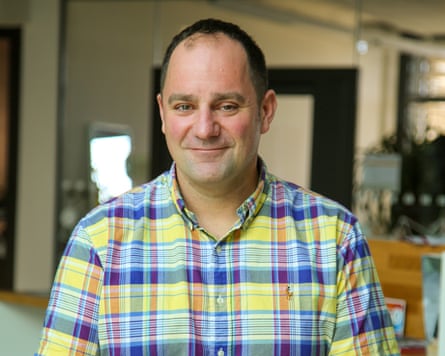
Alexander Lex, who studies human-computer interaction and data visualization for biomedicine and other applications, moved to the US more than a decade ago as a post-doctoral fellow at Harvard University and went on to lead the Visualization Design Lab at the University of Utah.
Last summer, Lex announced that his lab was “entering a new chapter” and moving to the Graz University of Technology. An Austrian national, Lex said that he began searching for a job in his native country before Trump returned to power. The 2024 election and its aftermath affirmed his decision to look for work elsewhere.
“I think there is a big contraction happening in the US academic environment, partially because of hard facts, partially because of self-censorship and being worried,” Lex said. “Especially if you’re in a more vulnerable position, people are taking less risks,” he said, “and that’s really bad for science”.
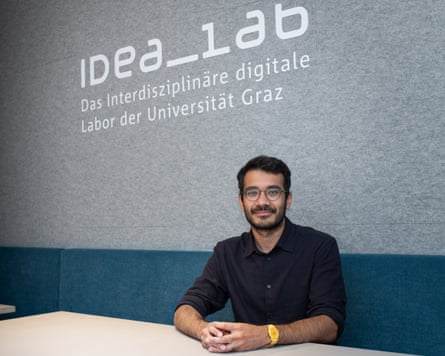
Even before Trump’s return, Hussam Habib, who received his PhD at the University of Iowa, could feel the political pressures seeping into his work. He studies the impact of algorithms and platform governance on political polarization, his interest in the topic stemming from his undergraduate days in Pakistan.
“I had met people at my school who were very fine, normal, decent human beings. But over the years, you saw them become more and more radical. And you talk to them, and they start quoting Jordan Peterson, Ben Shapiro and a lot of these radical misogynists,” Habib said.
The US is where a lot of this research into disinformation and online radicalization was happening; for someone thinking of building a career in the field, it “seemed like the right place to be,” he recalled.
However, following the Covid-19 pandemic and Trump’s false claims about the 2020 election and January 6 insurrection, work that addresses online misinformation has been the subject of a concerted attack from the Republican party.
Funding began to dry up, Habib said, and peers began suggesting that he focus less on the political impacts of social media. Then Habib, saw a post advertising a position at the University of Graz. He applied, having never been to Austria, and received one of the new fellowships designed for people leaving America.
“Am I glad that I dodged a bullet? I want to say that no, I would have been fine,” Habib said. But, “deep down, I know that I would have been very, very stressed.”