4 weeks ago
48
4 weeks ago
48
Not so long ago, Frank Spinelli seemed to have sorted out his life. He was happily married, working as a doctor and had a sideline writing medical thrillers. He thought he had dealt with the sexual abuse he had suffered as a child – not only had he helped bring the man who groomed and abused him to justice, but also he had written a memoir about it. “I felt that I had closure,” he says. “I had the good fortune of working with some amazing therapists and I believed I had done the work and moved past it and I was a healed person.”
Little did he know that his recovery was fragile. The Covid pandemic took away his routine and structure: “All the external pillars that were tightly holding me together – the engagements at the office, the work trips.” Two years earlier, he and his husband had moved from Manhattan to a leafy suburb, from where he is speaking to me over a video call today. He was dealing with uncertainty and felt isolated. “We know one thing about shame: shame breeds in isolation.”
Spinelli had never had a problem with alcohol before. In the lockdowns, though, he found himself drinking more and more. A glass of wine while cooking dinner turned into two; a bottle shared with his husband turned into another. Drinking was no longer something that mainly happened at the weekend, but had blurred into the week. Three months into lockdown, Spinelli’s husband realised it wasn’t doing him any good and decided to stop drinking, but Spinelli continued.
“You make all these qualifying statements to yourself – you’re home, you’re not bothering anybody, I’m not driving,” he says. He convinced himself that if he drank in secret, it didn’t really count, so he started to take long dog walks, sipping from a water bottle filled with vodka; he hid empty bottles in the garage. When his husband confronted him about it, Spinelli promised to stop, but it lasted less than a week. He found better hiding spots: old bags in the wardrobe, empty cleaning-product bottles, the recycling bin.
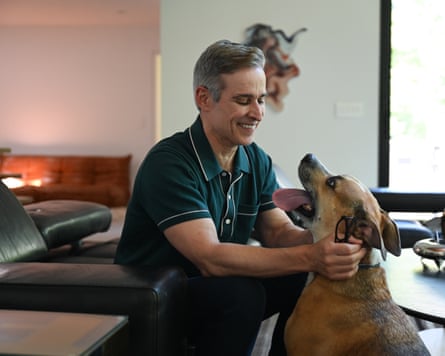
At this time, a class-action lawsuit against the Boy Scouts of America was going through the courts. Spinelli was one of 95,000 alleged survivors of sexual abuse within the organisation. The man who had abused him from the age of 11, from 1978 to 1980, was his scoutmaster, William Fox. In September 2022, a $2.5bn (£2.2bn) compensation fund for victims was established. In order to work out how much he would be entitled to, Spinelli was sent a 47-page questionnaire to fill out, in which he was asked to detail the abuse and its impact on him.
He read this piece of brutal bureaucracy, relying on alcohol to get him through. It wasn’t the “dramatic rock bottom I’d expected from movies and recovery narratives”, he writes in his new book, The Shame Compass. “There was no car accident, no lost job, no intervention from concerned family members. I was alone in my home office, staring at a legal document that reduced my childhood sexual trauma to data points.” It felt like another violation, “documenting my own rape for a legal system that would assign it a dollar value”, he writes.
The shame came flooding back – not just about the abuse, but also shame that he hadn’t got over it and shame that he was having to drink to cope with it. “You think you’re healed, you think you’ve moved on, and that is one of the myths,” he says. “The shame is still with you.”

Spinelli grew up in Staten Island, New York, the youngest of three children of Italian parents. “It was a very traditional background,” he says. His mother raised the children and sometimes worked in a supermarket; his father was a labourer. Neither had much education, but they expected big things of their children. “You really only get two choices: doctor or lawyer,” he says. Spinelli was already interested in science and wanted to become a doctor.
He was a sensitive boy. “Joining the Boy Scouts was my parents’ way of perhaps toughening me up a little bit. Unfortunately, that’s where we were introduced to a man who would change all our lives,” he says. As a scout leader, Fox, who was also a police officer, was commanding and authoritative. Otherwise, “he was sort of jovial and there was a lot of camaraderie. And then the sexual abuse began.”
In Spinelli’s previous book, his memoir Pee-Shy, “I wrote that the most insidious thing about child molestation is that it creates a desire in the child to want to please the molester, so I constantly was feeling: what am I doing wrong? How can I make him happy?” The psychological and physical bullying from other boys Fox had groomed was also extremely damaging. “There was this hierarchy that he established – if you got to ride in the front seat, you were one of Bill’s favourites that day. If not, you got to ride in the back. That is the type of psychological manipulation he employed as a tactic to keep you under his thumb.”
When Spinelli was 13, he told his parents about the abuse. “They went to the senior leaders and, in a sense, they were shamed into secrecy,” he says. “They were told: ‘You do not want this to get out – think of your son, think of your family,’ and I think they saw some truth in that. They agreed that Bill Fox could step down quietly, no charges pressed, and that would take care of matters. Now, unfortunately, we know many boys suffered after that fact.”
Spinelli’s takeaway was: “This was how you handled matters – with secrecy.” He had begun to realise around this time that he was gay, another source of shame in his traditional Catholic community. He imagines his parents’ thought process: “A young boy who might be gay, or we’re not really sure, is involved in a sexual relationship with an adult man. While we know child molestation is not a consensual relationship, looking at it from the outside, they probably said: ‘Do we really want to shine a light on this? Think of the scrutiny.’” His parents also took advice from their priest, says Spinelli. “I think my parents thought they were protecting me. I was already being bullied at school; this would only add to it.”
Spinelli struggled in his teenage years and dropped out of college. “This was not how I envisioned my life,” he says. “By accident, I came into contact with a therapist who happened to be an art therapist and she saved my life. I painted, she taught me to write, and I used that creative outlet to heal, to move beyond the trauma.” Other than his immediate family, she was the first person he told about the abuse. “I went into very specific details about what had happened and what made it so painful was to hear it out loud.” He was still blaming himself, thinking he was complicit. “But that’s what grooming is – making you believe that these actions are coming from you, when they’re being installed in your mind.”

Spinelli went back to college, then to medical school. He became a doctor, specialising in treating people living with HIV. The workload of being a doctor was a good distraction, although he was also being treated for anxiety and depression. “There was an undercurrent of unhappiness. Certainly, that was reflected in the relationships I had – perhaps dating people who weren’t always the nicest to me, or didn’t treat me as kindly as they should have.”
In 2008, he published a book on men’s health. While he was promoting it, he got back in contact with two old friends from Staten Island. His childhood felt closer to him again. “That night, I had a dream about Bill Fox, me waiting by the screen door for his red truck to pull up.” Spinelli looked up Fox online – and what he found shocked him. “I discovered that the year after he stepped down [from the Boy Scouts], he talked a suicidal teenage boy off a ledge and adopted him.”
Shortly afterwards, Fox was feted in TV appearances, won a “father of the year” award and published a book called The Cop and the Kid. He would go on to adopt about 15 boys – many, according to Spinelli, with special needs.
Spinelli was astonished and appalled and knew he had to do something. “It was horrifying to me that we allowed this man to step down from the Boy Scouts of America and one year later he adopts a boy, but doesn’t stop there.” When Fox was finally arrested, in 2011, he still had some boys in his care, Spinelli says. “I found that story shocking, that this could have happened even after I came forward, and so I felt it was my obligation to finally see this to the end. What motivated me was a sense of blinding justice. All I saw was the end goal of bringing him to justice because that would be the only thing that would make sense.”
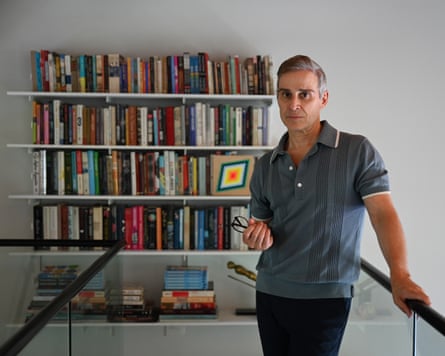
Spinelli went to the police soon afterwards. Although his abuse was past the statute of limitations, he helped keep the pressure on the investigation, even wearing a wiretap in a phone call with Fox. Three young men, two of whom had been adopted by Fox as children, came forward. In August 2011, Fox pleaded no contest – by which he did not admit guilt, but accepted the conviction – and was sentenced to at least 35 years in prison. He died in prison not long afterwards.
Spinelli’s memoir about the case was published in 2013. The act of writing everything down, along with securing Fox’s conviction, had felt like closure. And then came the pandemic and that questionnaire. “That’s when I thought: I really don’t have all of this managed. And that’s common: people who experience trauma will find that at different points in their lives it will re-emerge because something happens – life happens. It’s not as if you’re going to just be level for the rest of your life.” After completing the questionnaire, he woke up the next morning: “I looked myself in the mirror and I said: ‘This is not how the story ends.’”
He turned his attention to the feelings of shame, which would become his Compass framework: confront, observe, map, process, accept and sustain, plus a final “S” for service, sharing your experience to help others. What if he could dismiss the inner voice that had told him he was “bad” all his life and instead see if shame was trying to tell him something important?
“That inspired me to think about shame in a way that I hadn’t before. Shame is something we think is negative, but there’s also a way of looking at it where perhaps the shame is showing you that you are just out of alignment with your core values. My core values are kindness, compassion, loyalty.” His shame around drinking was reminding him not that he was a “broken” person, but that he had become someone who was lying to his husband and hurting him.
In Spinelli’s framework, once he had confronted and observed his shame, he mapped the source of its inner voice – it was, unsurprisingly, his scout leader. Looking back over his life, he could see all the moments he was triggered by other authoritative men. “I had this wonderful professor, who was brilliant, but he would talk to me in a condescending tone and it would make me freeze,” he says. The voice reminded him of his scoutmaster. “But I’m not 11 years old. I’m an adult man. That’s how I utilise the framework to help get through those situations. It was important for me to go back to all those different times and to map out my reaction to that situation and what I could have done differently.”
Learning to deal with his shame didn’t magically cure his alcohol dependency, but it helped, as did learning about the neuroscience of problem drinking: “It wasn’t necessarily a moral failing on my part. It was the fact that I had created these dopamine loops and the loop was encouraging me to drink more.”
He is no longer ashamed of shame. “I feel those scars are battle wounds and I’m proud of them; they’ve developed who I am as a person. If we try to understand shame, we might be able to move through it, not run away from it.” Some days are still a struggle, but others are not. Daily practices, including journalling, help. “It goes back to being as honest as I can with my partner and my family. But understanding that, again, I’m not infallible – things are going to happen. I’m just more resilient.”