2 months ago
60
2 months ago
60
They survived the Nazis, were confiscated by the communists, and for the last three decades they have been jealously guarded by a museum in the Czech Republic. Due to the attentions of an overzealous Czech customs guard and the vagaries of the British weather, a happy conclusion had been in doubt to the very end.
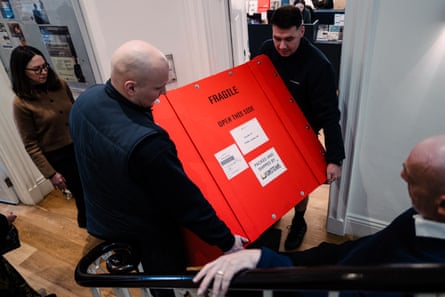
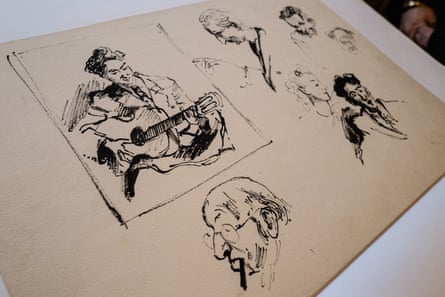
But last Thursday a small suitcase filled with 681 drawings, love letters, poems and manuscripts created by the Jewish artist and poet Peter Kien in the Theresienstadt ghetto in German-occupied Czechoslovakia between 1941 and 1944 finally made a blustery landing at Heathrow.
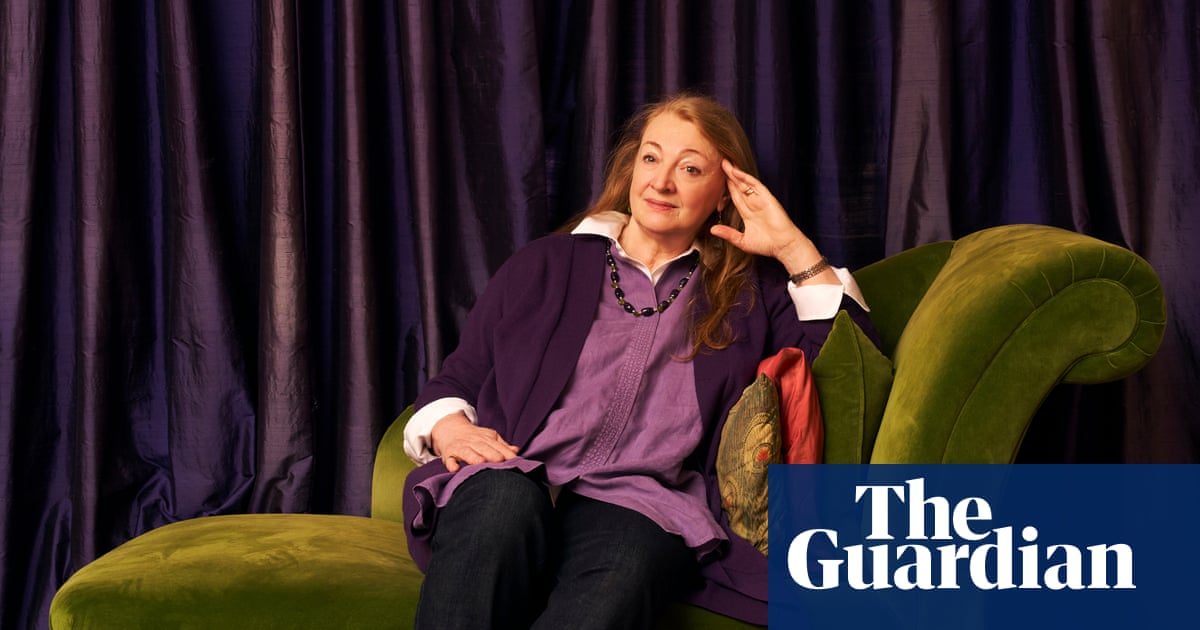
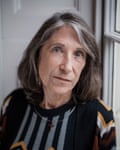
From there, the treasures were transported to their new home: the Wiener Holocaust Library in central London, where Judy King, 66, was anxiously waiting for them. She was keeping a promise she had made to her mother, Helga Wolfenstein, beside her deathbed in 2003.
Wolfenstein had been Kien’s lover in the ghetto. He had handed her the small caramel-brown suitcase on the evening before he was transported to the Auschwitz death camp, where he was murdered at the age of 25 along with his parents, Leonard and Olga, and his estranged wife, Ilse Stránská.
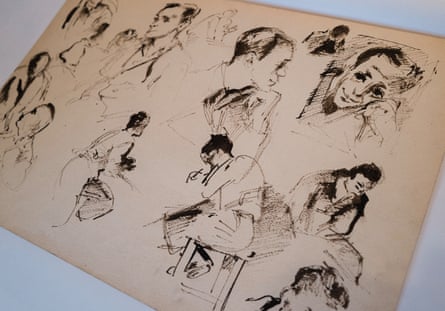
Wolfenstein’s mother, Hermine, was matron of the infectious diseases ward in the ghetto, and it was here where they hid the suitcase from the occupying forces, on the correct assumption the Nazis would balk at the risks of entering such a place.
When what was left of Theresienstadt was liberated in 1945, Wolfenstein left Prague for Libya, where her brother-in-law was working for the British as a doctor, before she moved on to England.
She had known that the communists now in charge of Czechoslovakia would not let her take the suitcase out of Prague, so she had left it with her aunt, Julia Fleischerova. She could not have foreseen the deception of a man called Karl Finger.
“Her aunt was elderly and had a handyman who discovered the contents of the suitcase being artworks in the 1970s,” King said. “He was a communist informant and he notified the authorities that the old woman had something of value.”
Officials came to see the aunt and gave her a choice: hand over the suitcase and everything in it or face losing the pension on which her survival depended.
“She was heartbroken,” King said. “She wrote very tragic letters to my mother about having to give her suitcase away. And so the communists took it.”
When the Velvet Revolution ended communist rule in Czechoslovakia in 1989, the works and the suitcase were taken in by the country’s Terezín Memorial, a museum commemorating those who died in the ghetto.
The staff asked Wolfenstein for her permission to display the art, capturing the people and scenes in the ghetto, for a one-off exhibition and she agreed. But when she asked for their subsequent return, the museum steadfastly refused.
“The Nazis were meticulous record keepers, but the communists were terrible record keepers,” King said. “So the communists didn’t even write down the name of my mother’s aunt or the address or anything from where they had taken the suitcase.
“The museum was like, well, you know, ‘show us provenance’. ‘Why don’t you have a receipt from camp that shows that the suitcase had been legally authorised and given to you?’ And of course, no one had such a thing.”
Wolfenstein was passionate about the return of what was known as suitcase #681, King added. “My mother spoke seven languages and she wrote in English, Czech and German to museums and institutions across the world trying to get support in recovering her suitcase.
“People were sympathetic but they weren’t willing to fund anything or to put their name to it. She worked for 33 years to try to recover this suitcase and its contents, and at her deathbed I made her a promise. I said: ‘I will finish your work.’”
King said her mother, who died aged 81, was almost obsessed by her mission. “Part of the difficulty was that she would begin letters to the Terezín people with ‘You thieves’ instead of ‘Dear Sir or Madam’. I said: ‘Oh, I can see how they will want to help now.’”
In 2017, King visited the Terezín Memorial with her cousin, Peter. “We talked with them and they said, you know, ‘we couldn’t work with your mother but we can work with you’,” she recalled. Yet it took nearly another decade to bring the suitcase and its contents to the UK.
“They needed a lot of advice from the National Gallery in Prague about how to do everything,” King said. “Part of the difficulty was that the artworks were considered to be national treasures, and so there was enormous national reluctance to part with them.”
The museum was under pressure, however, as the German writer Jürgen Serke championed a campaign for it to give up the works, while King – who was born in the US and lives in Florida – encouraged American officials to support her.
There were wrinkles to iron out. “They said: ‘Oh, if only you had something that had your mother’s signature that said she bequeaths it to you.’ And I said: ‘Well, funny you should say that, I have exactly that document.’
“As a Holocaust survivor, my mother was extremely paranoid, and she wrote a document saying that the suitcases and the artworks were her possession, that I was her only heir and that she willed them to me. She dated it. She had notarised the signature and the date. So [the museum] was satisfied.
“But it was still touch and go. At the last minute, the customs department said: ‘Oh, a handwritten document is no good. It must be a court-appointed document.’
“Just this week, we thought all of these efforts had come to naught, but our friend, who has been coordinating all the efforts with the shippers in London and in Prague, somehow managed to pull strings. Customs relented and the artworks left Prague. But then they had trouble landing in London – you had a great deal of wind.”
King concluded that her mother – an anglophile who worked for the Post Office in London and became a British citizen before she settled in America – would have been thrilled to know that the artworks had been donated to the Wiener Holocaust Library.
Howard Falksohn, the London institution’s senior archivist, said it was “most grateful for this wonderful donation” ahead of International Holocaust Remembrance Day on Tuesday.
The documents join nearly 100 other Kien works held in the library’s archive that were smuggled out by King’s cousin Peter during the communist era.