3 months ago
59
3 months ago
59
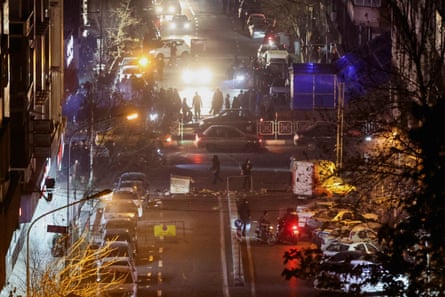
What does it take to shake illusions in western intervention? This is not a question designed to deflect from the barbarism being unleashed by Iran’s theocratic regime. Because it severed the country’s internet connection, facts are difficult to establish, but the respected Human Rights Activists in Iran has confirmed 544 have been killed and well over 10,000 arrested – those numbers are probably significant underestimates.
Here is a regime that consolidated its power in the 1980s by butchering leftists – helped, it should be noted, by both MI6 and the CIA, who supplied them with lists of alleged Soviet agents. Today, trade union activists are arrested and tortured, while women’s activists languish in jails. The economic disaster resulting from sanctions may have helped spark these latest protests, but millions of Iranians are fed up with living under fundamentalist rule – underlined by surveys confirming growing religious non-observance and opposition to the compulsory hijab.
But those who believe freedom will arrive on the back of western bombs seem incapable of learning from the catastrophes that have defined this century. Donald Trump continues to threaten to bomb Iran, egged on by Reza Pahlavi, son of the late deposed shah. The one advantage of Trump is that – unlike his predecessors – he generally does not pretend to champion noble ideas. He incited an attempted coup against his own democracy, and after recently attacking Venezuela, made clear that oil was his primary concern. He has paid lip service to the protests in Iran. But as far back as 1980, he publicly declared his support for intervening in the country, claiming that “right now we’d be an oil-rich nation” if the US had done so. Similarly, overseeing the killing of Qassem Suleimani, and attacking the Fordow nuclear facility at a time of extreme regional tension, were hardly done with the best interests of average Iranians in mind.
And long before Trump, the US had no objection to supporting tyranny in the Middle East, not least Saudi Arabia, which beheads dissidents, and reportedly committed war crimes in Yemen, such as blowing up a school bus packed with children, with US bombs. Trump’s recently published national security strategy even abandons the previous US pretence of supporting democracy, committing to abandoning a “misguided experiment with hectoring” the Gulf autocracies “into abandoning their traditions and historic forms of government”. And indeed facilitating Israel’s genocide should have been more than sufficient to eradicate any remaining illusions about the motivations of American power.
Iran’s nightmare began with western intervention. It was Britain and the United States that engineered the coup against the progressive democratically elected government of Mohammad Mosaddegh in 1953. It was justified by the then secretary of state, John Foster Dulles on the grounds that the “free world” would be “deprived of the enormous assets represented by Iranian oil production and reserves”. The new shah told a CIA agent: “I owe my throne to God, my people, my army, and to you.” The 1979 Iranian revolution emerged from the brutality of this dictatorship.
And what of the record of western intervention in the Muslim world? The catastrophe of the Iraq war is well understood, but too little attention has been devoted to the role of exiled Iraqi politicians returning to the country. They sought to establish legitimacy in the aftermath through religious sectarianism – which then helped unleash the catastrophic bloodletting between Shia and Sunni militants that ripped Iraq apart.
In Afghanistan, the plight of women under the Taliban was cited in favour of western intervention: yet after two decades of bloody occupation ended and the Taliban returned to power, their nightmare is worse than ever. In Libya, the pretext was to defend protesters from a violent crackdown by the regime. Violent civil war ensued, which jihadists opportunistically exploited, and 15 years later the country remains with no central authority as two rival governments battle it out.
Iran is much larger than any of these examples, and ethnically and religiously diverse. Its population is three-and-a-half times bigger than Iraq at the time of the invasion. Its rich tapestry includes Persians, Azeris, Kurds, Lurs, Arabs and Turkmens. There is no question that a large majority of Iran’s people have run out of patience with the corrupt theocracy that reigns over them. But the regime has a much bigger and entrenched support base than any of those previous examples. Millions still vote for ultra-conservative candidates.
Unlike in other protests, we’ve seen attacks on religious sites. This clearly comes from a fury that has grown among some Iranians at spending their lives being force-fed religious dogma. But it also hints at the sort of divisions that could erupt, not least if Pahlavi comes to power, given the chauvinistic and ultranationalist positions of many of his key advisers.
And Israel looms large. Trump’s former secretary of state Mike Pompeo tweeted: “Happy new year to every Iranian in the streets. Also to every Mossad agent walking beside them.” An Israeli minister has boasted that “our people are working there right now”. We’ve seen how Israel has sought to undermine post-Assad Syria, both by routinely attacking it and promoting its Balkanisation. Israel clearly believes its relative strength in the Middle East is best served by weakened and chaos-afflicted neighbours – rather than a genuinely free and democratic Iran.
Given the dire precedents, it would surely be lunacy to believe that despite all these disastrous western interventions, the one that will finally succeed will be under Donald Trump. The truth should be obvious – the US is not driven by the best interests of the Iranians. It would be a tragedy if this lesson – written in the blood of Iraqis, Afghans and Libyans – were ignored once again.
-
Owen Jones is a Guardian columnist