4 weeks ago
47
4 weeks ago
47
The first thing that strikes visitors arriving in Faka, a small village in Sinjar district, northern Iraq, is the silence. No children play in the streets. No shops are open. Roofless houses stretch across the hillside, their walls pockmarked by shellfire, while weeds and wild grasses grow through collapsed living rooms.
A decade after Islamic State (IS) swept across the region, war remains visible everywhere. But according to the people who returned, another enemy has quietly taken its place.
-
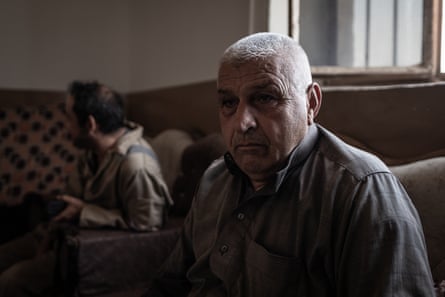
Rajab Mohammed says the problem in his village of Faka is no longer Islamic State but water and jobs
“Today, the problem isn’t only IS,” says Rajab Mohammed, 62, the village’s mukhtar, standing above the ruins of Faka. “It’s water. It’s jobs. It’s the future.”
Across Sinjar, abandoned houses now outnumber occupied ones. The battle against IS has ended. The battle to save the villages against drought and neglect has only just begun, and time is not on its side.
Before August 2014, about 150 families lived in Faka. When IS fighters seized the Sinjar region, residents fled as frontlines advanced across north-western Iraq. In August 2014, IS launched what the UN has recognised as a genocide against the ethnic minority Yazidi community. Thousands were killed and more than 6,000 people, mostly women and children, were abducted.
-
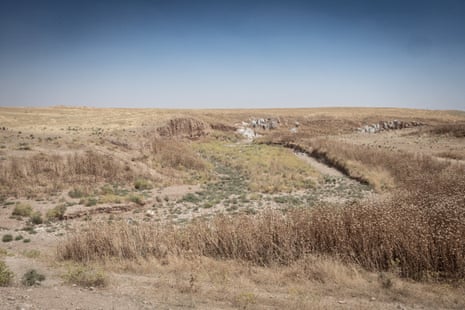
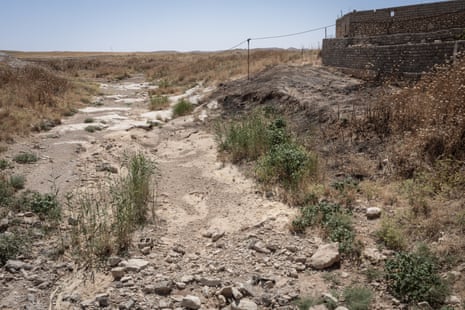
Rivers in the Sinjar region have dried up as rainfall has become more erratic and temperatures have risen
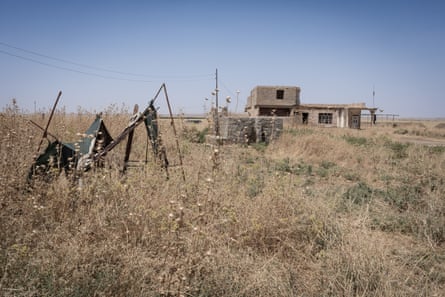
While Faka and the nearby village of Qubq escaped the mass killings that devastated other nearby villages, coalition airstrikes and ground fighting left much of the area destroyed. Today, only about 20 families have returned. The rest have settled elsewhere, discouraged by the lack of reconstruction, jobs and basic services in a region where the climate crisis is making rural livelihoods such as farming increasingly precarious.
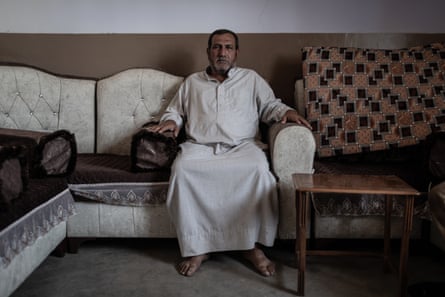
“People ask why families don’t come back. The answer is simple. Where would they live? How would they earn a living?” says Aqil Ridha from Qubq.
-
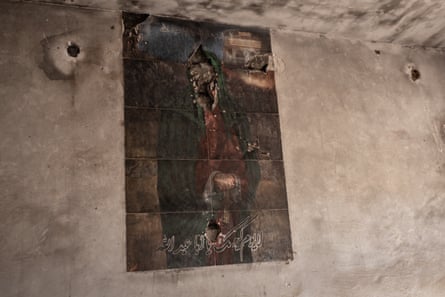
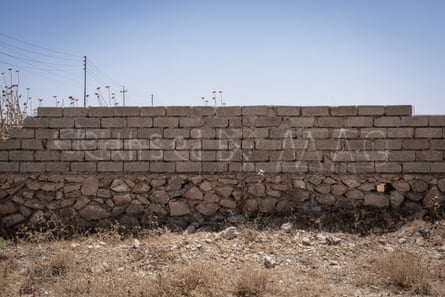
Clockwise from top left: much of Qubq village was destroyed by airstrikes and fighting; many of its homes were burned and looted; graffiti on a wall indicates a house been cleared of unexploded ordnance; Aqil Ridha says people do not return because there is nowhere for them to live
The UN has ranked the country the fifth most vulnerable to declining water and food availability and extreme heat. Iraqi authorities project that by 2050 the country’s average annual temperature will have risen by 2.5C, with 24 additional days a year crossing extreme heat thresholds. Temperatures in Sinjar this summer have approached 50C.
Rainfall has become increasingly erratic and summers are hotter and longer, while prolonged droughts are reducing agricultural production. The UN’s special representative for Iraq has warned that the country will be able to meet only 15% of its water needs by 2035 if current trends continue.
-
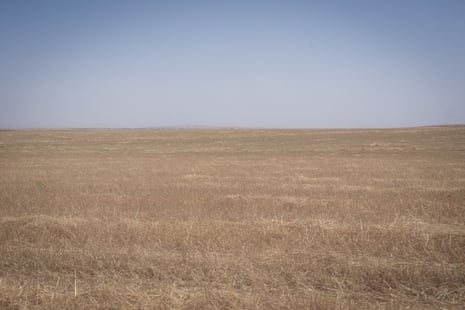
Temperatures in Sinjar have approached 50C this summer
In rural areas, where farming remains the principal source of income, the issues of climate and migration have become inseparable. The International Organization for Migration has recorded more than 186,000 people displaced by climate-related factors across Iraq as of September 2025.
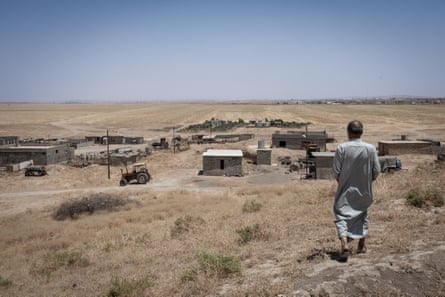
In the village of Tal Jado’o, Bahjat Othman Hasan walks between ruined homes that have never been rebuilt. The roads remain little more than dirt tracks. Electricity is intermittent. Before the war, more than 200 people lived here. Today, barely 50 remain. “People didn’t leave because they wanted to,” he says. “They left because they couldn’t live here any more.”
-
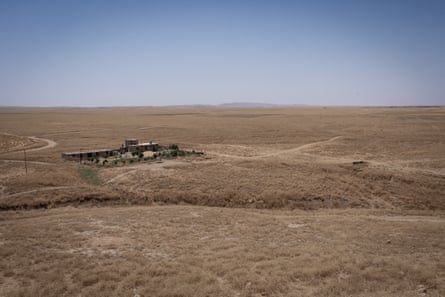
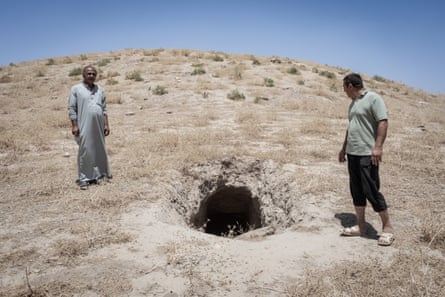
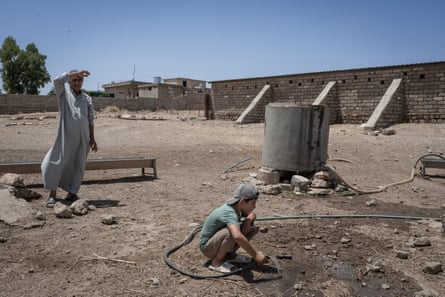
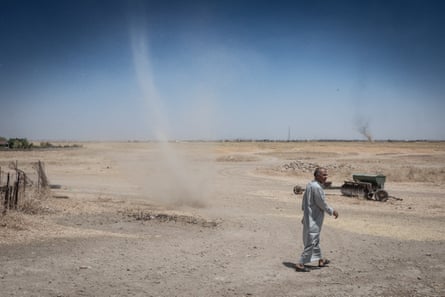
Clockwise from top left: farmland around Tal Jado’o village is contaminated by landmines and unexploded ordnance; Bahjat Othman Hasan overlooks Tal Jado’o; Hasan with his son at a well in the village, where groundwater levels are rapidly falling; dust devils have become a symbol of a changing climate; a cave reportedly used by IS fighters
Parts of the surrounding countryside are still contaminated by unexploded ordnance left behind after IS was driven out. But the greatest concern now lies beneath the surface, where groundwater levels continue to fall every year. “Years ago, you could reach water at around 10 metres,” says Hasan. “Today, we must drill to around 25 metres. Every year it becomes more expensive.”
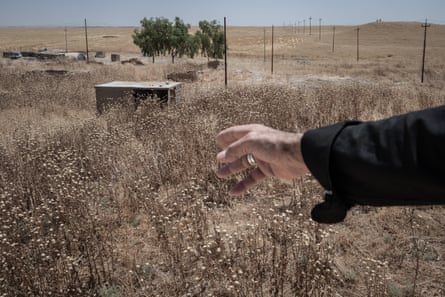
Not far from Tal Jado’o, the village of Al-Sajea shows what happens once that tipping point is passed. Before the war, 37 families lived here. Today all 24 houses still standing are severely damaged, their rooms and courtyards overrun by hurfeish, the spiny, purple-flowered wild milk thistle that has colonised abandoned fields and ruins across the region. Nobody lives here any more.
-
All 24 houses still standing in the village of Al-Sajea are severely damaged
“Everybody went to Tal Afar [a city in northern Iraq],” says Asef Hasan Ali, 43, one of the few people who still comes back at all. He lives in Tal Afar, but during the agricultural season he stays in a caravan parked at the edge of the village, close to the fields he still works. “For families, it’s impossible: everything was bombed, nobody can live here.”
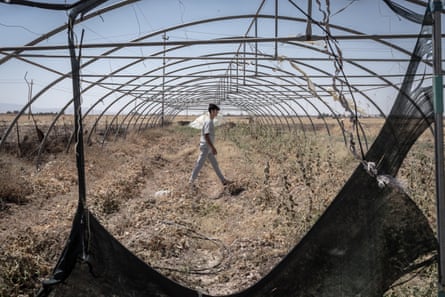
Only days before our visit, 19-year-old Smain from the village of Qazal Quyu says his family’s vegetable garden burned to the ground after a dust devil whipped across neighbouring fields, triggering an electrical spark that ignited dry vegetation. These rapidly rotating columns of hot air, common during Iraq’s increasingly intense summers, have become another symbol of a changing climate.
-
Smain on his family’s farm in Qazal Quyu village
The villages are not simply losing people, they are losing a generation. Village schools have fewer pupils every year. Those who complete secondary education rarely return after university. Others head directly into construction jobs in the cities of Mosul or Erbil, where wages, although modest, are more reliable than farming.
“Almost all my friends want to leave. Sometimes I want to leave, too. But if I go, who will help my parents?” says Smain.
-
A dry riverbed in Sinjar province