3 months ago
76
3 months ago
76
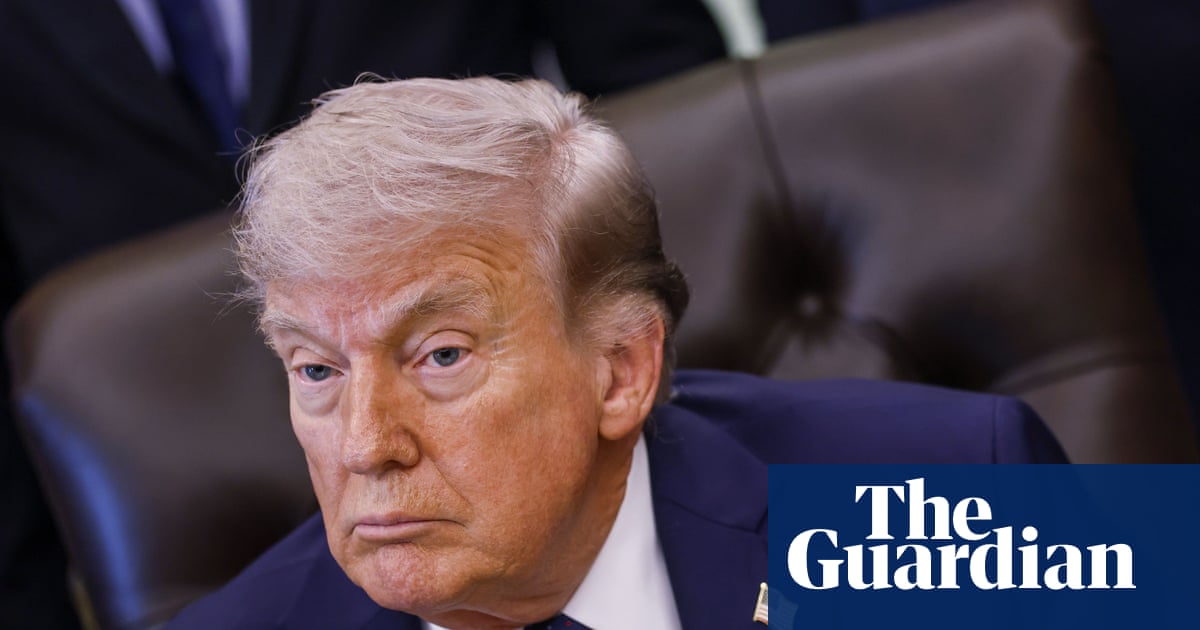
A deal to end the war between Russia and Ukraine was “95% done”, Donald Trump claimed after his meeting over the weekend with Volodymyr Zelenskyy at Mar-a-Lago.
Unfortunately, the 5% still remaining includes the small matter of getting Vladimir Putin to agree to a deal – and there are precious few indicators that that is any closer. Instead, Trump’s claim seems to be the latest in a long line of overoptimistic statements anticipating a swift end to the conflict, starting with his campaign promise that he would end the war in 24 hours.
Indeed, a sober observer looking at what is still left to achieve before a lasting and durable peace can be declared might react to the “95%” claim the same way Zelenskyy reacted to Trump’s insistence on Sunday that “Russia wants to see Ukraine succeed”: a mix of disbelief and shocked amusement.
Since the leaking of a US peace plan – which originated as a set of Russian demands – in mid-November, several supposed deadlines for peace have come and gone. A deal by Thanksgiving and peace by Christmas both proved just as impossible as they sounded.
Throughout every round of talks, the basic facts have not changed. Russian officials repeatedly state that the war will end only when its “root causes” have been dealt with, a vague formulation that involves Russia retaining some form of military or political control over Ukraine’s future.
Ukraine is facing its toughest winter yet and many are ready for difficult compromises, but things are not yet so bad that capitulation is an option. Meanwhile, Putin shows no sign of stepping away from those maximalist goals and Trump shows no sign of being willing to put pressure on him to do so. Until one of these factors changes, it is hard to see how a lasting deal could take shape.
The diplomatic dance performed by Ukraine’s European allies focuses on keeping Washington engaged with Kyiv and not letting Trump cut off US assistance, such as intelligence sharing, that remains crucial to the Ukrainian war effort. Zelenskyy’s European friends have also been pushing US-backed security guarantees, which are meant to boost the standing of Kyiv in the aftermath of the elusive peace agreement.
Trump announced progress on these security guarantees over the weekend but a lot remains vague and it is unclear how the guarantees would work in practice. Russia is likely to veto any meaningful commitment to station western forces in Ukraine or give Nato-like security assurances, meaning any real guarantees would have to be imposed on Russia, rather than coming as a component of a negotiated peace deal.
That seems an unlikely step: neither the US nor Europe is willing go to war with Russia over Ukraine now and they are unlikely to agree to anything that would oblige them to do so in future.
There is no sign that Trump is prepared to impose anything at all on Putin. He continues to give the impression that he merely tolerates the beleaguered Zelenskyy while remaining fascinated by the autocrat in the Kremlin. This was again in evidence during the weekend meeting with Zelenskyy: not a single US official met the Ukrainian president off the plane in Miami, in stark contrast to the red carpet and personal greeting from Trump that Putin was afforded in Alaska in the summer. It was also notable that Trump called Putin – a call that took place on Trump’s initiative, the Kremlin claimed – just before meeting Zelenskyy.
If Russia does agree to a ceasefire eventually, it is far from clear what mechanisms the west could deploy to ensure Moscow sticks to it. If there is no ceasefire and no deal, it leaves Ukraine with a pair of disheartening possible scenarios: in one, the country manages to keep fighting and hold the line until a change in Russia’s political or economic climate forces the Kremlin to become more amenable to compromise; in the other, the situation in Ukraine becomes so bad that Kyiv is eventually forced to accept Moscow’s punishing terms.