2 months ago
65
2 months ago
65
In 2019, when Sajid Javid was home secretary, he spoke about growing up on “the most dangerous street in Britain” and said how easy it would have been to fall into a life of crime. Fortunately, he said, he managed to avoid trouble. But it turns out that Javid was being a little economical with the truth. He did get into trouble. Serious trouble.
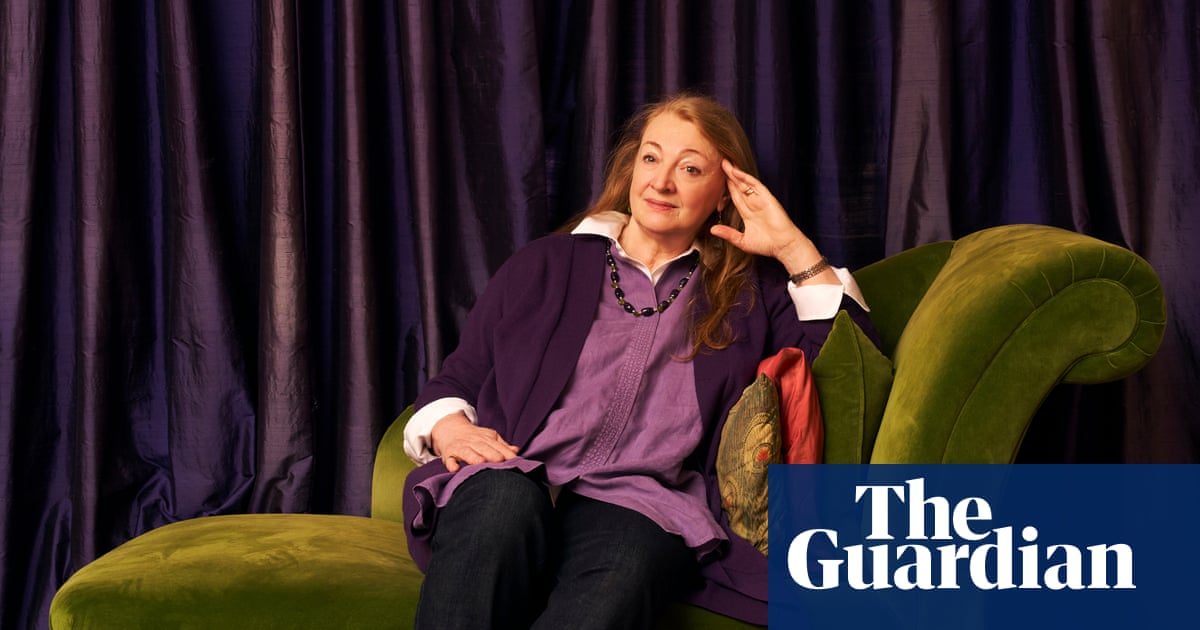
Now 56, he has just published his childhood memoir, The Colour of Home. It’s crammed with incident – arranged marriages, savage beatings and boys behaving badly. I think there’s one key moment in your story, I tell him. “What, just one?” he hoots. Javid is not lacking for confidence.
Thirteen-year-old Sajid is sitting in a police station with his younger brother Bas, who went on to become one of Britain’s most senior police officers, after they’d been caught red-handed swindling an amusement park. It’s an astonishing Sliding Doors moment when you can see the future banker and politician becoming trapped in a life of scuzzy, low-level crime.
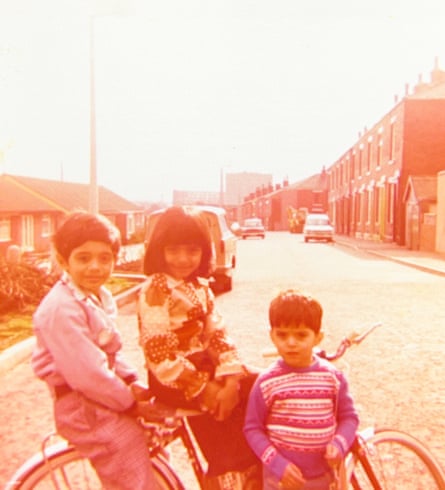
They had discovered how to cheat fruit machines with a J-shaped piece of wire. Before long, Javid had opened a savings account with his ill-gotten gains. Eventually they were caught by the manager of an arcade in Weston-super-Mare. Javid describes the incident in the book: “‘Right, you little Paki bastards, I know you’ve been ripping me off,’ he crouched to get as close to our faces as possible. ‘You’ve been stealing from the machines. If you weren’t kids I’d kick the shit out of you, but I’ve called the police instead. They’re on their way and you’re going to jail, you little fuckers.’”
The boys were arrested and held in a cell. They confessed, their winnings were confiscated, and the police gave them enough money for the bus back to Bristol. When they got home their father beat them.
Two months later, the boys were ordered to attend a police station in Bristol with their father. Sajid could have easily been charged, Bas should definitely have been because he had already received a caution for theft. Their father, in tears, begged the officer for leniency. The officer eventually cautioned both boys, and said he was giving them a second chance.
I never imagined Javid’s memoir would make me blub.
What was the pleasure in stealing from the slot machines? Javid’s face lights up. “Oh, I loved it. I loved it. The pleasure was that you could make money from these machines.” He pauses. “Well, actually not make money, take money from these machines.” He says they justified their actions by telling themselves the owners were also acting unlawfully. “Bas and I thought that the people who operated these amusement parks shouldn’t be letting kids in anyway. You had to be 18. Bas was 11, I was 13. We were obviously nowhere near the legal age.”
Javid sips his black coffee. “You’re right to pick out that moment because it did change me a lot,” he concedes. What does he think would have happened if they’d not been caught? “I think we would have just continued till we got caught.” Would he like to see the police officer who didn’t charge them again? “I’d love to.” What would he say to him? I’d say thank you. You changed my life.”
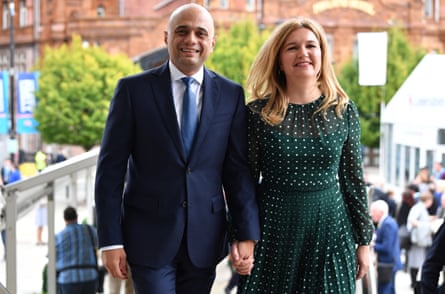
I meet Javid at his house in an affluent part of London. His wife, Laura, answers the door, and he is nowhere to be seen. She makes me coffee, asks where I’ve come from, chats about her keep-fit routine, tells me about the art on the walls. One of the pictures, a gorgeous still life of a jug and pear, was painted by their daughter Maya when she was nine or 10. Laura has a lovely easy warmth. As does their eldest daughter Sophia, who has just been for a jog, and Bailey their dog, a cavapoochon who nuzzles up to me in a chair.
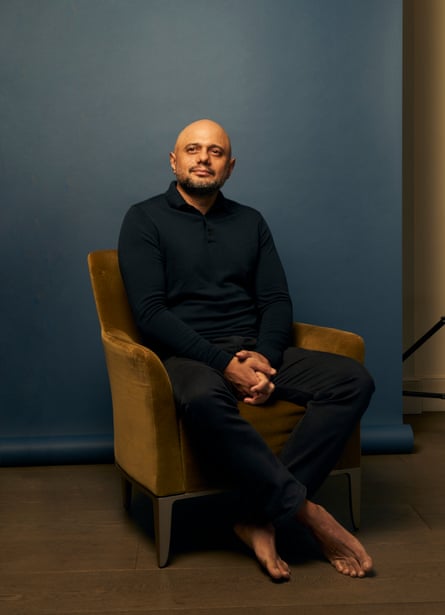
When Javid walks into the room, some minutes later, he is genial but more business-like. There’s little space for small talk. Bald and round-faced, he looked old for his years when first elected. Sixteen years on, unshaven and informal, he seems more youthful.
“Read it all?” he asks of the book. Yes, word for word, I say. “Good, thank you. Did you like it? Did it surprise you?” It’s more an interrogation than a conversation. The Colour of Home provides great insight about his evolution into a can-do Conservative. Javid admired his bus driver turned shop-owner father and his mother, who got by despite not speaking English, but he wanted so much more for himself.
One of five brothers, when the family moved house, 12-year-old Javid was so determined to stay at his old school that he got on his bike – Tebbit style – and cycled the 6.3 miles there. He was told that he was no longer on the school roll, so he pleaded with the deputy head to let him stay. When he was told he couldn’t do maths O-level (now maths GCSE), he pleaded again – this time with his father to pay for a tutor. And when he was told he could only do two A-levels at school, he left for further education college where he could do three and go on to university. “If I had to pick out a theme, from a very young age I would say I was positively stubborn.”
He also demonstrated a precocious if dodgy entrepreneurial initiative. And we’re not just talking about slot machines. When the government sold shares in nationalised industries, 16-year-old Sajid phoned up his father’s bank asking for an appointment while impersonating him. The manager was shocked when he arrived in his school shirt and tie, admitting what he had done, and asking for a £500 loan. The manager told him he couldn’t give him the money, but he offered to loan it to Javid’s father who could then pass it on to him. Javid ended up making more than £2,000 from the selloffs. Margaret Thatcher became his hero.
In the book, racism is omnipresent. There’s his first fight at the start of secondary school because a boy in his class tells him, “You’re a Paki bastard. We don’t like Pakis”; the woman who nicks clothes from his father’s shop and runs off racially abusing the family; and the university “friend” who finds out that Javid has got a job at Chase Manhattan bank and he hasn’t, and asks him, “What the fuck is wrong with this country?” But the racism is multicoloured. There’s the man who tells his father he can’t let Javid’s brother Khalid go on a school trip to Israel because “he’ll be surrounded by Jews”. On another occasion, his father invites two Black friends for dinner and his mother worries what she’ll do with the plates after they have eaten off them.
Most shocking of all is his family’s reaction to Laura when she became his first serious girlfriend. Javid’s father tells his son that he can’t marry Laura, a white Christian. When he asks why, his father says it’s because he is already engaged. His parents have not bothered telling him that they have arranged a marriage to his first cousin Amna, whom he loved as a sister. His parents finally agree to meet Laura’s parents, and he discovers that over a curry they told them that marrying their son would be the ruin of Laura. “Imagine that! My parents meeting with the parents of the woman I want to marry, and their message is ‘Don’t let your daughter marry our son, it will destroy her life.’” Javid’s horror is undiminished today.
The accounts of his relationship with his father, who died in 2012, are fascinating. They love each other, but his beatings are brutal. The worst incident is when the oldest of the five boys, Tariq, steals money won by Javid on a slot machine, but tells their father that Javid stole the money from him. His father takes off his leather shoe and hits Javid on his arms, legs, stomach and face before attacking him with a vacuum cleaner. “There were moments of rage. It could be a shoe or a stick. As a kid, I thought I’m never going to do this to my kids because look how it makes me feel. I hate it. I just hate it.” He’s talking in the present tense, as if he can still feel the crack of that stick. “As a kid, I used to think, ‘How can you love somebody and hit them?’. But then a couple of days later, my dad would be as if nothing had happened and he’d show you so much love and affection. And you’d think, ‘How do you go from that to this?’”
Does he regard what his father did to him as abuse? “Yes. I forgave him, but, yes, I regard hitting a child as abuse. When I was in government I did a lot around child abuse and sexual exploitation, especially as home secretary. I introduced the online harms white paper, as it was then. Some of the things I went through as a child made me think I could now do something to help children in terms of abuse.”
Three of Javid’s brothers went on to successful careers. Tariq struggled, and in 2018 he took his own life. By then Javid was a high-profile politician, and it was splashed all over the papers. Tariq’s suicide remains a source of huge pain for him. As health secretary, he hoped to draw up a 10-year mental health plan and a suicide prevention plan, but he never got time. Javid tells me that any profit the book makes is going to the Samaritans.
After studying economics and politics at the University of Essex, he went on to a fantastically lucrative career in banking. Is it true you earned £3m a year, I ask. “I’m not getting into what I earned …” He smiles. “I was paid well.” He left banking in 2009 to build a career in politics. A year later he was elected Conservative MP for Bromsgrove in Worcestershire. When campaigning, he said, “I entered politics to do my best for this country – the country that has done so much for me.” The first department he ran was culture, followed by business, housing, the Home Office, the Treasury and health. An impressive portfolio of posts. Yet he never seemed to stay long enough in one job to make a difference.
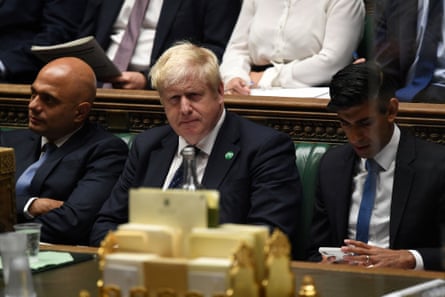
He enjoyed working for David Cameron, less so for Theresa May, and then there was Boris Johnson. Javid resigned twice from Johnson governments – as chancellor, when Dominic Cummings told him to dismiss his special advisers (he told Johnson that he was Cummings’ puppet), and as health secretary when it emerged that Johnson had been lying over Partygate. By then he’d had enough, and he finally stood down as an MP in 2024.
Was he disillusioned? “Yes, because there were so many things going wrong.” What was it like to work for a liar? “Well, look, Boris …” He pauses. “I don’t know if you’re referring to Boris, but the fact that I resigned on him twice speaks for itself. I thought, if I didn’t have confidence in the prime minister, I can’t work honestly with integrity for the government.”
Did he feel tainted by association? “No, I didn’t feel tainted because, rightly or wrongly, I felt I had carved out enough of a personal image. After I resigned as health secretary, I had a pensioners’ fair in my constituency, and they were all high-fiving me, saying, ‘Well done, we’re so proud of you.’” Why? “For resigning!”
Would he go back into politics? “No.” Why not? “I’m 56. I don’t think it’s for me any more. I still support my party, of course, but I’m just not involved in any activity any more.”
I ask if he still has a relationship with Johnson? “We have a relationship,” he says gnomically. He insists it’s a good one when pressed. How did Johnson react when Javid said he was a puppet of Cummings? “Well, at the time, he said ‘Absolutely not.’” Was he angry? “No, he didn’t look it because he was more focused on trying to convince me to stay. What I will say is that he’s since told me that with Cummings I was absolutely right, and that he should have listened to me and others.”
Javid has had a strange career in politics. Such a spectacular CV, and yet so little to show for it. Does he feel satisfied by what he achieved? “Given the opportunities I was given, it would be churlish to say I wasn’t satisfied. That said, did I achieve what I wanted to achieve? I wanted to be prime minister. And I tried.” He stood for the leadership in 2019 and finished fourth, with Johnson winning. “Obviously, I didn’t make it. But I’m pleased I tried. Had I not, I would always look back and think I should have given it a shot. Among the people who were putting their hands up for it, I thought I could have done the better job.”
Why? “Two things. So much of the challenge the country was facing was economic, and I just think I had a better handle on the economy, businesses and wealth creation. Second was the thing we’ve been talking about – the social challenges around class or race. Because of my lived experience, I could understand that in a way most politicians just can’t.”
Javid now has several finance-based private sector jobs, but his most interesting work is in the charitable sector as chair of the Holocaust Memorial Day Trust and co-chair of the Independent Commission on Community and Cohesion. Are Labour or the Tories doing enough today to counter the politics of division preached by Reform? “No, they aren’t.” What should they be doing to improve social cohesion? “I would like all major political parties to be much more cognisant of the language they use and the issues they pick, and about how divisive they can be or they can be seen to be.” As home secretary, Javid disowned Theresa May’s term “hostile environment”, preferring “compliant environment”, though this was largely semantics – it didn’t lead to a more welcoming attitude to migrants. When reading the book, I can’t help thinking how much he would have hated the word compliant as a child, and how his parents would never have been allowed to migrate to Britain in the first place if today’s policies had been in place.
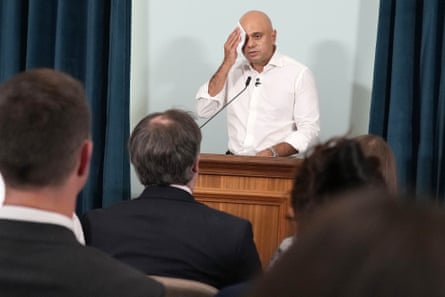
He is aware that today’s rise in rightwing populism has disturbing echoes of his childhood, growing up in the heyday of the National Front. “I don’t want us to go backwards, but there is a danger we will,” he says. Last year, he argued that the mismanagement of immigration, cost of living pressures and social media-driven extremism were in danger of creating “a tinderbox of disconnection and division” in Britain. “Unless we find ways to defuse it, the basis of our democracy is at risk,” he said.
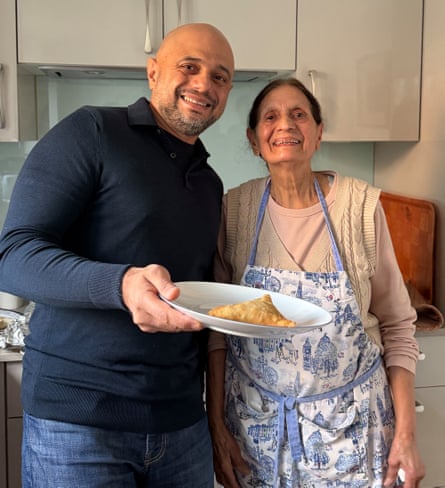
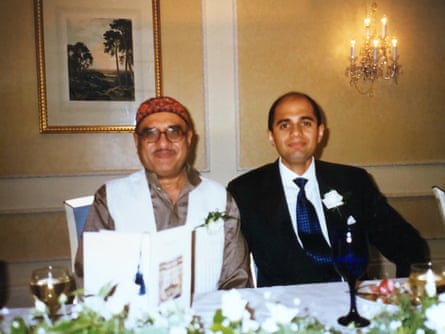
Javid stands by this. But he believes his story is an example of how communities can heal divisions. He says his family is a microcosm of modern society – or how he’d like it to be. Forty years on, he and Laura are still together and have four children. In the end, his family not only accepted her but grew to love her. When Javid was an adult, his father told him he was ashamed of the beatings he had dished out and begged for forgiveness. As for his mother, she finally learned to speak English and now lives happily and independently.
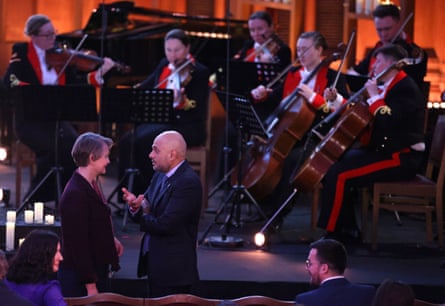
Finally, there are Sajid and Bas, the two reprobates who were headed for a life of crime. Fast forward four decades from the day they were held in custody to 2019, and Javid finds himself as home secretary presenting Bas with his certificate at the College of Policing for graduating on the Strategic Command Course. “My mum was sitting there, and she said to us afterwards, ‘If only your dad was here now. Look what you two were doing before.’”
He says that The Colour of Home is not a political book. And in a way he’s right. It’s an intimate childhood memoir. But at the same time it’s a parable of the Thatcherite dream. Distinctly unromantic because money is at the heart of so much of it and he (almost) rises to the top in the grubbiest of political times, and yet profoundly romantic because of how much he achieves against the odds. “It’s a story that hopefully will motivate others,” he says. “Particularly those born on the wrong side of the tracks.”
The Colour of Home: Growing up in 1970s Britain, by Sajid Javid, is published by Abacus on February 5 at £25. To support the Guardian and the Observer, order your copy at guardianbookshop.com. Delivery charges may apply.