3 months ago
78
3 months ago
78
When I joined the band Swim Deep 13 years ago, my dreams were much like those of any young musician: to play Glastonbury, to tour America and to hear our music on the radio – all of which we’ve managed to achieve. But what I hadn’t counted on was finding a fanbase in China. Despite us never having knowingly released our music there, Swim Deep recently returned triumphant from our fourth run of shows on Chinese soil in barely 10 years, and we’re not the only British indie band benefiting from this unexpected opportunity.
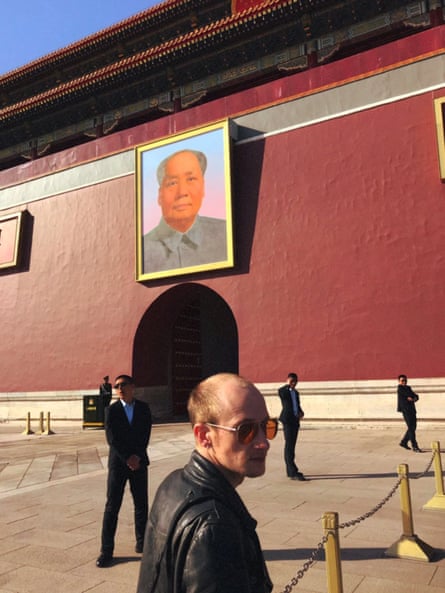
China has had an enthusiasm for British and Irish pop acts for years, long before its ¥500bn (£531m) music industry overtook France to become the world’s fifth largest in 2023. Jessie J became a phenomenon after winning the country’s premier singing competition in 2018, while Westlife have spent decades playing to thousands in Chinese arenas and stadiums. But less heralded is a growing interest in grassroots UK indie bands, for whom the unexpected demand – and promise of excellent pre-gig catering – presents a financial and spiritual lifeline as returns increasingly diminish on home soil.
The Underground Youth, formed in Blackpool in 2008, have spent more than 15 years “slogging night after night through small clubs in the UK and Europe”, says frontman Craig Dyer. Twelve albums in, Dyer says that touring at home is no longer financially viable, with accommodation and catering costs often outstripping performance fees.
In China, the experience is quite different. Tours are often pitched to artists as all-inclusive offers, with promoters taking on a financial risk by booking large venues and covering internal travel, hotels and hot meals on top of a multishow fee – a risk they’re happy to take, because of the passion for British artists among Chinese fans. “It’s some of the best treatment we’ve had,” says Dyer, citing the 14 gigs they’ve played there since 2019. “We’re in nice hotels, being taken out for meals, and having small cares taken care of without thinking. And the professional level of the venues goes above and beyond what we’re used to.”
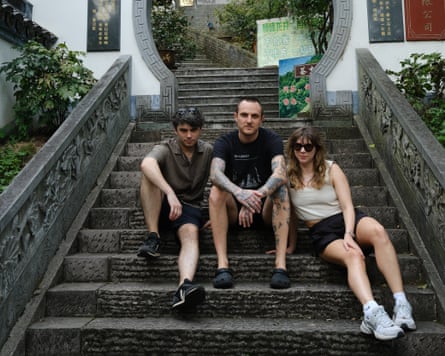
For Kat Day of Manchester-based darkwave duo the KVB, the second point is particularly encouraging: “We’re an audiovisual band, and the venues in China are often equipped with beautiful LED screens. I wish we had the funding to make our venues this good.” It’s not just the technical capabilities that are impressive, either. “Venues are often in shopping centres, which is quite genius,” she continues. In the UK, she says, “all of our venues are getting shut down – Moth Club [in Hackney] is fighting tooth and nail to keep open. But who’s going to complain about noise in a shopping centre?”
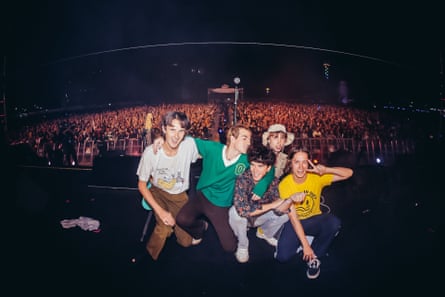
Swim Deep’s first gig in China, in 2014, was bizarre: we had arrived in Hong Kong to discover that the venue was an Italian restaurant with all the tables and chairs pushed to the side. But on the mainland, we’ve mostly encountered ultra-modern spaces like those Dyer and Day enthuse about. And like them, we find our audience numbers in China often far surpass what we’d expect to find at home. In September 2019, our biggest UK festival show took place at 110 Above in Leicestershire, in front of a crowd of 500. A few months later, we played to 10,000 people at sunset on the main stage at Strawberry music festival in Guangzhou; we were the only UK act on the bill.
Sea Power, who formed as British Sea Power in Reading in the mid-90s, have had similar success. Their first visit to Beijing was a “catastrophe”, says frontman Jan Scott Wilkinson – the band had arrived to find the festival they had been booked for was mysteriously cancelled, so they instead went to the Great Wall to play acoustically to some “very bemused local families”. But in May 2025, four new headline shows turned to six after tickets sold out within hours. “We were playing up to 3,000 capacity venues,” Wilkinson says. “It was like playing in London every night.” The band have two separate trips planned in 2026 – a festival in May, and a dozen further shows later on. “We’re old. We’re no longer desperately trying to break or grow,” Wilkinson says. “So it’s a nice surprise to do something like this and be treated like kings.”
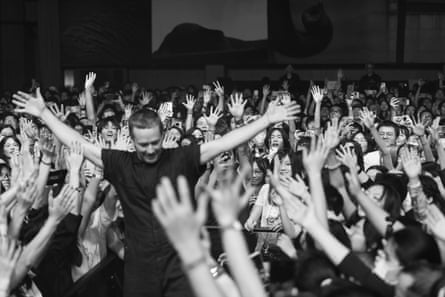
Their popularity is easily explained: in 2019 Sea Power scored video game Disco Elysium, which “deals with communism, capitalism and all kinds of philosophies and political thoughts”, says Wilkinson, and was an unexpected hit in China. But for other bands, the source of their Chinese fandom isn’t well known, especially as western platforms such as Spotify and Instagram are blocked in the country. “We were told that fans liked us because we looked like a couple from one of these Chinese soap operas,” says Day of the KVB. Galway’s NewDad, meanwhile, went viral on Rednote in 2024, with the Chinese social media platform flooded with makeup tutorials recreating the look of the porcelain doll on their Madra album cover.
Levek Lee has travelled thousands of miles from her native Guangdong to huge cities, to see British bands such as Wolf Alice and Ride – and her personal experience offers some insight into Chinese fans’ engagement with western music. Having discovered acts like Jake Bugg and Swim Deep via the algorithm of now defunct Chinese streaming platform Xiami Music in the 2010s, she began importing records from UK stores such as Banquet Records in Kingston upon Thames, often waiting for a month or more for purchases to arrive. Studying in Sheffield for her postgraduate degree cemented her affinity with the “spirit of rebellion” embedded in British music and fashion.
“I enjoyed Chinese music but it tended to be more mainstream and pop-oriented,” she says. “But British indie music felt like a closer expression of my authentic self. I think Chinese music fans are also constantly searching for that kind of distinctiveness.” Furthermore, “I think [the success] also has something to do with the British music industry: there are loads and loads of bands out there, so there is something for everyone.”
Zipping through China via ultra-efficient bullet train is an eye-opening experience for UK artists; stories of Wuhan jam sessions with mohawk-wearing Chinese punks, meet-cutes with Chinese indie legends Carsick Cars, panda spotting in Chengdu and trips to subterranean Shanghai clubs that feel “like The Matrix” are among the highlights these bands share with me. After-show encounters with queues of excited fans bearing armfuls of merch and handmade gifts are no less cherished. But not every aspect of touring in China is liberating.
“In Nanjing, our tour manager came backstage with two police officers who wanted to run through the setlist and our understanding of the law,” says Dyer. “I had to sign documents saying that I wouldn’t swear, get naked, endanger anyone in the crowd or say anything negative about the regime.” All lyrics must be submitted for approval before an artist’s arrival in China, to ensure compliance with local censorship laws. The process can result in well-known songs being denied without explanation. “All well and good,” says Dyer. “But it’s a bit of a mood killer 15 minutes before you go on stage.”
Bureaucracy aside, UK artists are broadly enthusiastic about their Chinese touring experiences, with the avid work of independent promoters including So Ready Presents, Mentha Project, Haze Sounds and Blank Joy central to those experiences. With British acts including Shame, Matt Maltese and Caroline all playing China this year, the bookings show no sign of abating; and with the promise of visa-free travel for UK citizens, artists may soon find themselves with company on their outbound flights.
“I feel absolutely blessed that we can go to these places and meet these people who are so passionate and so kind,” says Day. “It’s special. There’s a lot of animosity towards China, but I think people need to go and see it for themselves.”