3 months ago
76
3 months ago
76
In yet another confusing and chaotic period for British politics there is one thing on which just about everyone can agree: Keir Starmer is unpopular. Very, very unpopular.
His net favourability rating, the difference between those who have a generally positive or negative view of the prime minister has been, depending on the pollster, anything from -50 to -57, a nadir only beaten by Liz Truss. Recent focus group descriptions of Starmer include a “jellyfish” and a “doormat”.
Perhaps most strikingly, the slightly plaintive chant of “Keir Starmer’s a wanker” to the inevitable tune of Seven Nation Army has been heard not just at football stadiums but January’s world darts championship.
In a political world increasingly atomised and feral, and fuelled by social media algorithms, open dislike is perhaps more common than in the past. But even in this context, Starmer appears an outlier.
The slightly more complex question is why. Yes, Labour is flagging in party polling, but the party still generally scores better than the Conservatives, Liberal Democrats and Greens, all of whose leaders are, by contrast, only mildly disliked.
It can also seem slightly anomalous to have such national scorn for a leader who even critical voters might see as quite mild, while those who have worked with Starmer generally portray him as decent and caring, if very tough and focused at the same time.
The raw disapproval figures, at least, have an explanation. Leaders tend to be viewed favourably by supporters of their own party, and Starmer is not. He entered No 10 with understandably strong backing from 2024 Labour voters, but this has evaporated, seemingly the result of government blunders and a policy framing intended more to chase Reform than engage the base. The same is true for Liberal Democrat and Green voters.
Even so, YouGov’s head of politics and elections, Anthony Wells, says the leap from the polling figures to the outright, visceral dislike can be difficult to explain. “People thought Rishi Sunak did a terrible job, but there wasn’t that deep personal element you get sometimes with Starmer,” he said.
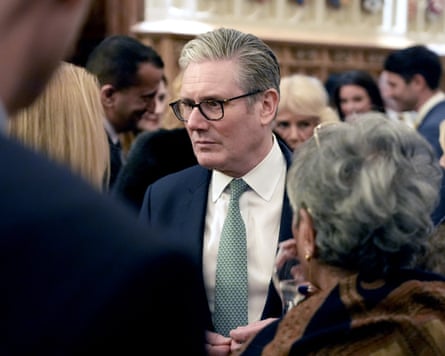
“He is deeply unpopular. The polling consistently shows it. But the reasons for it – disappointment in the scale of delivery, and the feeling he hasn’t got much of a clear purpose – are not what you would expect to drive a great dislike.”
MPs, who routinely hear political views from local people, have a variety of theories. One from an opposition party believes it could in part be a herd mentality. “No one wants to be the one that defends him. Once the view is that you’re useless, there’s no coming back,” they said.
A Labour MP who is not always a fan of the prime minister notes that such vitriol is, to an extent, part of the territory of being in No 10: “There are doors I’ve knocked under every leader since Blair who have said they would vote Labour if it wasn’t for the party leader.”
There are, however, some recurring themes, primarily the idea that voters are upset that Labour’s bold promises of change have not been delivered. “Some of my voters just feel betrayed, there’s a belief that he has ruined something for them,” one Labour backbencher said. An opposition MP explained: “The main theme that comes through from my constituents is that the public were sold a pup by him at the election.”
Luke Tryl from the pollsters More in Common, who regularly sits in voter focus groups, says the bile aimed at Starmer is in part structural, that he has “become a vessel for people’s frustration with the system”, but also personal, from a sense that he has not fulfilled his pledge to spark national renewal and oversee a drama-light, sleaze-free politics thatintruded less on people’s lives.
Rapid errors helped turn around the public mood. “I think two things crystallised him in the electorate’s mind early on as not just a bit disappointing, but fundamentally a bad character, which were freebies and winter fuel,” Tryl said.
“Where the real anger comes from is a sense of the whole ‘it’s a change, it’s something different’ was a sham. You have the combination of people feeling actively conned with the fact that they just think things are shit and politics has failed to make them better for a long time.”
Then there is the man himself. For all that Starmer does genuinely come from a relatively humble background, Tryl says the knighthood he earned as director of public prosecutions means many voters assume he is privileged and out of touch.
“In one focus group before the election, someone said: ‘At least Tony Benn gave his title up.’ It’s like they saw Keir’s knighthood as hereditary,” he said.
Added to this is a manner and delivery which even Starmer’s closest allies accept can be uninspiring. Tryl says that in recent focus groups based around people specifically picked as Starmer supporters, there was a view that he doesn’t have enough passion.
One person who has worked very closely with Starmer says that while he can be engaging and funny in private, he finds it hard to show emotion in a professional setting.
“I think that because of his classic bright grammar school boy and professional background he thinks the job is about working really hard and getting on with things,” they said. “The idea that a big part of it is about being looser and baring your soul hasn’t ever been really comfortable to him.
“But he’s also one of the toughest people I’ve ever met. It’s not that he is unaware or numb to what people say. It’s not that it doesn’t bother him. It’s that he has an incredible ability to plough on.”
Sometimes when people plough on, they can be rewarded. In an update on Friday, YouGov’s latest favourability poll for Starmer showed a 10-point increase from the previous month, showing him at a mere -47.
With the survey carried out after Monday’s near-rebellion by Labour MPs, it is possible that some voters now think he should be given a chance.
But it could also be a blip, and Starmer’s public persona might prove his downfall. Tryl says: “One of my grand macro-theories of politics is that people relate better to politicians who look like they enjoy the job, and they react quite badly to politicians that look pained by it.”