3 months ago
58
3 months ago
58
Ask the women working at Natchi Apparels in the historic city of Dindigul in Tamil Nadu and many will describe the turnaround in their working conditions in the garment factory over the past five years as extraordinary.
On 5 January 2021 the decomposing body of Jeyasre Kathiravel, a 21-year-old Dalit woman who was an employee of Natchi, then an H&M Group supplier, was found on a strip of farmland a few miles from her village after she failed to return home following a shift on New Year’s Day.
A man named V Thangadurai, her supervisor, was arrested and put in police custody, where he confessed to Kathiravel’s rape and murder.
Her fellow workers described Thangadurai as a predator, who sexually harassed and intimidated Kathiravel with impunity for months before brutally escalating his actions. She had complained but did not know how to stop him.
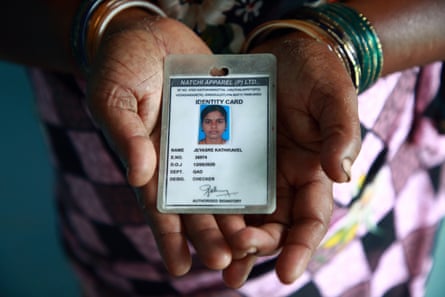
Other women faced similar problems. Selvi, a tailor who joined the factory in 2020, recalls workers loudly sobbing or quietly struggling as a result of the regular “production tortures”.
After the killing, and by the time international workers’ rights organisations such as the Asia Floor Wage Alliance (Afwa) and Global Labor Justice (GLJ) were involved, H&M had dropped Natchi, a subsidiary of the larger Eastman Exports, as a supplier.
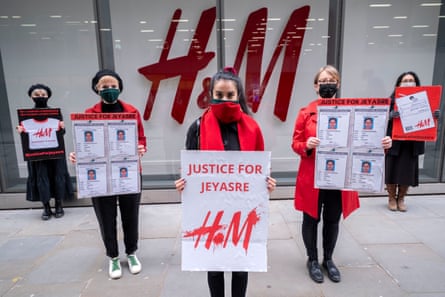
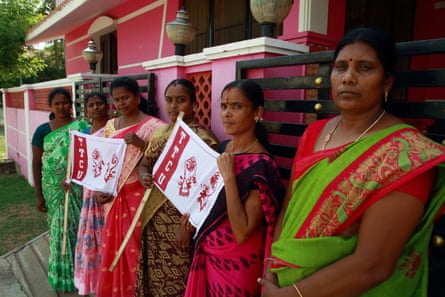
It took a year-long “Justice for Jeyasre” campaign, plus an investigation by the Worker Rights Consortium, which corroborated the women’s allegations, before the Tamil Nadu Textile and Common Labour Union (TTCU) – an independent, female-led and majority-Dalit union that represented many Natchi employees – sat down with Eastman to sign what would become known as the Dindigul Agreement to End Gender-Based Violence and Harassment.
Thivya Rakini, TTCU’s president, says: “Later, we came to know that mid-management never took this issue to the top management. And then a lot of labour groups and international feminist groups stood in solidarity with us, protesting outside H&M stores and reaching out to stakeholders.”
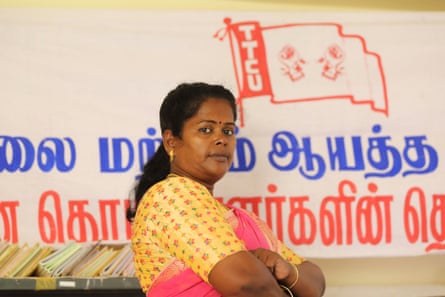
The binding contract borrowed lessons from a similar accord signed in Lesotho a few years earlier. But the Dindigul agreement was different, says Nandita Shivakumar, who served as the campaigns coordinator for Afwa at the time, because it had the strong presence of a local union.
This ensured that the agreement was “firmly grounded on the shop floor and effectively implemented at the local level through sustained engagement with both workers and management”.
H&M Group, despite no longer buying garments from Natchi, also signed a supporting agreement with TTCU, Afwa and GLJ, providing support and funding for the changes that had to be made. Later, Gap Inc and the owner of Calvin Klein, PVH Corp, did the same, despite having never sourced from Natchi, though both had contracted with other Eastman factories in the past.
Together, they provided US$300,000 (£223,000) for the duration of the Dindigul agreement, which concluded in October after a seven-month extension from the original March 2025 end date.
The brands’ combined funding has helped to retain unionists on the factory floor to engage with Natchi’s management on a near-daily basis, train shop-floor monitors to report and resolve instances of sexual harassment, and create an independent grievance mechanism to investigate and make findings on complaints of non-compliance by Eastman to honour the agreement.
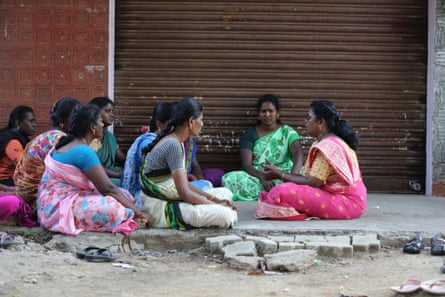
Jeyalakshmi, a cutter who has worked at Natchi for the past seven years, says: “I never thought the situation of my factory would change. We women were never respected. Now we are no longer harassed and there isn’t the same feeling of hostility as before. We have real freedom. Actually, the men are scared of us now because the grievance mechanism is very strong.”
Alagesan Senniappan, a senior vice-president at Eastman, says it has been a win-win situation. Workers have a renewed sense of trust in the management and productivity has increased. He says the agreement has created a “more inclusive and collaborative environment, strengthening both compliance and operational harmony within the factory”.
“Even though the agreement has formally expired, our commitment continues,” Senniappan adds. “We plan to keep working closely with TTCU, and we have already implemented the key learnings from the agreement across our other factories.”
A spokesperson for H&M said it remained in talks with labour organisations and continued to work on the prevention of gender-based violence and harassment in its supply chain in India and globally.
But there is disappointment that other brands did not sign the Dindigul agreement. Neither have they come hammering on Natchi’s doors with a slew of orders, despite what Sarosh Kuruvilla, a professor at Cornell University’s ILR School who has studied the Dindigul agreement at length, describes as “overwhelming evidence” that the deal was meeting the goals for which it was created.
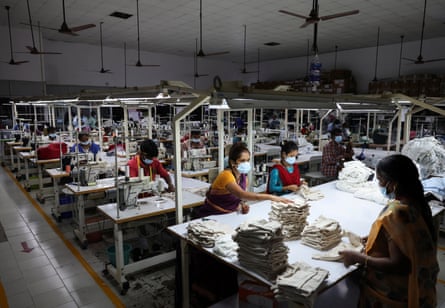
When the last large shipments to H&M Group were dispatched in June 2021, employment at Natchi fell by half to just under 1,700 workers, according to Kuruvilla’s report. In April 2025, Natchi employed more than 1,800 workers, or 55% of its workforce in January 2021.
Despite buy-ins from brands such as Walmart and Zara’s owner, Inditex, Kuruvilla says the factory has been unable to replace H&M Group with a similar “high-volume, high-value” buyer, which has made weathering the global economic slowdown more challenging.
“We’ve had three years of evidence – lots of evidence – that the agreement is working, but the factory isn’t getting enough business,” he says.
Kuruvilla believes that the seven weeks in 2022 when a “withhold release order” issued by US Customs and Border Protection was in place, which led to Natchi’s shipments being detained on suspicion of forced labour, could have had a “chilling effect” that was too difficult to reverse.
The bad press that followed Kathiravel’s murder, and which continues to dominate online searches for the factory, could be another factor, he adds, as well as the eye-watering 50% so-called reciprocal tariff that the United States has imposed on India.
But Kuruvilla thinks there is another reason some brands are unwilling to go into business with the factory.
“There are lots of brands that will not source from a factory where there’s a collective bargaining agreement or a labour management agreement because they think that’s not a good thing [for business],” he says. “Somebody will say: ‘Oh, they can go on strike any time.’”
Shivakumar doesn’t think the industry cares. “I think the CSDDD [the EU’s corporate sustainability due diligence directive] was a way forward to some degree, but now it’s been watered down.”
There have been a couple of notable exceptions, such as the legally enforceable Accord on Fire and Building Safety in Bangladesh, which about 200 brands rallied around after more than 1,130 garment workers died when the Rana Plaza garment factory collapsed on the outskirts of Dhaka in 2013.
“Unless there is some massive tragedy, nobody will do anything,” Shivakumar says.