3 months ago
56
3 months ago
56
Key events Show key events only Please turn on JavaScript to use this feature
Link to full government strategy
There’s a lot of reaction coming in on the plan – some believe the new elements aren’t ambitious enough and it’s just a consolidation of previously announced measures.
But here is the full strategy from Keir Starmer’s government, 16 months in, to tackle and reduce the rate of child poverty in the UK.
There are around 4.5 million children living in poverty in the UK currently – a historic high.
In 2023/24, there were 4.5 million children in relative low income, 900,000 more than in 2010/11.
There are two million children in deep material poverty – the label used to describe when families can’t afford four or more of 13 essential items, e.g, food, heating, housing.
Charities welcome 'invaluable' changes but say it's just the first step
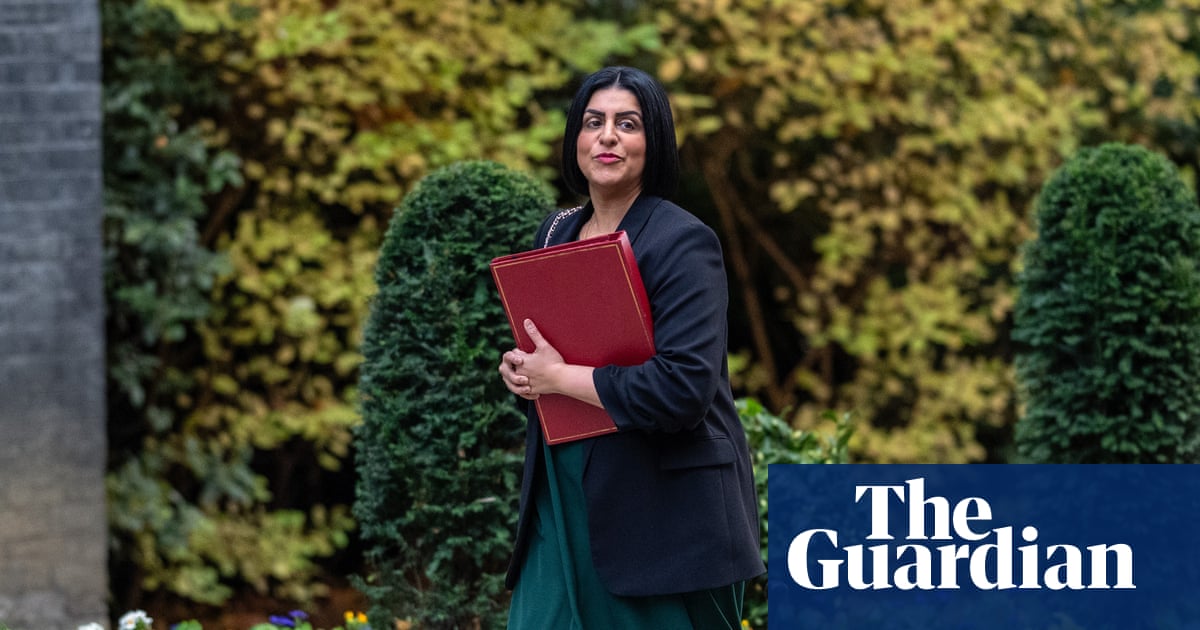
Poverty charities have reacted positively to the plan, which was originally intended for spring but then delayed as the government wrestled with the fiscal and political repercussions of removing the two-child limit.
The abolition of that cap will cost the government £3bn but lift 450,000 children out of poverty. The suite of other new measures will help 80,000 more.
The government “has put its money where its mouth is on the manifesto commitment to reducing child poverty”, said Katie Schmuecker of the Joseph Rowntree Foundation, saying that the removal of the two-child limit was “the single most effective policy decision” ministers could have made in tackling child poverty.
Under the limit, introduced by the Conservative government in 2017, 1.7 million children lived in households affected by the restriction – menaing one in nine kids missed out on help worth £3,514 a year.
Lynn Perry, the chief executive of Barnardo’s, said she welcomed the plan, adding: “Whist this is a landmark moment, we must also remember that even with these important changes, close to four million children are still set to be living in poverty in 2029. We must work together as a society to change this.”
Alison Garnham, the chief executive of the Child Poverty Action Group, said the changes were invaluable but “only the first step”, adding: “There is much to do and we must now build on this momentum to achieve more tangible change for children.”
Too many families still 'struggling without the basics' - PM
Too many families are still “struggling without the basics – a secure home, warm meals, and the support they need to make ends meet”, Starmer said in the statement announcing the full plan.
“I will not stand by and watch that happen, because the cost of doing nothing is too high for children, for families, and for Britain.
“This is a moral mission for me. It’s about fairness, opportunity, and unlocking potential. Our strategy isn’t just about reversing the failures of the past, it sets a new course for national renewal, with children’s life chances at its heart.”
Families to be offered help to leave temporary accommodation under UK child poverty strategy
My colleague Peter Walker has a full report on the plan, the key new elements of which I’ve pulled out for you below:
As part of what Keir Starmer has described as a “moral mission” for his government, the strategy will include an £8m investment in a pilot scheme across 20 councils with a particular prevalence of homeless families in temporary B&B accommodation, to ensure they are all moved within six weeks.
There will also be a new legal duty for councils to inform schools, GPs and health visitors when a child is put in temporary accommodation with their family.
In a parallel policy strand, ministers will work with the NHS to prevent mothers with newborn babies being discharged back to B&B hostels or other similarly unsuitable housing.
Rules will also be changed to make it easier for working parents receiving universal credit to get help to pay upfront childcare costs.
The new proposals in a strategy that was originally due to come out in the spring are in addition to the abolition of the two-child limit for some benefits, which will have the greatest impact on poverty, at a cost of £3bn during this parliament.
Other recent poverty-related policies include an expansion of free school meals in England, funding for more breakfast clubs and a project to set up a wave of new Sure Start-type family hubs.
Welcome: Labour announces plans to lift 550,000 children out of poverty
Happy Friday and welcome to our UK Politics blog, it’s Frances Mao with you this morning.
Today we finally get Labour’s long-awaited child poverty strategy – which they say will lift more than 550,000 children out of poverty by 2030.
For Starmer, this has been a “moral mission” of his government – the measures include childcare boosts, more free school lunches and a major pilot scheme to get the most vulnerable families out of temporary accommodation.
Too many are still “struggling without the basics – a secure home, warm meals, and the support they need to make ends meet”, Starmer said. He and his ministers will be up and down the country today championing the measures, which follow, of course, the major boost to alleviating policy, which is the scrapping of the two-child benefits cap, announced in the Budget last week.
In other news, we’ll also see how the BBC and ITV respond to Farage’s claims that broadcasters themselves used to peddle racist nonsense. The Reform leader has tried to turn the focus back on those outlets after their reporters yesterday questioned him on his alleged teenage racism and antisemitism.
The Guardian has led the reporting on Farage’s alleged racial abuse as a schoolboy, and since we broke the story a fortnight ago, 28 of his former classmates and contemporaries have come forward with recounts. A group of Holocaust survivors this morning are demanding Farage apologise for his alleged antisemitism.