2 months ago
64
2 months ago
64
I was brought into The History of Sound as the music adviser, my main job being singing coach for the cast, especially Paul Mescal and Josh O’Connor.
My parents were folk educators. I grew up in New England, singing and playing all kinds of different folk including Appalachian fiddle tunes, as well as songs from the British Isles. My parents’ favourites were legendary Yorkshire singing family the Watersons. I now live in London and it was amazing how close History of Sound’s musical world matched my own. Ben Shattuck – who wrote the original short stories and the screenplay – made a playlist of all these different types of music so everybody could get a sense of the film’s world.
It’s set around the first world war, so I pointed the actors at recordings of the era, such as Almeda Riddle, an amazing ballad-singer from the Ozarks who had this idea of “getting behind the song”. Paul is from Ireland and had an immediate connection to folk music. Josh was familiar with traditional music and had done some singing in musical theatre and choirs – but within just three weeks, they had to look as if they’d been singing their entire lives. Their vocals in the film are sung live on camera, in the moment. When I saw the finished film, I understood how crucial this was to the organic development of the scenes.
They would both come to the little shed-studio at the bottom of my garden: we’d have an hour or so together each time and I’d sing and show different approaches. Actors make amazing students. They have little time so their attitude is: “I need to get this now.” I have a distinct memory of Josh standing just inches from my face, studying every element of how my voice was producing sound, and Paul breaking out into a huge grin and grabbing Josh and I on the shoulders when we nailed a three-part harmony.
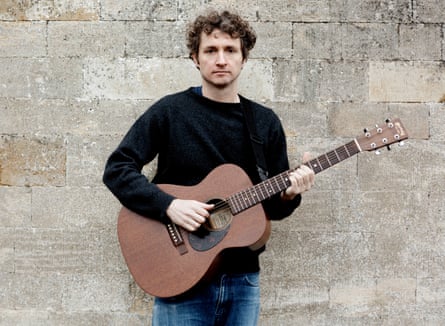
The thing about singing is that the voice is much more intensely connected to your emotions than other instruments are. When teaching guitar, you can point people’s fingers to the right place, but with the voice it’s all internal. So for me, teaching singing is about helping people get comfortable, finding the natural sound in their voice, and not being scared of it.
We made some pre-recordings in a studio in New York as a reference for singing on set and as a way to heighten the focus for the actors. They really engagedas musicians: Josh working on his piano parts, Paul coming up with harmonies. Paul really connected with the lonesome feel of the song Silver Dagger. And the enthusiasm for the music was real: I heard they were singing the songs down the street on their way back from the studio, just like Lionel and David do walking through the woods in the film. It made me remember hitchhiking through Ireland with my best friend, singing Talking Heads songs.
I was not on set, but during filming, some of the cast and crew came to one of my gigs. My mom met everyone backstage and immediately started singing the Watersons’ song Country Life to Paul, who joined right in. Oliver Coates, who composed the score, was aware of my dad Peter Amidon’s choral arrangements, and actually used his arrangement of All is Well in the Oxford scene where Paul’s character Lionel is conducting the choir. Dad died in October and was able to see the film not long before. Hs role in the film was especially meaningful to me.
When I saw the finished film, it was moving and magical to see how comfortable the actors were when singing: it didn’t feel academic or that they had just learned a style. There’s an incredible scene where Lionel’s father has just died. Lionel’s at a bonfire, there are musicians there playing, and he goes into a kind of reverie. It really captures something about a folk festival at night, but of course it’s mixed with his profound grief and the catharsis of that moment.
I hope the film inspires people to explore this music. Folk is the poetic record of people who would make up songs to sing to themselves as they worked or travelled. It’s our only record of the internal emotional landscape of working people of those eras, as very few would have published books. The deeper theme of the film is the longing around love and a pain which never goes away. This is what a lot of these ballads have preserved – and the songs are still speaking to us 100 years later.