1 month ago
59
1 month ago
59
Unilever has warned it will push through further price rises over the coming months, as the Marmite, Dove and Hellmann’s owner tries to recoup its own growing costs.
The Anglo-Dutch company said that while the pace of price rises slowed in the second quarter, owing in part to World Cup-related discounts and efforts to stay competitive in Brazil, these were “temporary factors” and would not shield consumers for long.
“We expect underlying price growth to accelerate in the second half as commodity-driven pricing continues to land in market,” the company told shareholders on Tuesday.
That could end up translating to higher profits for Unilever, depending on whether consumers keep buying its products, despite the price rises. Unilever said in its release that its underlying sales were up 5.8% in the second quarter, pushing turnover up 3.8% to €13bn (£11.1bn).
“Consumers continued to demand Unilever’s branded products, rather than switching to unbranded cheaper alternatives, despite cost of living pressures, proving the strength of Unilever products’ brand loyalty,” said Victoria Scholar, the head of investment at Interactive Investor.
Companies such as Unilever have been grappling with a rise in costs for ingredients and services, owing to higher oil prices since March, when the US-Israeli war on Iran effectively stopped tanker traffic through the strait of Hormuz.
Although oil prices have been oscillating amid temporary ceasefires, that has yet to lead to a sustained drop in prices for manufacturers, which are hoping to pass higher costs on to customers.
UK inflation dropped by more than expected in June to 2.6%, but City economists are warning that the Bank of England could be forced to tear up its economic forecasts and raise interest rates later this year if oil prices return to above $100 a barrel.
Mohamed El-Erian, a professor at the University of Pennsylvania and a former chief economist at the International Monetary Fund, suggested a sustained increase in oil prices to $90 a barrel could be enough to rewrite UK policymakers’ forecasts.
“Should oil prices remain above $90 a barrel, an important ‘if’, then headline inflation would face significant upward pressure. This, in turn, would heighten concerns over immediate indirect effects, including rising food prices driven by diesel transportation costs, and broader second-round effects over time,” he said.
That could put further pressure on customers of London-listed Unilever, which has factories across the country making Pot Noodle in Crumlin, Wales, and Hellmann’s, Marmite and Colman’s products in Burton-on-Trent.
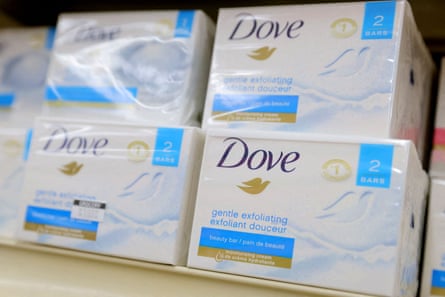
Unilever indicated that its investment in marketing had paid off, after sales growth beat expectations. “The days of underinvesting in our businesses are over,” the chief financial officer, Srinivas Phatak, told investors.
after newsletter promotion
Diana Radu, an equity analyst at the investment research firm Morningstar, agreed that Unilever’s turnaround strategy was working. “Strong volume growth, market share gains and an upgraded outlook suggest that increased investment behind its brands is translating into stronger consumer demand,” she said.
Unilever also raised its outlook for 2026. It now expects underlying sales growth of between 4% and 5% in the second half of the year, which will be “led by pricing” – another indication that it is planning price rises.
Unilever’s shares had climbed by more than 7% by early afternoon on Tuesday to the top of the FTSE 100 leaderboard.
Chris Beckett, a consumer staples analyst at the wealth managers Quilter Cheviot, said markets had reacted positively to Unilever’s latest results.
“The company comfortably exceeded sales growth expectations, with volumes increasing 5.5%, roughly double what had been anticipated,” he said. “While earnings only came in modestly ahead of forecasts, most of the focus will rest on the strength of its sales performance. Pricing remained relatively subdued during the quarter, with a greater contribution expected in the second half of the year.
“Personal care was the standout performer, with beauty and wellbeing brands such as Dove, Vaseline and Sunsilk driving much of the growth.”