3 weeks ago
52
3 weeks ago
52
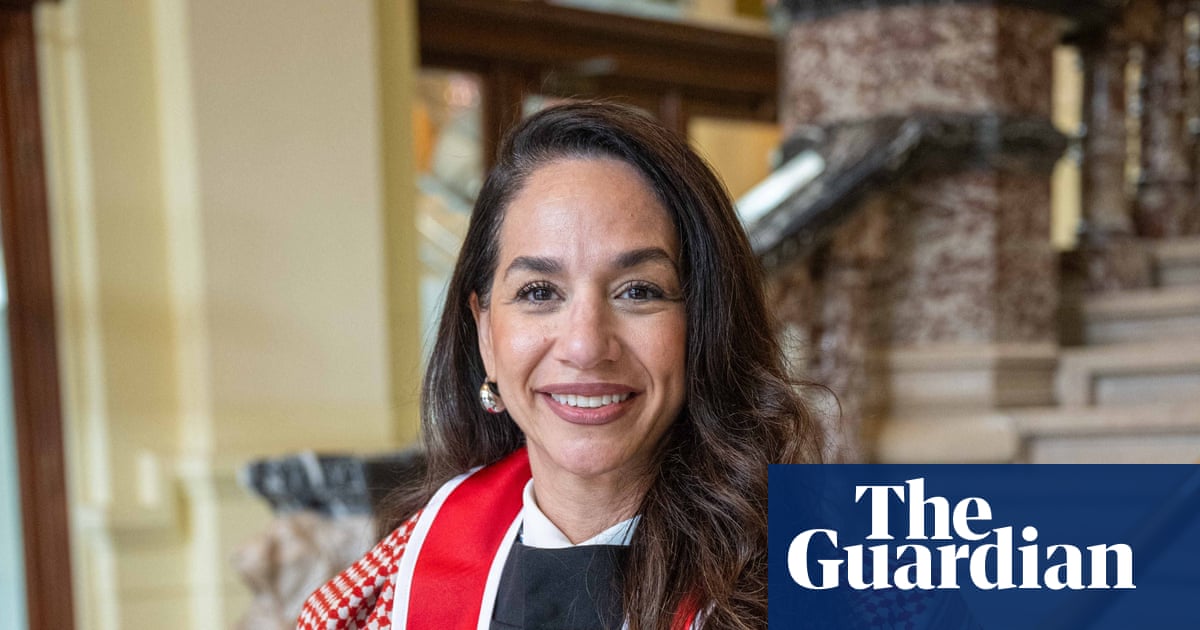
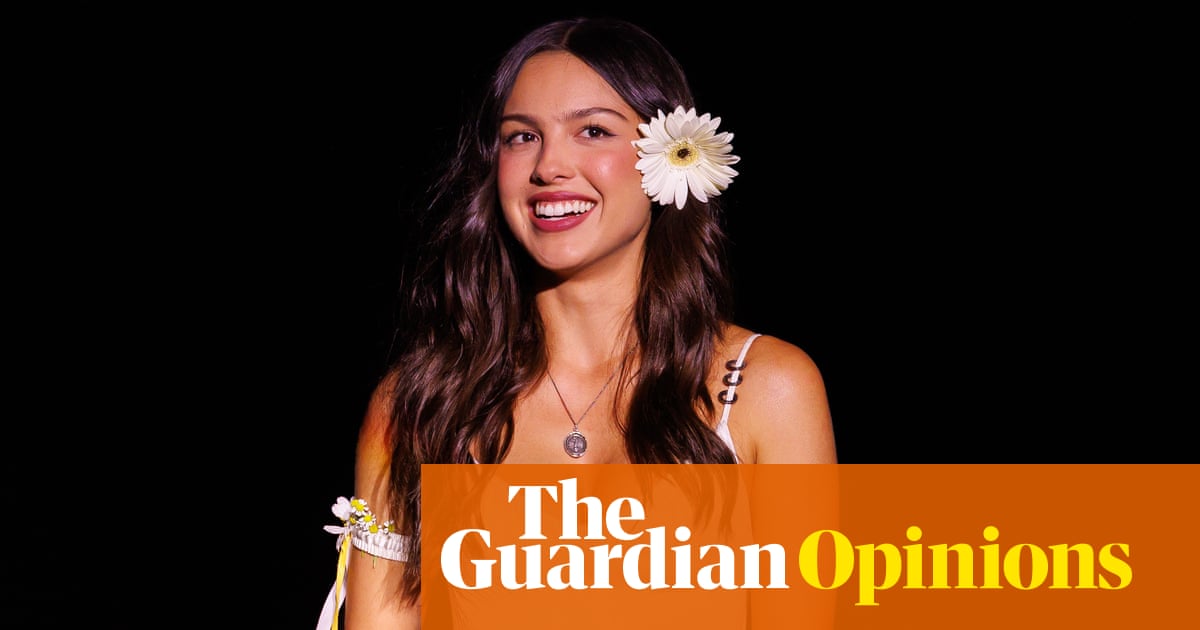
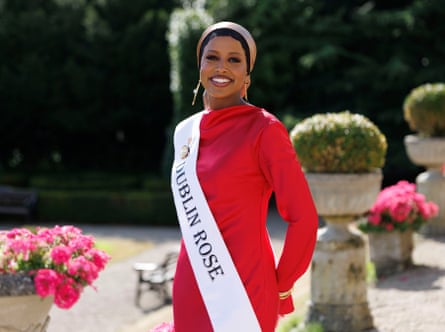
Last week marked the climax of Ireland’s Rose of Tralee festival, an annual celebration of Irish women, culture and the Irish diaspora. When Suad Mooge was chosen as Dublin’s participant in the festival earlier this year, she quickly became a symbol of Ireland’s fraught conversation around immigration and what constitutes Irish identity.
I caught up with Suad on a video call a week after the festival’s culmination, and found someone reflective and determined in the face of criticism.
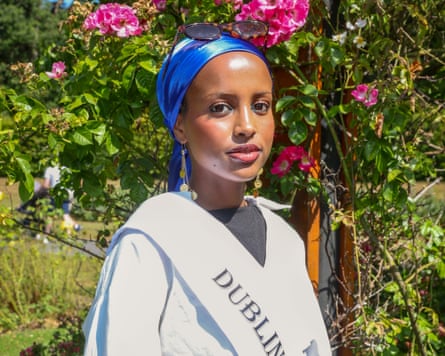
Suad is a wellspring of energy. Personable, open and radiating so much charm. More than anything, though, there is a sort of sororal girlhood about her. One can immediately see why she was chosen as Dublin’s Rose from among 39 competitors, and therefore the city’s representative in the wider Rose of Tralee festival. I asked Suad what prompted her to enter. Why not, she thought, after seeing an Instagram ad that made her realise you can simply nominate yourself. She applied then forgot all about it, until she received a notification that she had been selected. She went on to be named the Dublin Rose, and proceeded to the nationwide stage.
The 10 days before the overall winner is crowned at the culmination of the festival are a whirlwind affair, Suad tells me. All the roses go on a tour of Ireland, meeting with the public, attending cultural events – Irish dancing, singing and sports – until they finally arrive in Tralee for the televised events and the finale. Everywhere they went, Suad tells me, they received a “huge welcome”.
A viral backlash
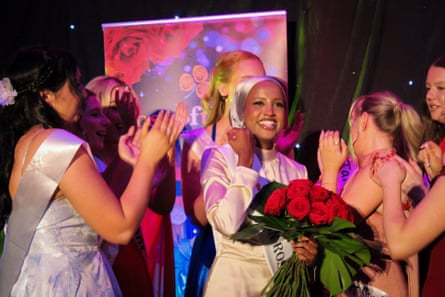
But that warm in-person reception came in tandem with a huge viral onslaught. “Even when I first got elected as Dublin Rose,” Mooge recalls, “In the first 24 hours there were 10,000 tweets. Then it was 20,000, 50,000.” Many of those comments and posts questioned Suad’s right to participate as someone of Somali heritage, and veered into racism and abuse. “My TikTok was completely flooded. Some bits were fun. I got to go on TV and do the Six O’Clock Show, but the incoming of people commenting online was a bit mad.” She had to lock her accounts and stay off her phone. Even rightwing US media picked up on the news, and dog-whistled about a “Somali Muslim” in the contest.
Suad says it was “hard” to be at the centre of the backlash. The contest was already “physically and emotionally overwhelming”, with early starts and late nights, but the experience became even more difficult due to the discourse around her. But she remembers the other women with her – she was one of 32 – and how they helped and supported each other.
An Irish cultural institution
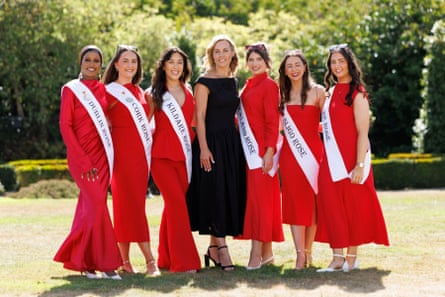
The Rose of Tralee, which culminates with a final in the titular town of Tralee, County Kerry, is a particularly unique Irish festival. In its 66th year, its purpose is “bringing back that Irish connection,” Suad says, between the Irish at home and the Irish diaspora abroad, and “celebrating it”, with Irish women at the core. When we start talking about Irish culture, how much she learned during the festival and the tour of Ireland, she brims with excitement. She quotes John B Keane, a famous dramatist and author from Kerry, who captured the beauty of the county that stunned her when she visited it; there are “two kingdoms — the Kingdom of Heaven and the Kingdom of Kerry”.
She references how there has been a recent resurgence of pride in Irish culture, including traditional music and the Gaelic language, after hundreds of years of colonial erasure due to British occupation. “We were forced not to speak our language any more, but Irish is having such a comeback; everybody is doing Irish lessons. Irish culture is everywhere now; there’s a real pride in it, there’s a lot of reclaiming, we still came out on top and still have our culture. And people want to integrate and become part of this culture.”
A sunny denial
One of the problems of this positively inclined predisposition, Suad tells me, is that uncomfortable conversations are avoided. The response to racism and xenophobia is often: “‘Oh, it’s grand, it’s grand. It’s just a couple of eejits.’ We just brush things under the rug. A few things can be true at the same time. Yes, there is a lot of noise online and in person everyone is lovely. In the same breath, there is an issue. We need to face it. Otherwise these people will just continue sharing these ideas.”
She notes that immigration to Ireland, when compared with immigration to the UK, for example, is a relatively recent phenomenon. Her family came to Ireland in the mid-90s and were the only Somali people in their area. Since then, the rate of immigration has increased drastically. “There was never that slow transition into it, and the country wasn’t necessarily equipped for that on a government level, and that trickles down to the people. They haven’t put proper systems to integrate systems and integrate people, as well as support the locals. It’s caused a divide.”
after newsletter promotion
The result is that “Ireland has become so much more diverse, but I don’t think people’s idea of Irishness has fully caught up. When I was elected as Dublin Rose, it tickled a lot of people’s feathers because it challenged their idea of what it means to be Irish. They don’t picture someone who looks like me. Representation and acceptance have not moved at the same pace.”
Processing the experience
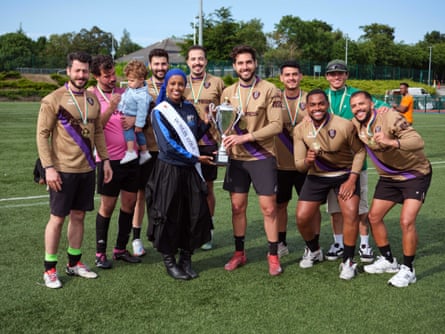
The noise has died down now. Suad has taken a week off and tells me she is processing what happened, slowing down, staying off her devices and decompressing. But alongside the fatigue there is a determination that is at once steely and matter-of-fact. “My mam raised me not to let this stuff affect me,” she says. From a young age her mother would tell her “you’re going to get a lot of shit, but don’t back down. At the same time it was hard. But I’m at a healthy level of ‘don’t give power to these comments’.” What she has learned is to not “let people’s ideas of you limit you”.
She ends, mentioning her mum again, and what she owes her and her generation. She “built me up,” Suad says. “A lot of our families have come from war. They crossed oceans to be here. There’s nothing that could compare to what our parents went through.”
How can she let the criticism, when compared to the trials that her parents endured, get to her? “You can’t. Wallah, you can’t.”
Tap in
How do you feel about the Rose of Tralee competition? What is the conversation missing? Share your thoughts by replying to this, or emailing us at [email protected] and we may include your response in a future issue.
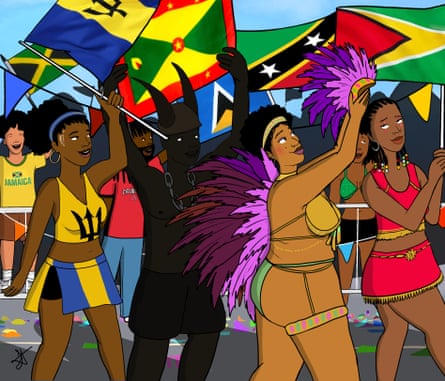
Cartoon | Carnival across borders
To receive the complete version of The Long Wave in your inbox every Wednesday, please subscribe here.