3 months ago
70
3 months ago
70
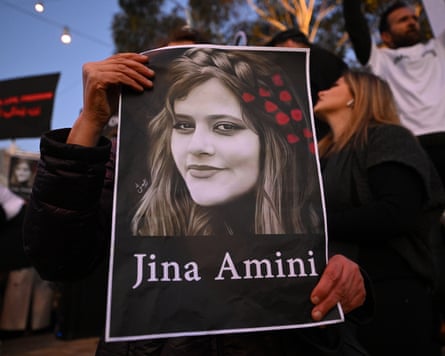
Mehnaz was too young to protest when Mahsa Amini died in police custody three years ago after she was arrested for allegedly wearing the hijab improperly. Her mother did not let her join the throngs of crowds chanting “woman, life, freedom” in Tehran and across the country – so she could only watch at home as they were beaten back by batons and bullets.
Since then, the 19-year-old computer science student in Tehran has waited for the chance to join fellow Iranians in protest. On Sunday, the moment finally came.
A sudden nosedive in the value of Iran’s currency was the final blow to a population growing tired of being patient under an ailing economy. Protests soon began in Tehran and spread, kicking off the country’s biggest protests in years – some of which have turned deadly. At least 10 people had been killed by violence surrounding the protests, with two new deaths occurring overnight.
“Despite my mother’s fears, I joined in [on protests] on Wednesday. They execute, and arrest us anyway. So people now think, if they continue to kill us when we are not even on the streets in protest, why the fuck are we waiting for the right moment?” said Mehnaz, speaking under a pseudonym for fear of repercussions.

The demonstrations started with merchants closing their shops in protest against deteriorating economic conditions and have spread from Tehran to about 32 cities across the country. What began as a movement to express economic grievances has widened in scope, with protesters chanting against the Iranian government.
Students and activists have begun chanting “death to the dictator”, referring to the 86-year-old supreme leader, Ali Khamenei, and “woman, life, freedom”, echoing the 2022 protests that paralysed Iran.
As the protests have grown, so has the government’s concern. Iran’s president, the reformist Masoud Pezeshkian, initially announced he had instructed authorities to listen to the “legitimate demands” of protesters and said he was seeking dialogue with protest leaders.
At the same time, Iranian human rights groups allege security forces have used deadly force against protesters. The New York-based Center for Human Rights in Iran said on Friday that eight protesters have been killed by state security forces and dozens more injured. At least 119 people have been arrested for their involvement in protests, according to the human rights activists news agency.
Reza, a 20-year-old university student involved in the protests, described how plainclothes officers and the Basij [the volunteer paramilitary force] burst into his dorms on New Year’s Eve. They began interrogating students and beating them as they asked about who was leading the protests. Since then, many classes have been moved online to prevent gatherings on campuses where security forces have beefed up their presence.
“Joining these protests is a matter of ruining our future, but we have realised there is no future for us under this regime, so why cower and hide now?” said Reza, who asked to use a pseudonym.
The protests come at a precarious time for the Iranian government, which was rocked by a 12-day war with Israel in June. More than 1,000 people were killed when Israel bombed Iran for nearly two weeks with almost complete impunity.
It was a blow to the image of an impregnable Iranian regime, which for years had said Israel would not dare strike Iran on its home soil. Iranians watched Israelis shelter in missile bunkers, while they had to crowd inside metro stations and flee Tehran under the threat of bombs, wondering why their country was not better prepared for a war that seemed years in the making.
As protests spread across the country, Donald Trump twice threatened a fresh attack on Iran. On Monday he told reporters he would “knock them down” if Iran was rebuilding its missile capabilities – a claim Iran denies. On Friday, he threatened US intervention if Iran killed protesters, warning that the US was “locked and loaded, and ready to go”.
Trump’s threats have led Iranian officials to lean into the narrative that protests at home are foreign backed, with the secretary of Iran’s supreme national security council, Ali Larijani, accusing the US and Israel of having a hand in the demonstrations.
The threats confronting the Iranian government have only fed some protesters’ convictions that the time is right to take to the streets.
“We are fed up, and after June we know we must hit them when they are weakest, which is now. They say you must hit the iron when it’s hot, right?” said Mehnaz.
Another 28-year-old protester said instead of foreign military attacks, he wanted the west to put diplomatic pressure on the Iranian authorities and provide technical support to protesters, such as ensuring the internet remained open in Iran.
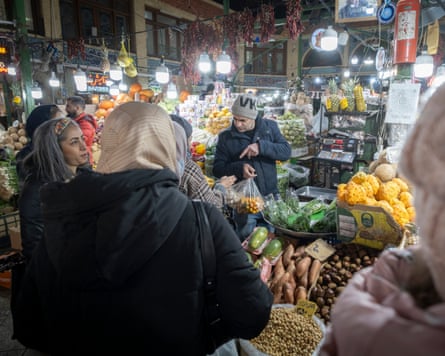
Fuelling the protests is an ailing economy, which experts blame on a mixture of government mismanagement and international sanctions that have driven inflation as Iran cannot access frozen assets abroad and foreign exchange. The Iranian rial has lost more than 50% of its value in the last six months and more than 200% in the last three years.
The cost of living has soared as people’s purchasing power has been eroded, with the cost of food increasing on average by half since this time last year. A new government tax, meant to take effect in the Iranian new year on 21 March, has further angered people.
It is unclear if the protests could survive a violent crackdown such as the one in 2022. This time around, protests are smaller and lack a central figure such as Mahsa Amini to rally behind. Demands are more diffuse and grievances more economic in nature.
Still, the protesters on the streets say they are determined to stay there until they see real change. They say they have learned from the protests three years ago and are eager to apply the lessons.
“We learned that no matter what, the only way to get freedom is to continue protesting and doing so consistently and strategically, which I think lacked in the past,” said Moein, a 28-year-old protester in Lorestan speaking under a pseudonym. “We knew we wanted the end of the regime – and that’s been the common goal for all the protests.”