3 months ago
57
3 months ago
57
The climate crisis supercharged the deadly storms that killed more than 1,750 people in Asia by making downpours more intense and flooding worse, scientists have reported. Monsoon rains often bring some flooding but the scientists were clear: this was “not normal”.
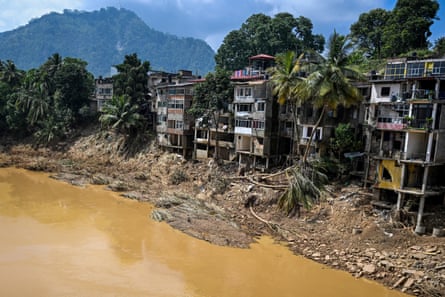
In Sri Lanka, some floods reached the second floor of buildings, while in Sumatra, in Indonesia, the floods were worsened by the destruction of forests, which in the past slowed rainwater running off hillsides.
Millions of people were affected when Cyclone Ditwah struck Sri Lanka and Cyclone Senyar hit Sumatra and peninsular Malaysia in late November, and the events became some of the deadliest weather-related disasters in recent history.
The analysis by World Weather Attribution, a consortium of climate scientists, found the intensity of five-day episodes of heavy rain had increased by 28-160% in the region affected by Cyclone Senyar owing to human-caused global heating. In Sri Lanka, the periods of heavy rain are now between 9% and 50% more intense.
While at least 1,750 people died in the floods and hundreds more remain missing, cyclones also have a wide and enduring impact on health. Recent studies have found deaths from, for example, diabetes and kidney disease increase after such storms. Many people have also lost their homes and their livelihoods, with the poorest affected most.
“The combination of heavy monsoon rains and climate change is a deadly mix,” said Dr Sarah Kew, an academic at the Royal Netherlands Meteorological Institute and the lead author of the study. “Monsoon rains are normal in this part of the world. What is not normal is the growing intensity of these storms.”
Prof Lalith Rajapakse, at the University of Moratuwa in Sri Lanka, who was part of the study, said: “Cyclones like Ditwah have become an alarming new reality for Sri Lanka and the wider south and south-east Asian region, bringing unprecedented rainfall, widespread loss of life and massive disruption to economic activities.”
“Flooding is quite common to us every year during the monsoon season: we expect flooding, but up to about 1ft to maximum 2ft level,” he said. “But this time what happened was in some areas it was exceeding 14 to 15ft. So even not reaching the second floor could sometimes save the affected people.”
Scientists agree that the climate crisis, caused by the burning of fossil fuels, is making rainfall heavier and more intense in many regions around the world. Warmer air can hold more moisture, making rain heavier.
For the study, the researchers examined weather records to assess how periods of heavy rain have changed as the planet has heated by the 1.3C seen today, and found significant increases in intensity. The range in estimates, from 28-160% in the region affected by Cyclone Senyar, for example, is due to a range of meteorological data series being used.
Climate models are used in these studies to estimate how much more likely extreme weather events have been made by global heating. In this case, the models did not replicate the events well, with natural fluctuations in ocean temperatures – La Niña and the Indian Ocean Dipole – being complicating factors.
However, analysis of the weather data and measurements of increased ocean temperatures meant the scientists concluded that global heating had supercharged the downpours from the cyclones.
after newsletter promotion
Dr Mariam Zachariah, at Imperial College London, said: “These events illustrate how climate change and natural variability can align to produce exceptional heavy rainfall. While natural variability is inherent to the climate system, reducing reliance on fossil fuels is within our power and necessary for reducing the intensity of future extreme events.”
Maja Vahlberg, at the Red Cross Red Climate Centre, said: “Large parts of Sri Lanka and Indonesia have experienced devastation on a scale that very few people living there have seen in their lifetimes. Unfortunately, it is the most vulnerable people who experience the worst impacts, and have the longest road to recovery.”
She pointed to two factors that had worsened the impacts: people migrating to towns and cities and the razing of forests: “Over decades growth has increasingly taken place in low-lying floodplains, deltas and river corridors. These areas are economic hubs, with roads, power lines, hospitals, markets. But they’re also the natural pathways for flood waters.”
“Deforestation and the loss of wetlands also reduce the land’s ability to absorb the water on hillsides,” Vahlberg said. “This increases the risk of landslides, and downstream it raises flood peaks and carried debris into settled areas in Sumatra.”
Early estimates of the damage in Sri Lanka were $6-7 bn, or 3-5% of national GDP, Rajapakse said: “This should be an unequivocal eye-opener to the scale of future climate-driven extremes the country and the region must prepare for.”