3 months ago
58
3 months ago
58
Pete Hegseth, the US defense secretary, told soldiers under his command in Iraq to ignore legal advice about when they were permitted to kill enemy combatants under their rules of engagement.
The anecdote is contained in a book Hegseth wrote last year in which he also repeatedly railed against the constraints placed on “American warfighters” by the laws of war and the Geneva conventions.
Hegseth is currently under scrutiny for a 2 September attack on a boat purportedly carrying drugs in the Caribbean, where survivors of a first strike on the vessel were reportedly killed in a second strike following a verbal order from Hegseth to “kill everybody”.
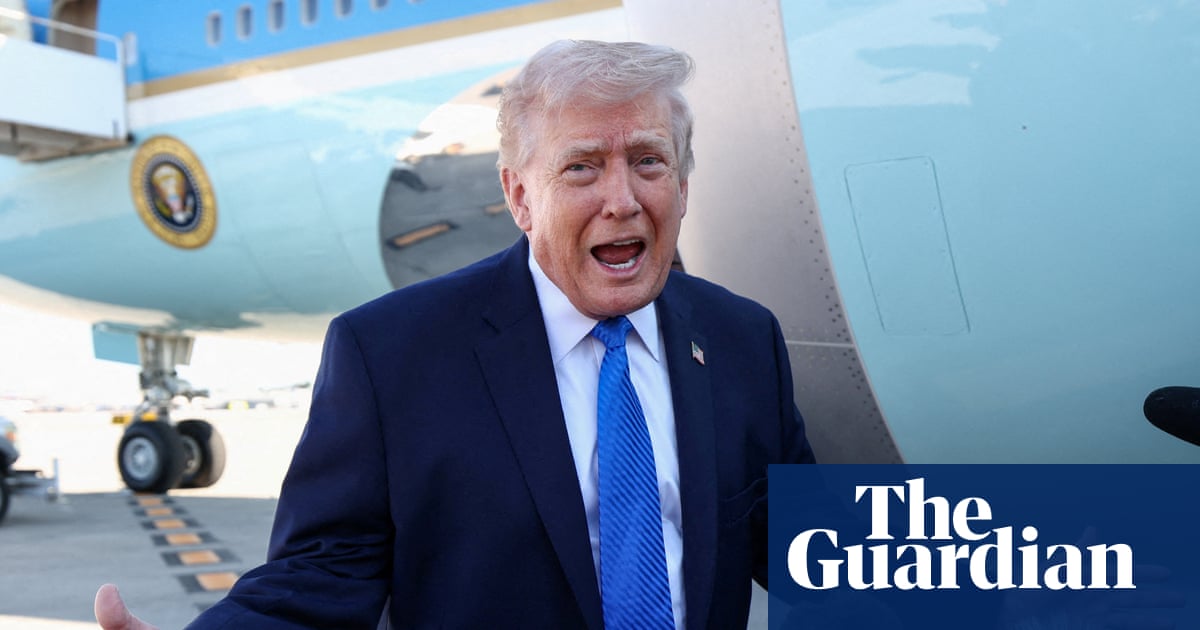
Hegseth has denied giving the order and retained the support of Donald Trump. The US president said Hegseth told him “he did not say that, and I believe him, 100%”. But some US senators have raised the possibility that the US war secretary committed a war crime.
In the book, The War on Warriors, Hegseth relates a story about a legal briefing at the beginning of his service in Iraq, in which he told the men under his command to ignore guidance from a military judge advocate general’s (JAG) attorney’s guidance about the rules of engagement in the conflict.
Hegseth writes that “upon arrival in Iraq”, the men were briefed “regarding the latest ‘in theater’ rules of engagement”, adding: “Needless to say, no infantrymen like army lawyers – which is why JAG officers are often not so affectionately known as ‘jagoffs’.”
He added of JAG lawyers: “Most spend more time prosecuting our troops than they do putting away bad guys. It’s easier to get promoted that way.”
Hegseth writes that in explaining the rules of engagement, the JAG officer “used the example of an identified enemy holding a rocket-propelled grenade”, asking Hegseth’s platoon: “‘Do you shoot at him?’”
“And my guys were like, ‘Hell, yeah, we light him up,’” Hegseth writes.
According to Hegseth, the JAG officer responded: “‘Wrong answer, men. You are not authorized to fire at that man, until that RPG becomes a threat. It must be pointed at you with the intent to fire. That makes it a legal and proper engagement.’”
Hegseth writes that in response: “We sat in silence, stunned.”
He then instructed his men to ignore the legal advice.
“After this briefing, I pulled my platoon together, huddling amid their confusion to tell them, ‘I will not allow that nonsense to filter into your brains. Men, if you see an enemy who you believe is a threat, you engage and destroy the threat. That’s a bullshit rule that’s going to get people killed. And I will have your back – just like our commander. We are coming home, the enemy will not.’”
The Guardian contacted the Department of Defense for comment.
Prof David M Crane, a former chief prosecutor of the UN special court for Sierra Leone, distinguished scholar in residence at Syracuse University College of Law and an army veteran with 20 years’ service, including stints as a JAG attorney, said obeying rules of engagement was crucial and that those who break them should face sanction.
“After the tragedy of My Lai in 1968, we have tried to avoid another one and prosecute those that do in fact stray. And that happened particularly in Iraq, at Fallujah, and other places in defense, where we had some marines go south and commit war crimes, and they’re prosecuted for it,” he said.
He added: “These rules go all the way up the chain of command. I mean, it goes all the way to the president of the United States, who is the commander-in-chief of the armed forces of the United States.
“So if there’s an illegal order that goes all the way down, then all of them have committed a war crime. It’s not just a single guy in the airplane, the jet aircraft, firing those missiles at the boat. Yes, they are following an illegal order, but it goes all the way up all the way to the president.”
In his book, however, Hegseth called into question the entire edifice of laws of conflict, writing: “If our warriors are forced to follow rules arbitrarily and asked to sacrifice more lives so that international tribunals feel better about themselves, aren’t we just better off winning our wars according to our own rules?! Who cares what other countries think.”
In Trump’s first term, Hegseth successfully campaigned for the pardon of two army officers and the reversal of disciplinary measures on a Navy Seal, each of whom were either charged with or convicted of war crimes. He has expressed admiration for his former commanding officer, the now retired army colonel and, according to Hegseth, “certified badass” Michael Steele, who was reprimanded after reportedly ordering soldiers in 2006 in Iraq to “kill all military age males” in a raid.

Crane said of Hegseth’s portrayal of a fundamental antagonism between JAG lawyers and soldiers that it was “absolutely not true”, and that “the bottom line is that judge advocates are soldiers who are lawyers, [and] whose job is to make sure soldiers don’t commit violations of the laws of armed conflict, and the soldiers appreciate it”.
He added: “I have deployed around the world in some very scary places with my unit as their lawyer, but I did everything that my unit did: jumping on airplanes, scaling cliffs, doing all the things that you know about these very specialized organizations. I did it too. I was right there with them. They respected me. I respected them. And they listened to me.”
‘Certified badass’
In the same passage of the book as his anecdote, Hegseth praises his then commander, who was later reprimanded for his own role in an incident in which unarmed Iraqis were killed by US soldiers.
He commends “Colonel Michael Steele … our brigade commander” as “a certified badass”, adding that Steele incentivized the killing of Iraqis: “He suffered no fools. If you engaged the enemy and destroyed it under his command, you got a ‘kill coin’.”
Hegseth adds: “Colonel Steele would have been a horrible gender studies professor at the University of California, but there was nobody you wanted more in a combat situation.”
Steele was commander of the 3rd Brigade, 187th Infantry Regiment in the 101st Airborne Division between 2004 and 2006, under whom Hegseth served as a platoon commander.
In 2006, four soldiers under his command were charged with the murder of unarmed Iraqis during a raid in Salahuddin province, and in sworn statements the men said Steele had “ordered them to kill all military-age males”.
Media reports at that time indicated that Steele had promoted body counts as a measure of performance, with the New York Times reporting of Steele that “in Iraq, as a commander involved in harrowing assaults against insurgents, he inspired the use of ‘kill boards’ to track how many Iraqis each soldier had killed over time”.
In 2007, the New York Times reported that Steele had been formally reprimanded for issuing improper orders for the raid, effectively blocking his further promotion, and had been rotated out of Iraq to an administrative assignment.
Crane said: “You know, we have commanders who are ‘badasses’ – and most of them don’t go into higher rank, because they’re quietly removed from the service, or they’re court-martialed and removed, or reprimanded, or put in jail.”
He added: “Colonel Steele was completely outside the bounds. That mentality is frowned upon, and that’s why he was reprimanded and his career was ended.”
He said: “This shows you the mindset of this secretary of defense: that’s the kind of person, that’s the signal they’re sending the commanders – kill them all and let God sort them out.”
‘Fidelity to the warfighter’
In the book, Hegseth ventilates more general grievances about legal restraints placed on soldiers in combat.
At one point, Hegseth writes: “We send men to fight on our behalf, and then second-guess the manner in which they fight. I saw it every day.”
Hegseth adds: “In some cases, our units were so boxed in by rules and regulations and political correctness, we even second-guess ourselves. That needs to end. Count me out on the Monday-morning quarterbacking – I’m with the American warfighter, all the way.”
Elsewhere, Hegseth appears to argue that American soldiers should proceed without any constraints whatsoever.
He writes: “If we’re going to send our boys to fight – and it should be boys – we need to unleash them to win. They need them to be the most ruthless. The most uncompromising. The most overwhelmingly lethal as they can be. We must break the enemy’s will.”
Hegseth adds an apparent call for virtual impunity for serving soldiers, writing: “Our troops will make mistakes, and when they do, they should get the overwhelming benefit of the doubt.”
The idea that soldiers should be given the benefit of the doubt echoes comments Hegseth made in November 2019, after Trump pardoned Clint Lorance, then serving a 19-year sentence for the murder of two civilians; Maj Mathew Golsteyn, who was facing murder charges over the killing of an unarmed Afghan civilian; and reversed the demotion of Navy Seal Edward Gallagher, who in July 2019 was found not guilty of murder over the death of an IS captive, but was convicted for posing for photos with the man’s corpse.
At that time, Hegseth, still a news presenter but widely credited for influencing Trump to clear the men, told the Fox News audience that Trump had shown “fidelity to the warfighter”.
“The president looks at it through that lens, a simple one, and important one. The benefit of the doubt should go to the guys pulling the trigger.”
Crane said that such pardons “cheapen the profession. Having been in the military myself there’s a great amount of pride among the professionals within the US armed forces, and they take great pride in following the law and doing things appropriately under law.”
He added: “The force is irritated now and embarrassed because they truly believe in separating themselves from politics, and they are America’s armed forces, not the president’s armed forces.”