1 month ago
55
1 month ago
55
Back in October 2020, the UK immigration minister stood up in parliament to reassure campaigners concerned about EU citizens who weren’t aware they had to ask the Home Office to stay in the country after Brexit.
Using an example of a child in foster care who might not know they were an EU citizen until they applied for their first job, the Conservative Kevin Foster said the UK would take “a generous approach as to what reasonable grounds [for failing to apply] were”.
In other words, the UK/EU Brexit agreement was designed to protect those who had exercised lawful freedom of movement, and they couldn’t just be chucked out of their host state because the UK had decided to leave the EU.
The Home Office is not perfect, and is regularly criticised by campaigners for missteps over the implementation of the EU citizens chapter in the EU-UK withdrawal agreement. But “reasonable grounds” have been outlined in parliament, providing legal arguments to challengers.
Yet thousands of miles away in Sweden, post-Brexit rights are being undermined with an apparent high level of removal orders for law-abiding British citizens, some at the most vulnerable stage of their lives.
One 74-year-old British man, who has been in Sweden for 25 years, is this week facing deportation despite having vascular dementia and parkinsonism, and being so incapacitated that he is in full-time care.
Rejecting a legal request for him to stay using family ties, a Swedish court ruled that immigration interests trumped human rights. “Upon balancing the state’s interest in regulated immigration against what has emerged regarding Horace Mason’s private life and his adaptation to Sweden, the migration court concludes, on balance, that his deportation appears proportionate,” it ruled.
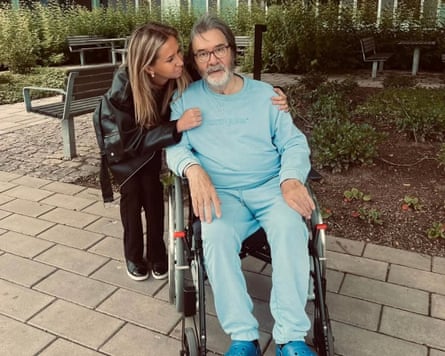
This week, Joyce Thomas, a 78-year-old widow who has been in Sweden for 21 years, also lost her appeal to reverse a migration agency decision that she has to leave the country within four weeks.
“It would be difficult to find anyone who would argue that what is happening to Mrs Thomas and others in Sweden was an intended outcome of the [EU-UK] withdrawal agreement,” said David Milstead, of the campaign group British in Sweden. He said he knew of people who, on receiving the removal order, just left, “too embarrassed” to fight it.
The question now is whether the Conservative party failed British citizens during Brexit negotiations by not spotting the difficulties with the “constitutive” system adopted by 13 countries – including the UK – where EU citizens (including, at the time, British citizens living elsewhere in the EU) had to make an application to stay. Others, such as Spain, opted for a “declaratory” system, whereby EU citizens just had to register their presence before Brexit.
Did the government fail to communicate this effectively to the estimated 1 million Britons in the EU? Or has the European Commission failed to enforce the withdrawal agreement to protect citizens in practice?
“Problems will inevitably emerge when a new treaty is put into practice. However, the UK, the EU and Sweden must act to address them. Words and expressions of concern won’t cut it,” said Milstead.
One of the problems is lack of political interest in Sweden. Politicians in Sweden have the perfect get-out clause: legally, they are unable to interfere in any decisions made by the Migrationsverket, the Swedish migration agency.
The UK government has raised the issue of Sweden multiple times, but it is years since the first cases emerged and nothing appears to have changed.
Two years ago, Kathleen Poole, who had Alzheimer’s, faced deportation from a dementia care home because she did not have up-to-date bank statements and a passport. Her case was paused – long enough not to be acted upon, as she died soon after.
after newsletter promotion
One UK government source said it was “concerned that Sweden is taking a considerably stricter approach to this requirement than other member states”, adding that “in practice individuals are not likely to have their reasonable grounds accepted”.
The latest statistics available (2024) show only about 14,000 applications to stay post-Brexit have been made in Sweden. But of those, 27.5% were refused – a refusal rate three times higher than in any other member state, and far higher than the EU average of 3%-4%.
Thomas, like many others who have contacted the British in Sweden group, believes she had “reasonable grounds” for her late application. She and her late husband were told they didn’t have to do anything – a story told over and over by Britons in touch with Milstead.
Felix Andler, a Swedish hospital neurologist and family friend of Thomas, said he had spoken to her husband before 2020 about how Brexit affected him. “I remember talking to Gwynne and asking him, is there anything you have to do? And he said, ‘No, I checked it and we are good’, so I take it he looked it up or contacted someone at the British Foreign Office.”
Joyce says even if the government had communicated the need to make a special application to stay after Brexit, they didn’t do it well enough. “They have our ID cards, our email addresses and contact us with other important information, why not something as critical as this? It is mind-blowing,” she said.
“Simply stating that the person was unaware of the requirement to apply is not, in itself, considered a sufficient explanation,” said a spokesperson for the Swedish migration authority.
In 2022 similar stories were emerging from Denmark of Britons being ordered to leave: in one instance because a man was three weeks too late to apply to stay, and in another, a man was just four days late. The Danish government acknowledged communications shortcomings and changed the law to allow Britons another chance to apply for residency rights.