2 months ago
65
2 months ago
65
No one knows exactly what Mary Ann Patten said in September 1856 when she convinced a crew on the verge of mutiny to accept her command as captain. What is known is that Patten, who was 19 and pregnant, was a force to be reckoned with.
After taking the helm from her sick husband in the middle of a ferocious storm off the coast of Cape Horn, the notoriously hazardous tip of the Tierra del Fuego archipelago off southern Chile, she successfully put down the mutiny and navigated her way to safety through a sea of icebergs.
Patten arrived in San Francisco Bay 10 weeks later with her crew and her cargo intact, the first woman ever to command a merchant clipper ship.
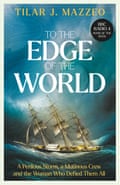
Yet her story has been all but forgotten. Now, the author and historian Tilar J Mazzeo is seeking to put that right with her latest book, To the Edge of the World: A Perilous Storm, A Mutinous Crew and the Woman Who Defied Them All.
“I got the idea to write it when my husband and I were out sailing,” says Mazzeo, who lives on Vancouver Island in Canada. “The gentleman we bought our boat from left all his books onboard. I came across a reference to Mary Ann Patten in one of them.”
Mazzeo found Patten’s tale inspiring and “quietly heroic”, she says. “There were very few sea captains in the 1850s and 1860s who could have achieved what she achieved, as a maritime feat. It’s amazing she and her crew survived.”
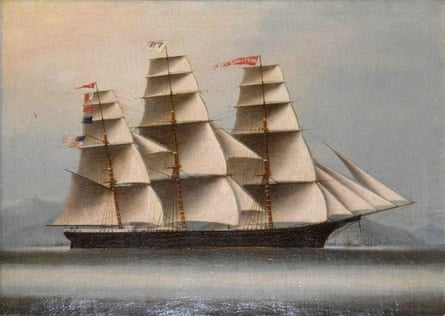
When Patten set off from New York on Neptune’s Car, a fast 65-metre (216ft) sailing ship laden with mining equipment and groceries worth the equivalent of $12m (£9m) today, her husband, Joshua, was the captain. They were hoping to break speed records and earn a fortune by participating in a five-way clipper race to San Francisco.
Their bad luck began the day before they departed in June 1856. The first mate broke his leg on deck and a new first mate, William Keeler, was appointed at very short notice.
“In retrospect,” Mazzeo writes, “it is hard to know if Keeler was incompetent, hopelessly lazy, simply malevolent or deliberately trying to sabotage Neptune’s Car and throw the race because he’d been paid to do so by a competitor.”
Keeler was repeatedly caught sleeping on duty – and when Joshua demoted him, he threatened his captain with violence. He was then locked up in leg irons in the brig.
The second mate was illiterate and so unable to read the almanac tables required to navigate. So Joshua, who had unknowingly contracted tuberculosis before they set sail, was required to keep watch on deck almost around the clock to keep the ship on course.
By the time they entered the Le Maire strait, a narrow channel near Cape Horn that Mazzeo describes as “a graveyard of shipwrecks”, Joshua’s health was failing. On 1 September, he collapsed on deck.

Patten, who was three months pregnant, was faced with a stark choice: allow someone else to take command and navigate the ship, or step up herself. She had been educated at one of the first schools in the US to admit working-class children, and she had learned celestial navigation skills from her husband.
Supported by the second mate, “she takes the helm”, says Mazzeo, “just as they come around the tip of the strait and are fully exposed to the force of the winds in [the] Drake Passage.”
To stay on course, Neptune’s Car needed to make the notoriously difficult turn around Cape Horn, but “a terrible gale” trapped the ship for days off one of the most dangerous coastlines in the world, and they could make no progress. “On the third day, Mary Ann realises the crew is going to mutiny – that they’re losing trust in her.”
That’s when Keeler, still in shackles but sensing an opportunity, connives to send her a letter asserting his right to take command of the ship. “And that’s the moment Mary Ann gives this extraordinary speech to the crew,” Mazzeo says.
“She stands there, furious, explaining all of the ways the first mate has forfeited whatever rights he had to command of the ship, and asking them to support her.”
Later, the crew would report that the older sailors had tears in their eyes as they witnessed the 19-year-old’s determination and courage.
“Whatever she said, it must have been amazing, because the men tell journalists later that they all found themselves applauding.”
After persuading the crew to accept her as their captain, Patten fights the storm for days. Another ship trying to round the cape and in distress is spotted lying ahull – a desperate tactic that involves furling the sails, battening down the hatches and letting the vessel drift freely at the mercy of the storm.
Patten realises the “force of the wind in the wave is simply going to crush Neptune’s Car, that the wooden vessel is going to crash and break apart. So she takes the most extreme measure a sea captain can take in bad weather, which is to decide to sail to the outer edge of the cyclone of the storm – and let the storm essentially spit her out,” Mazzeo says.
Patten then finds herself surrounded by icebergs and ice fields off the coast of Antarctica, unable to stop moving for fear Neptune’s Car would become frozen in the ice. “The only way to know which direction you’re going in would be through celestial navigation.”
This skill, which Mazzeo learned to help her write the book, means that “with just an almanac, a watch and a sextant, you can pinpoint where you are in the world – it’s what allows Mary Ann and her crew to survive”.
Mazzeo also retraced Patten’s journey around Cape Horn and went on a 500-mile voyage from the coast of Chile to the South Shetland Islands, to get inside the captain’s head as she neared Antarctica.
She was struck by the “electric blue” of the icebergs and how strange and unfamiliar the continent must have looked to Patten, who grew up in Boston. “Before Mary Ann, no other woman is known to have captained a ship in those waters.”
Mazzeo details in her book how, against the odds, Patten managed to turn the boat around and steer Neptune’s Car back on course. “She’s a real survivor.”
“The story is really about what a woman in the 1850s – given an education and an opportunity – was capable of doing, and how we remember that.”
To the Edge of the World: A Perilous Storm, A Mutinous Crew and the Woman Who Defied Them All by Tilar J Mazzeo is published on 29 January