3 months ago
46
3 months ago
46
Neighbours had heard a woman crying at the house on McGill Street.
In the first few days of December 2019, things “got bad again” behind the high fences at the property south of Ipswich. The abuse became more frequent. A man’s voice screaming; a woman sobbing, trying to calm him, pleading to be left alone.
On 8 December came the sound of the man shouting: “Get up, you dog. Come on, get up.”
Two days later the body of Kardell Lomas, a 31-year-old Kamilaroi and Mununjali woman, was found by police in the boot of an old car in the back yard. She was six months pregnant.
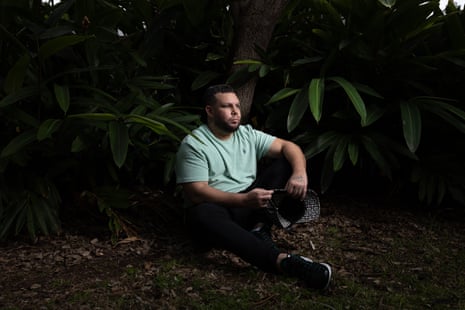
“For years after, Kardell’s death didn’t sit well with me,” says her younger brother, Adair Lomas. “It felt like the system had failed her.”
In the months before her death, Kardell repeatedly sought help – from domestic violence support services and the police – to escape the violent and dangerous man who killed her. She had 24 interactions with various agencies and she repeatedly disclosed fears for her safety, death threats, serious violence and other abuse.
A coroner’s finding detailed some of the events of those last few months. But it did not interrogate the actions of police in the lead-up to her death. It did not unpack what her family and First Nations experts believe is clear evidence of systemic racism in the way authorities and services responded to Kardell’s attempts to seek help.
The coroner declined to hold an inquest because “there does not appear to be any prospect of making recommendations that would reduce the likelihood of similar passings occurring in future”.
Her family now wants answers. Why did everyone fail to protect Kardell? And why have those failures not been investigated?
‘Psychopathic’ traits
Detectives arrested Traven Lee Fisher for the killing. They told reporters in the days afterwards that Fisher and Kardell were “known to police”.
Kardell had a history of mostly non-violent and minor offending, including charges related to drug use and unpaid fines.
Police knew Fisher as a violent and dangerous man who had been jailed for raping a two-year-old and seriously assaulting the child’s siblings. His psychologist had told a court that Fisher had “significant psychopathic personality traits” and was a high-risk domestic violence offender.
Officers responded to incidents involving the pair at least three times from January 2019.
On the first occasion officers arrived at the McGill Street house after receiving a call that “an Aboriginal man was chasing an Aboriginal woman down the street”.
According to the coroner’s finding, Kardell told them that “it’s not DV” and she did not want to press charges; she simply wanted to collect her belongings and leave. As she went through the house, Fisher followed her, “agitated and yelling”.
The police did not ask her what had happened to prompt the call-out – they only sought a version of events from Fisher – despite hearing her say that he had threatened to kill her and her son while the pair were arguing inside the house.
One of the officers suggested to him that perhaps he was just “mouthing off”, according to an examination of police body-worn camera footage by the Domestic and Family Violence Death Review Board.
Police said Kardell and Fisher were “as bad as each other”. They did not consider either party to be in need of protection and gave them a warning about swearing at one another.
The coroner and police noted that Kardell did not appear fearful during this interaction. Kate Pausina, a former senior detective who worked reviewing domestic violence homicides, says this is “a convenient or ill-informed reason to not take action” and it should have been further addressed by the coronial finding.
Sign up: AU Breaking News email
Police attended the McGill Street property again in August after a neighbour reported a verbal argument. They returned several times but no one answered the door.
The officers closed the job and determined it was not domestic violence because the occupants of the house “do speak very loudly with occasional swearing by both parties involved. In cases that police have attended it is always a verbal and they eventually calm down”.
‘It’s a bit 504-ish’
In September Kardell slipped a note across the desk of a support agency, asking staff to call the police.
The Queensland police service agreed to release body-worn camera footage of the interaction to Guardian Australia.
When officers arrive, a staff member at the agency tells them the situation relates to “DV” and that Kardell has refused to leave with Fisher, who had gone with her to the appointment.
“We know who they are,” the officer says.
Kardell tells one of the officers she needs a key from Fisher so she can leave him to stay at a relative’s house. The coronial finding says she also told police she had been experiencing mental and physical abuse and that Fisher would not let her access her money. This exchange is not recorded on the footage.
Staff at the agency appear concerned for her safety.
The other officer speaks to Fisher and eventually takes him outside to retrieve the key. The body-worn camera records the officer’s comments:
…
There’s obviously a little bit more going on with her maybe that none of us know about, you know? There’s obviously something going on there that’s not quite right …
Don’t go up there, mate … I know you get a bit fired up … And I don’t want you to say something that [means] we’re going to have to start taking some action in relation to DV or something …
If you are going to say anything, well, just leave it until we get out of here.
The officer tells Fisher to wait outside and uses his radio to report back.
“There’s not much really going on here … a bit 504-ish,” he says. The number 504 is Queensland police radio code for a “mental health” issue.
The officers tell Kardell they will drive her to her aunt’s house. She is initially reluctant but officers encourage her to go with them because “he’s still outside” and they want to know “she got there safe”.
She apologises for the call: “I’m sorry for fucking you around.” Police escort her out of the building and place her in the padded compartment of their truck. The footage shows Fisher verbally abusing and swearing at her.
According to the coroner’s findings the police officers determined there was “no evidence of any dispute or domestic violence” but noted that Kardell had said she was fearful of Fisher. The officers categorised the job as “DV – no offence” and took no further action.
Pausina has reviewed the footage and believes it shows significant police failures that were not identified by the coroner. Police have legislated requirements to investigate a reasonable suspicion of domestic violence and take protective action if necessary. This clearly did not occur, she says.
“Even the most basic investigation – a check of the system – would have revealed enough information to understand Kardell was at serious risk,” Pausina says.
“The officer fails to conduct any assessment with Kardell as to whether [she] is in fact a danger to herself...
“It is clear from viewing the footage there is no application of an appropriate and ethical investigation of domestic violence.”
Police did not take out a protective order on Kardell’s behalf.
The coronial finding mentions the body-worn camera footage but does not question how police handled the interaction or why they took no further action.
A QPS spokesperson said when providing the footage that the service had made “significant progress in relation to responses to DFV, acknowledging more can always be done”.
“As further research is progressed the QPS is agile in educating its members to respond and ensure victims’ needs are at the forefront of policing responses and that perpetrators are held to account.”
A ‘missed opportunity’
Kardell was 10 when she witnessed her mother’s suicide.
The coroner’s finding speaks about Kardell through the lens of records held by the state. But her family tells a human story – of a child who demonstrated compassion in the face of unthinkable trauma.
She spent much of her young life – before and after her mother’s death – in foster care. Child safety records indicate she was subjected to violence, including sexual abuse, while under the guardianship of the state of Queensland.
In that environment, she became the protector of her younger siblings.
“My sister pretty much did what older siblings are supposed to do with their younger siblings,” Adair says. “When my mother died she made a lot of sacrifices for me and whoever she was around.”
after newsletter promotion
She was a talented runner and netball player; Adair says at one point they thought she might be “the next Cathy Freeman”.
Kardell began a relationship with Fisher in late 2018. Her Centrelink payments went directly to Fisher’s account.
In February 2019 she attended an appointment at a support service with a visible injury to her ear; staff there referred her to a domestic violence service.
According to the coroner’s findings that service’s records indicate that she told them Fisher had tried to cut her ear off with a pair of pliers during an assault, and that he had previously threatened to kill her and her son.
Kardell told the service she had tried to escape a few days earlier by jumping out of a car at a set of traffic lights.
She told them Fisher was holding her personal documents “hostage”; she said he talked for her, did not let her attend appointments, took and spent her money, didn’t let her go to the toilet without his permission, isolated her from friends and family, and threatened to kill himself if she left him.
She told the service that she didn’t want police involved because she didn’t “want to bring shame to her family or his as the elders would view this as disrespectful”.
The service assessed Kardell as being “high risk” and arranged hotel accommodation for her. When she didn’t use it staff closed her file, marked her as “disengaged” and didn’t follow up.
In April, when Kardell attended a case management appointment at the first support service, she had a swollen lip and a large bruise on her thigh.
She asked for help to get away from Fisher. Staff completed an assessment that identified multiple serious risk factors, including pending separation, threats to kill, stalking, verbal abuse, assaults with a weapon, sexual violence and strangulation.
It noted that Fisher had burned her clothes; that he would hold her by the throat and say words to the effect: “Do you realise I can kill you if I just press here?”
The risk assessment should have triggered involvement by Queensland’s “high-risk” team. But the staff member who completed the assessment was unable at the time to access a government portal that would have triggered that response. Kardell’s details were never entered into the team’s system.
The coroner said this was a “missed opportunity” for the team to intervene.
The service had no further contact with Kardell. Her case was closed a few weeks later. A non-publication order issued by the coroner prevents Guardian Australia from naming the services and staff from whom Kardell sought help.
‘This is a national crisis’
The coroner published her non-inquest findings into Kardell’s death, anonymised, last month. Guardian Australia has the Lomas family’s consent to identify her.
Adair says he is concerned that the decision not to hold an inquest means police and other agencies who failed to take action that might have protected Kardell have not had to address their failures or answer for their handling of the case.
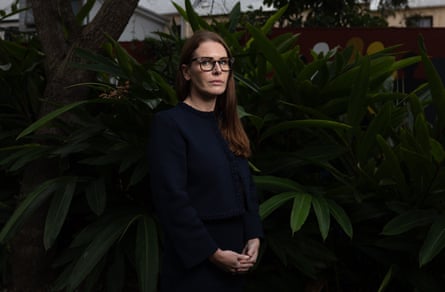
Pausina is critical of the way the findings place Kardell’s interactions with police “in the context of her not being cooperative” but do not further scrutinise apparent failures to investigate domestic violence, recognise coercive controlling behaviours and take protective action.
“She is not responsible for the violence she endured and her death,” Pausina says.
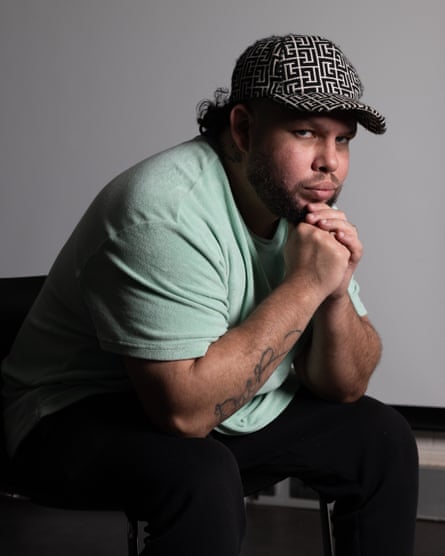
Karen Iles, a Dharug woman and lawyer for Adair Lomas, says the decision not to hold an inquest was “incredibly distressing and upsetting” for Kardell’s family, as well as for Aboriginal and Torres Strait Islander people and communities nationwide.
First Nations women in Australia are seven times more likely to be the victim of an intimate partner homicide than non-Indigenous women.
“This is a national crisis,” Iles says.
Dr Amy McQuire, a Darumbal woman from the Carumba Institute and The Disappeared Project, said she was “troubled” by the coroner’s findings.
“Her death is normalised and seen as routine, because the coroner does not see her death as sufficiently worthy of further inquiry,” McQuire says.
“Her death is minimised again by assertions that these are just procedural failures and mistakes rather than a pattern of racialised violence and callous disregard shown towards black women.”
‘My sister trusted them’
A deputy police commissioner, Cameron Harsley, said the case highlighted that police had “a long way to go with breaking down the barriers and the trust with First Nations people”.
“Often the communication with police in those cultures is not good because there’s mistrust in the relationship. And there’s mistrust, I would say, in both ways. The people [and] the police and the police and the people we’re dealing with.”
The coronial finding repeatedly makes a similar point: that Kardell mistrusted government agencies and did not want to involve police.
Her family says those comments fail to recognise that she repeatedly sought help to escape Fisher.
“Kardell did trust police because she reached out to them asking for help, asking for protection and safety,” Iles says.
“Their failure to respond in a culturally sensitive way, in a way that was able to understand and read between the lines of when a victim reaches out, is not the fault of the victim.”
Adair says the response is “what you expect” from police.
“My sister trusted them enough to do what she was doing, like asking for help.
“What if Kardell was white, what would have happened? I think the police and the system would have taken her seriously.”
The coroner wrote to him in 2024 to say she would not hold an inquest because “there has been significant domestic and family violence reform in Queensland over the years since your sister’s passing”.
Iles has written repeatedly to the coroner questioning this justification. She says the case highlights cross-cultural failings that have not been explored at any recent inquest.
Academics and advocates have warned that reforms including the criminalisation of coercive control could be dangerous for First Nations women, particularly due to concerns about police failures to identify them as victims.
McQuire says she doesn’t accept the coroner’s reasoning.
“The reforms that have been under way are centred on the deaths of non-Indigenous women … These reforms are not based on the experiences of black women – in fact, black and criminalised women are often routinely silenced and forgotten in these conversations,” she says.
“I can’t help but feel that [the coroner’s finding] … reinforces the racist view that we are not worthy of justice and are not worthy of remembering and not worthy of an inquiry.”
A Coroner’s Court spokesperson said coroners “speak through their findings” and would not comment further. They said there were several avenues for a person to challenge a finding or a decision not to hold an inquest.
Cameron Harsley retired from the role of deputy commissioner of the Queensland Police Service in September
Indigenous Australians can call 13YARN on 13 92 76 for information and crisis support. In Australia, the crisis support service Lifeline is on 13 11 14 and the national family violence counselling service is on 1800 737 732. Other international helplines can be found via www.befrienders.org
Do you know more? Contact [email protected]