2 months ago
37
2 months ago
37
Metro passengers in Rome can now peruse ancient history while in transit after the opening of two long-awaited stations showcasing a vast trove of treasures unearthed during their construction – including the remnants of a military barracks built during the reign of the emperor Trajan and 28 wells, along with the votives offered up in thanks.
The Colosseo-Fori Imperiali, a sprawling station beside the Colosseum descending across four levels, and Porta Metronia, in the area of San Giovanni, form part of the driverless Metro C, an underground line that connects the suburbs of Rome to the centre.
Tuesday’s grand opening of the two “museum stations” promises some relief for Rome’s commuters, as it comes after years of delays, while providing plenty of additional archaeological delights for tourists to marvel at during their visit to the Italian capital.
The underground network in Rome, which includes Metro A and B, is limited, partly because construction works inevitably reveal long-buried history.
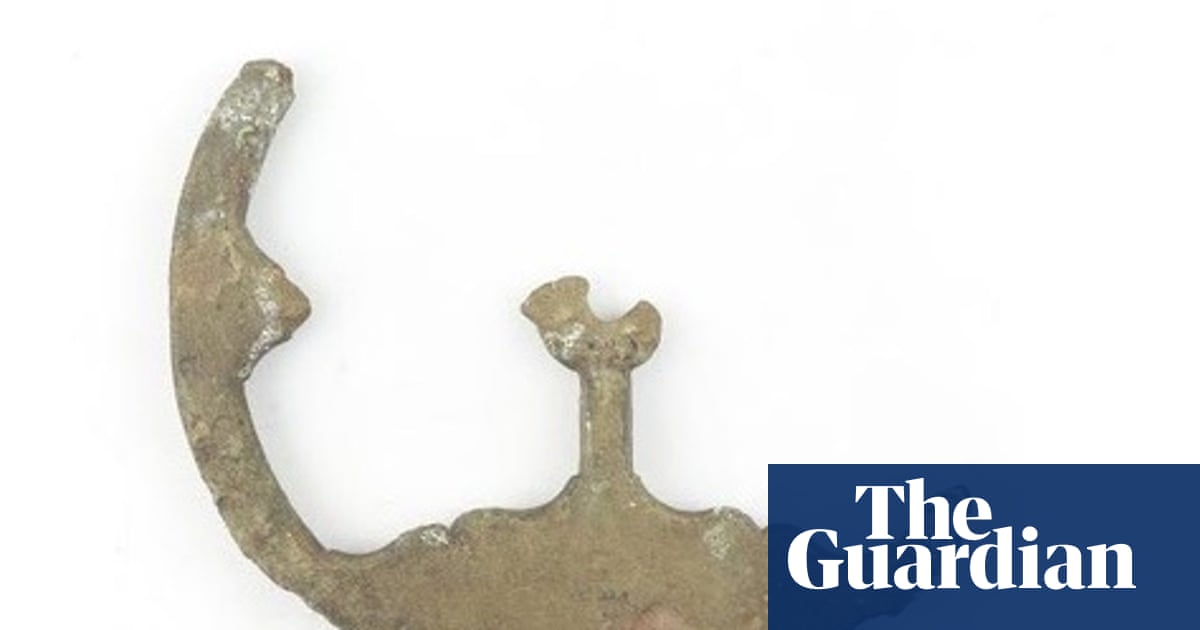
Colosseo-Fori Imperiali contains the remains of a Republican-era townhouse and a thermal bath believed to date back to the beginning of Rome’s imperial period, and 28 wells that were used long before the first aqueduct was invented. Dozens of relics found during the metro station’s construction are displayed behind glass screens, including jugs, bowls and votives, such as a stag’s antlers and hairpins, found in the wells.
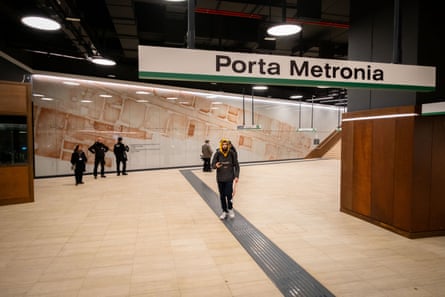
Meanwhile, at Porta Metronia, located in Piazzale Ipponio, a vast military barracks including a commander’s house featuring frescoes and mosaic floors was discovered. The barracks, found at a depth between 7 and 12 metres, are believed to date back to the early second century AD – before the construction of the Aurelian walls, the huge defence around the city.
“The military complex was an exceptional find,” Simona Moretta, the scientific director of the excavation, told reporters, adding that soldiers were either part of the emperor’s guard or based there for city security.
However, although trains are running from Porta Metronia, passengers will have to wait until early next year before the museum opens.
The opening of the two stations adds a further 3km (1.9 miles) to Metro C, whose extension, built by a consortium led by Webuild, will eventually branch out to include Piazza Venezia before heading towards the area of the Vatican.
Pietro Salini, the chief executive of Webuild, said their delivery represented “a strategic milestone that combines in an exemplary way progress in infrastructure with the conservation of our heritage”.
Carlo Andrea, a tour guide and historian, has been keeping close watch of the construction progress on his blog Odissea Quotidiana.
“It’s been an eternal wait,” Andrea, who plans to give tours in the stations, said as he visited Colosseo-Fori Imperiali. “There has been a bit of resignation too as there’s this sense among Romans that the city will never have the same infrastructure as other European capitals. But then on days like this, we’re reminded that it’s important to build the subway, even if it’s a challenge in Rome, also because it brings us wonderful things.”