3 months ago
69
3 months ago
69
As the fallout from the 2008 global financial crash reverberated around the world, a group of students at Harvard University in the US walked out of their introductory economics class complaining it was teaching a “specific and limited view” that perpetuated “a problematic and inefficient system of economic inequality”.
A few weeks later, on the other side of the Atlantic, economics students at Manchester University in the UK, unhappy that the rigid mathematical formulas they were being taught in the classroom bore little relation to the tumultuous economic fallout they were living through, set up a “post-crash economics society”.
These small acts of discontent found echoes in campuses around the world in the months that followed, as normally staid economics students demanded a broader and more questioning syllabus that more accurately reflected and challenged the world as it was.
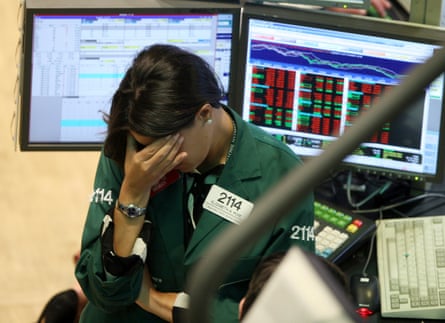
These disparate strands came together in early 2013 at the London School of Economics with the inaugural meeting of Rethinking Economics – a student-led organisation that has gone on to challenge the way economics is taught at universities around the world.
“That first meeting was a bit chaotic,” recalls Yuan Yang, one of the group’s founders and a Labour MP since 2024. “It was just after our final exams and it was all a bit intense. But I was really surprised with how many students turned up not just from the LSE but from other universities as well.”
Yang, who was studying a masters in economics at the time, said the first meeting was held on a “bit of shoestring”, dependent on volunteers and “some real acts of kindness” from family and friends as well as some of the LSE’s leading academics.
“It was very volunteer led,” she said. “My dad, bless him, helped out by doing some filming … and we had some of the leading professors helping out. [The South Korean economist and academic] Ha-Joon Chang arrived early and helped us make name tags.”
Chang, now a leading author and professor of economics at the School of Oriental and African Studies, said the launch came after decades when the neo-classical school of economics had come to dominate universities “like Catholic theology in medieval Europe … a doctrine that fundamentally defines the way humanity sees the world”.
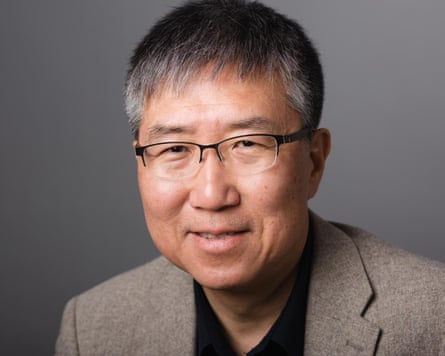
“By demanding that economics education should be more pluralist, more ethically conscientious, more historically aware, and more oriented towards the real world, Rethinking Economics has exposed the staggering deficiency in the way economists are educated and induced some significant, albeit woefully insufficient changes in economics teaching around the world,” he said.
Rethinking Economics has blossomed since the first meeting and now has thousands of members, including several eminent economists, across more than 40 countries.
According to its communications lead, Sara Mahdi, its aim is to make economics education “plural, critical, decolonised and historically grounded” rather than “dominated by a single framework presented as ‘neutral’ or ‘objective’”.
“We are building an international movement of young people who are organising, educating and agitating for an economics that takes account of the real world we see around us,” she said. “One that portrays the economy as embedded in ecology, power, institutions, history and inequality, and treats competing economic theories and methods as legitimate, not marginal to a sort of classical, almost mathematical view, which has been dominant in many institutions for decades.”
Mahdi, a degrowth, economics and anthropology graduate from University College London and the Autonomous University of Barcelona, says the group has secured tangible changes in the way economics is taught at scores – from full programme redesigns to the introduction of new core modules – at scores of institutions.
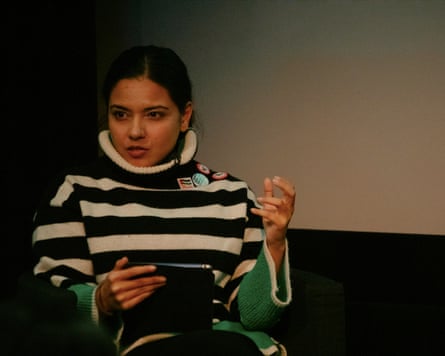
“Since 2019 alone the movement has supported and recorded more than 80 campaign wins in universities across 35 countries, including 23 major curriculum reforms, impacting tens of thousands of students,” she said. “These are the kinds of reforms that don’t just add ‘one optional lecture’, they reshape what students learn as mainstream economics.”
Among the changes highlighted are the launch of a politics, philosophy and economics course at Goldsmiths, University of London in 2014, an interdisciplinary programme at the University of Lille in France in 2020, and an economics and society undergraduate programme and public sector economics masters programme at Leiden University in the Netherlands in 2023.
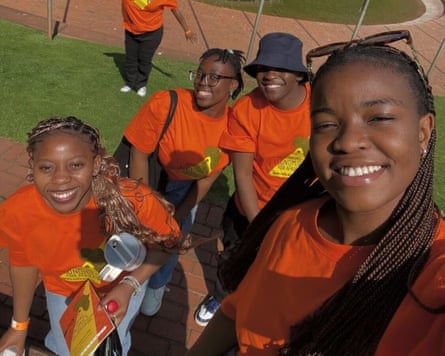
One of Rethinking Economics’s most active groups is based in South Africa, where the campaign grew out of a wider student protest movement calling for greater access to higher education for poorer communities.
The junior programme officer at Rethinking Economics for Africa, Amaarah Garda, said what started as a protest about fees had become a broader critique of the academic system and its colonial outlook.
Initially, universities refused to change mainstream economics teaching, so the campaignchanged tack.
“We have had to carve out our own progressive courses and events at these universities,” Garda said. “So it is not that everyone who does economics is exposed to a more progressive vision, but those courses are now available.”
The movement was growing, she said, as students sought answers to the issues confronting them in the news and their day-to-day lives, from how war economies work to what is being discussed at UN climate talks.
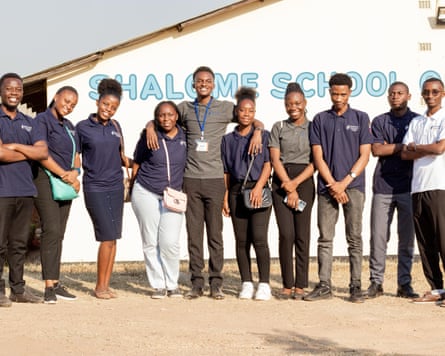
“In South Africa, and perhaps globally, we can see that our students are finding these ideas not just interesting but more and more urgent given the multiple crisis that we are facing,” she said. “They are approaching us to explain topics because they can see how critical they are to society and they cannot get that information through their usual courses.”
Many academics have welcomed the space the campaign has opened up.
Clara Mattei, a professor of economics at the University of Tulsa in the US and president of the Forum for Real Economic Emancipation (Free), said her group was collaborating with students from Rethinking Economics to “improve economic education and make it a useful tool for expanding economic agency among the general public”.
She said the current economic system was “showing its most violent face … with rampant militarism and unprecedented, obscene levels of inequality with four people owning more wealth than four billion people”.
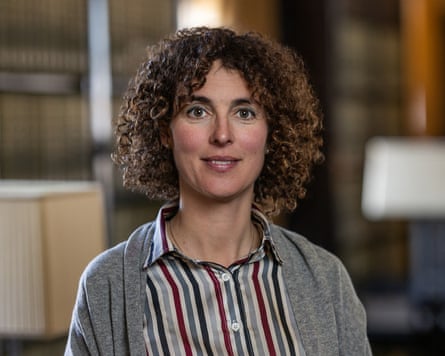
“It is urgent that the economics discipline learn to understand these issues as systemic features of our capitalist economy rather than as the result of market imperfections or crony capitalism,” she said, adding that students such as those involved in Rethinking Economics were “pushing toward more courageous frameworks within the economic tradition … to prioritise the logic of need over the logic of profit”.
Jayati Ghosh, a professor of economics at the University of Massachusetts Amherst in the US, said Rethinking Economics was forcing established economists to ask the basic questions that many had been trained to overlook.
She said there were still power structures within institutions, thinktanks and journals that wanted to maintain a narrower, restricted view of economics, but that the campaign was making headway.
“It is a battle, but what I really appreciate about this group is that they go about things in a thoughtful way, they are willing to hear people from the other side.”
She said she had spoken to Rethinking Economics groups around the world.
“They bring in all kinds of people, not just economists and students but activists and others together, and they look at the same questions in such different ways … I have actually learned a lot from them … It has made me realise that economics is too important to be left to economists.”