3 months ago
67
3 months ago
67
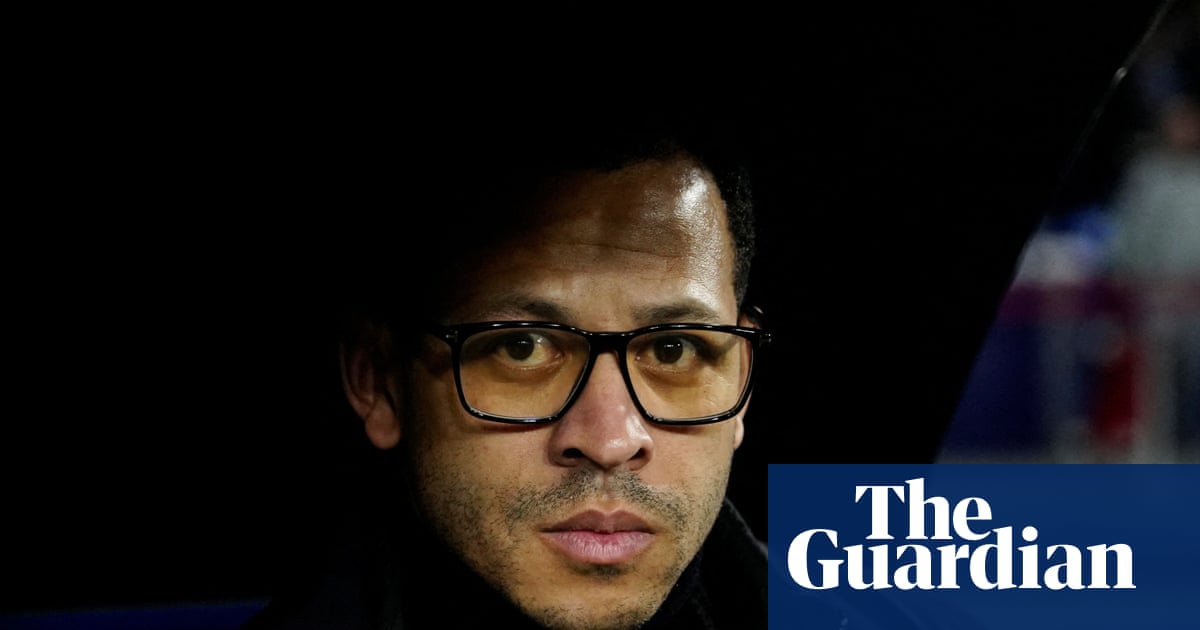
Discontent at Manchester United these days is only ever deferred. Ruben Amorim’s departure from the club on Monday was long anticipated and came, in the end, with a weary sigh. He had made a half-hearted protest about the recruitment structure after Sunday’s draw at Leeds, but it felt even at the time like barely more than a gesture. And so another manager, the seventh since Sir Alex Ferguson left in 2013, falls victim to the United meat-grinder.
Everybody at United, fundamentally, is unhappy. And not unhappy in the sense that Alex Ferguson used to be unhappy, when the club was essentially fuelled by his volcanic rages, but enervated, frustrated by the realisation that this is not how things used to be, that this was once the biggest football club in the country and now they keep failing to get the win they need to lift them to fifth.
After Sunday’s draw at Leeds, Amorim made clear just how unhappy he is – although this being the modern Premier League, it was an outburst that required some decoding.
“I’m going to be the manager of this team, not the coach,” he said. “And that is going to finish in 18 months. And then everyone is going to move on. That was the deal. That is my job – not to be the coach.”
His official job title is “head coach,”, but it’s been a long time since words meant what they say in the Premier League. So what was he actually talking about? Was this about control? With managers, it usually is. Amorim went on: “Every department, the scouting department, the sport director, needs to do their job, and I’ll do mine, for 18 months.”
That suggested his real complaint was over transfers, which chimed with rumors Amorim has clashed with Jason Wilcox, United’s director of football.
Perhaps it’s not unreasonable for a club to decide that if the man they employed as a head coach is no longer prepared to coach there’s little point in keeping him on, but this was not a decision based on one press conference. Signs of progress have been very hard to discern for outsiders. At the end of October, United won three games in a row for the first time under Amorim – against Sunderland, Liverpool and Brighton. It did perhaps then seem that some sort of corner had been turned. But they’ve only won three of 11 Premier League games since. One of those was at Wolves and one was a game against Newcastle in which the way they held on to a 1-0 lead defied logic.
Amorim, having insisted that he would never play anything other than a 3-4-2-1, has started to use a back four, in part in response to having three players away at the Africa Cup of Nations. In itself, that wouldn’t be an issue; there have been plenty of calls for Amorim to be more flexible, to adapt to circumstance, so it would be unfair to criticise him for that. But if he can change, why did he not do it sooner? What was his fundamentalism all about? Had he lost faith in his method? What might have seemed like welcome pragmatism only added to the sense of uncertainty.
And where does this leave United? Over the course of two transfer windows they have backed Amorim and his reshaping of the squad to the tune of £430m/$580m, with only around £165m/$200m recouped in sales. What do they look for in a new manager? Somebody who will carry on the 3-4-2-1 experiment, such as Oliver Glasner, whose contract is up in the summer and who is pretty obviously frustrated at Crystal Palace? Or somebody with a totally different approach who will need to reshape the reshaping that Amorim has begun?
The implication of Amorim’s press conference behaviour is that there wouldn’t be much money available for investment – which is, of course, at least partly Amorim’s fault. He did, after all, take over a club that had finished eighth while winning the FA Cup and lead them to 15th, before losing the Europa League final, which meant no Champions League. Prize money has diminished and there is no longer any income from European football. Revenues have dropped this season because United’s form last season was so poor. And United did spend £200m/$270m in the summer on three forwards, when one probably would have been enough.
But for now the drift goes on. When Erik Ten Hag’s United finished eighth in 2023-24, it seemed like a major crisis. Things have gotten so bad since that dabbling on the fringes of European qualification just feels like United’s level. And with each season that goes by, so getting back becomes harder.