3 months ago
115
3 months ago
115
It felt so typically Scottish that even rare success on the World Cup stage delivered such paradoxes of emotion and analysis. In Ireland, sporting glory is routinely cherished without contradiction. Scots have far more of a tendency to apply “ah, but” as an addendum. So it proved from Boston to Brora, where dissection of the 1-0 win over Haiti was far from straightforward. Rightly so.
Record books will show John McGinn’s scruffy goal earned the Scots just a fifth win at a World Cup finals. The claiming of a point against Morocco on Friday will, barring an extraordinary set of results elsewhere, seal Scotland a knockout berth for the first time. They haven’t even featured at this level since 1998. Any team within touching distance of heady times, rewarding a fantastic supporter base in the process, can hardly be castigated.
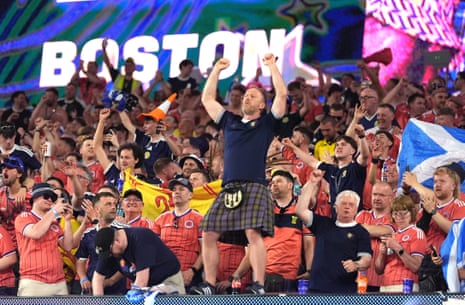
“It felt like a home game,” said the midfielder Lewis Ferguson of the scene in Boston. “I didn’t realise until we stepped on to the pitch how many Scottish people were there. The away kit was everywhere. Our support is amazing and never in doubt. They travel everywhere. They always have, always will, that’s a given. We went on a walk within the city on Saturday and it was full of Scotland fans. That gave us that little buzz going into the game.
“I wasn’t born for the 1998 World Cup so I’ve never witnessed Scotland playing at this level. So to be part of the team that’s won a game is really special.”
Attention towards Ferguson is apposite. He was excellent in midfield against Haiti, justifying faith from Steve Clarke. Scotland’s central defensive pairing of Grant Hanley and Jack Hendry were strong. Ben Gannon-Doak displayed directness and decision making that bodes well. Elsewhere, though, questions were raised that mean those keen to present the game as an ideal World Cup start are being over optimistic.
After Morocco, Brazil lie in wait. If Scotland remain on three points, they are already in the territory where relying on goal difference to secure qualification as a third-placed team looks borderline. Haiti offered opportunity which Scotland did not properly grasp, for no other reason than they returned an indifferent performance. Beyond celebration in Massachusetts and plenty of it in the middle of the night back home in Scotland, that will be quietly recognised.
“We could have been better on the ball and we will be,” said Ferguson. “It was difficult and we were under pressure towards the end. But we dealt with it, got a clean sheet and three points.” Again, all correct. Scotland were, however, jittery.
Ferguson, like Clarke, referenced a level of pressure encountered by Scotland’s players due to widespread expectation they would swat Haiti aside. Scotland teams of the past have blundered against inferior opposition at World Cups. A reality is that 1978, 1982 and 1990 are not relevant in the context of Clarke and this squad. More pertinent are the European Championships of 2021 and 2024, from which it should be safe to believe Scotland have evolved.
Haiti are comfortably the worst team Scotland have faced in a finals under Clarke. Yet they still laboured for long spells, the anxiety touched upon by players and staff readily apparent. It is legitimate to ask what was learned from 2021 – when the Scots slumped to an opening defeat against the Czech Republic – or three years later, when Germany thumped them in Munich. Haiti are an enthusiastic but patently limited team. Scottish nervousness due to the simple fact they were of higher quality is not entirely rational.
“It’s going to be really difficult against two top sides,” said Ferguson. “Both of them are ranked in the top eight in the world. So they’ll be tough games but I feel we can come alive in those sort of games when we’re the underdog. We’re looking forward to it, the next one will be a completely different game. But we’ll back ourselves.”
Ferguson has touched upon a Scottish cliche, that when hopes are low the team can prevail. That has not forcibly been borne out under Clarke, especially against sides of the stature of Morocco and Brazil. In practical, tactical terms Scotland will need much more composure – and probably greater numbers – in midfield. Scott McTominay’s stomach bug in the lead-up to Haiti provides a decently extenuating circumstance for a poor showing but there were ominous parallels there, too, with the summer of 2024. Scotland need McTominay’s star quality to shine through.
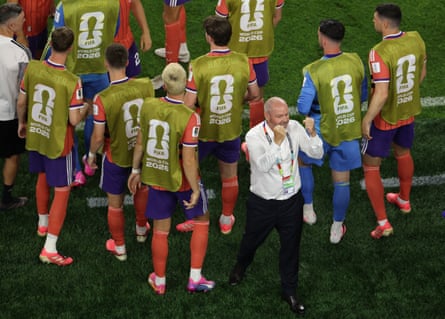
Another danger emanated from Morocco’s draw against Brazil, which was confirmed before Scotland kicked off. Morocco will now carry real belief they can top Group C, which will focus their minds for Scotland. Brazil will not have sauntered towards first place in the section by the time they face the Scots in Miami. Elite teams who are hugely incentivised are clearly a more substantial problem for Scotland than if going through tournament motions.
“I want more,” said McGinn. “I wanted a second and third [goal] and to kick on in the group. That wasn’t stress free but it was never going to be. They are a tricky team.”
The Scotland camp is well within its rights to accentuate pluses. It is similarly fair to ponder shortcomings. This Scottish team is within days of marching to where Denis Law and Kenny Dalglish could not. To do so, they must prove psychological shackles against Haiti were indeed the real problem.