3 weeks ago
69
3 weeks ago
69
It’s life, Jim – but very much not as we know it.
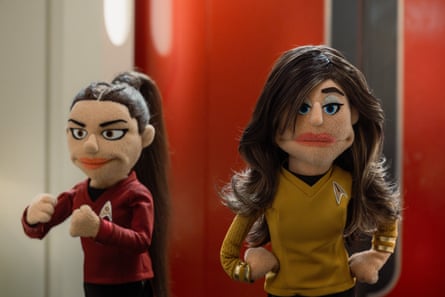
In fact, when it comes to the latest episode of Star Trek: Strange New Worlds, the life forms in question are less flesh-and-blood and more fabric-and-felt – as the series becomes the latest sci-fi show to embrace the magic of puppetry.
Level-Five Transporter Accident follows in a longstanding Trek tradition that sees crew members undergo unfortunate transformations while beaming up to the ship. This time, the crew suffers an even greater indignity: thanks to a spot of boldly sewing from the legendary Jim Henson’s Creature Shop, the Enterprise team are reconstituted into – quite literally – a bunch of muppets.
“I thought it would be a big swing for us, but we spent a lot of time discussing how to do it as a Star Trek episode,” says Strange New Worlds showrunner Henry Alonso Myers. “Because I knew if it didn’t feel like Star Trek then it wouldn’t work.”
It’s a major departure for the Trek franchise, which turns 60 next month. Across nearly 1,000 episodes and 13 movies, Star Trek has always eschewed the art of puppetry – in stark contrast to its cooler, younger sibling Star Wars. Luke Skywalker’s mentor Yoda in The Empire Strikes Back was just one of many iconic puppet characters who populated the original movie trilogy.
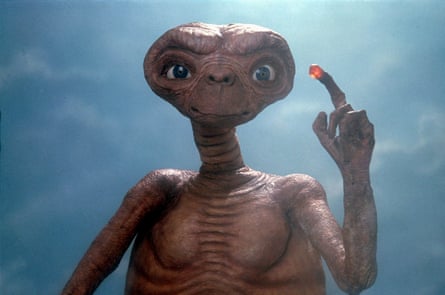
“The Star Wars universe has a very tangible, lived-in quality, which was different to a lot of science fiction at the time,” says Brian Herring, the British puppeteer who operated lovable droid BB-8 in the most recent Star Wars movies. “Back in the 70s and 80s, George Lucas was using every trick in the book to populate that universe, and that included puppets as well as people in creature suits.” Ever since, sci-fi and puppetry have gone hand-in-glove, from ET to Little Shop of Horrors, Gremlins and beyond.
Meanwhile, despite Star Trek’s six-decade commitment ‘to seek out new life’, the franchise has remained a puppet-free zone.
“Star Trek made a big commitment to makeup early on,” says Dr Chris Nunn, assistant professor of film at the University of Birmingham. “So aliens would typically be played by human actors under heavy prosthetic masks, and that trend has continued.”
So why the unexpected course-correction from a franchise about to enter its seventh decade? The answer, it turns out, is less about the magic of puppetry and more about the tropes of modern TV production.
“Doing a puppet episode is a TV concept,” says Myers. “One of the things we try to do on Strange New Worlds is go for big swings that haven’t been done before in Star Trek.” (Hence an all-singing, all-dancing musical episode named Subspace Rhapsody and the part-animated Those Old Scientists.)
For advice, Myers turned to former Angel showrunner Jeffrey Bell, who worked on the fan-favourite episode Smile Time, which sees its titular vampire, played by David Boreanaz, transformed into a puppet while investigating a sinister Sesame Street-style mystery.
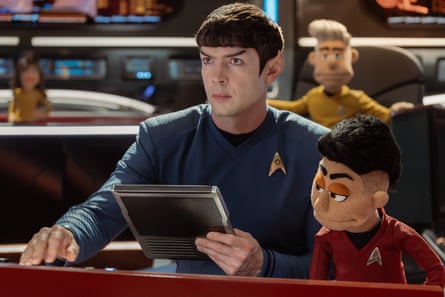
In Strange New Worlds, Myers flipped the format on its head, keeping Ethan Peck’s Spock as flesh and (green Vulcan) blood, while forcing the rest of the Enterprise crew to become chaotic, muppety versions of themselves.
“Spock was the obvious character to run into this problem,” says Myers. “Because he’s so logical.” The episode’s director, Jordan Canning, agrees. “Spock was 100% the right choice,” she laughs. “He’s the ultimate straight man.”
Like the hit Star Wars TV series The Mandalorian, Strange New Worlds uses a giant LED screen known as the Volume rather than building physical stage sets. Sci-fi actors must be particularly adept at playing make-believe, but according to Canning, the puppets made things easier for Peck.
“The Star Trek cast are amazing at working with their imaginations,” she says. “But when you have great puppeteers, you don’t really have to work at it. You can’t help but feel connected to those characters.”
Myers agrees. “The fact that Ethan is physically interacting with the puppets, not just looking at a tennis ball on a stick, makes the whole thing feel more real,” he says.
“It’s like Ryan Gosling in Project Hail Mary,” says Nunn. “That movie wouldn’t have worked if they’d added the alien in post. The fact that Gosling was reacting live in the moment is what made their relationship feel genuine.”
For Dawn Dininger, one of five puppeteers who operates Grogu in The Mandalorian, it’s a double-edged sword. “The actors always forget that he’s a puppet.” she says. “They just think he’s a baby and start rocking him and playing with him. They never talk to us, even though we’re the ones controlling him. They forget we’re there.”
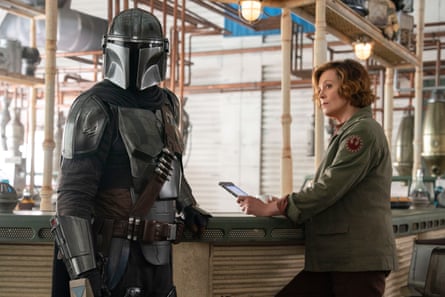
Although The Mandalorian notionally focuses on Pedro Pascal’s titular bounty hunter, it’s his puppet sidekick Grogu (AKA Baby Yoda) who steals the show – as evidenced by the not-so-subtle name-change for this year’s movie spin-off, The Mandalorian and Grogu.
A puppet-fabricator by training, Dininger was unprepared for the cult status the character would almost instantly accrue. Now, when top Hollywood actors appear opposite the puppet – as Sigourney Weaver recently did – it’s the A-listers who are starstruck.
“It’s like tagging along with a famous person!” laughs Dininger. “Nobody knows who you are, but they all know him, and they get excited as soon as they see him on set.”
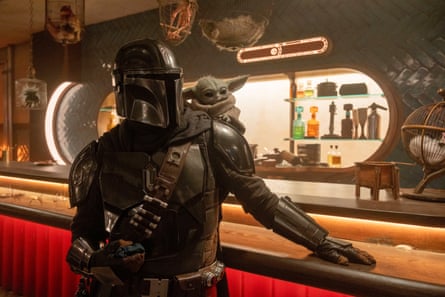
“I was under the table thinking, I can’t believe I’m interacting with Sigourney Weaver. Then afterwards I asked if I could get a photo, and she was like, ‘Well, yeah. Because I need a photo with Grogu.’ She couldn’t get over him. It was really cute.”
It’s a stark contrast to the Star Wars prequels of the late 1990s, which had a heavy reliance on green screen and CGI. Controversially, puppet Yoda was replaced mid-trilogy by an eerily acrobatic digital doppelganger.
“Suddenly Yoda’s jumping around,” remembers Nunn. “That was kind of freaky for those of us who grew up with the puppet.”
By the time of the Star Wars sequel trilogy, practical skills were at the forefront again.
“We see elements of physical craftsmanship,” says Nunn, “and I don’t think that’s rooted entirely in nostalgia. I think it’s also about the film-maker saying, ‘I really care about this.’”
It might be a while before we find out if Star Trek will follow in Grogu’s rubbery footsteps. Strange New Worlds is ending next year, and Trek production is now on hold, waiting for the dust to settle from the Paramount-Skydance merger.
In the meantime, though, the puppets are still out there. “They’re in storage,” says Canning. “Those puppets will always exist. I would love to get them out again and make some short films or a web series or something.
“If the fans like it, let’s get them out again. Let the puppets play!”