3 months ago
68
3 months ago
68
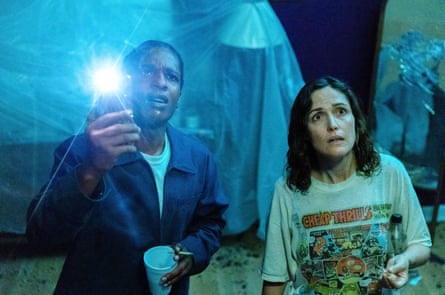
If I Had Legs I’d Kick You, for which Rose Byrne just won a Golden Globe, is unmistakably a horror film. And yet how can it be? It’s the story of a mother, Linda, with a very sick child. You never see the child, only the outlines of the anxious medics. You never find out what’s wrong with her, only that it involves a feeding tube. Linda is going steadily crazy, because who wouldn’t? On paper, this is a painful yet heartwarming tale of love and adversity. Instead, it is claustrophobic and vertiginous. It sometimes has the panic-attack surrealism of an anxiety dream, and other times is so real you can barely look directly at it. I’ve never seen the maternal condition drawn as a trip to the abyss. The only film I’ve seen that’s anything like this is Eraserhead.
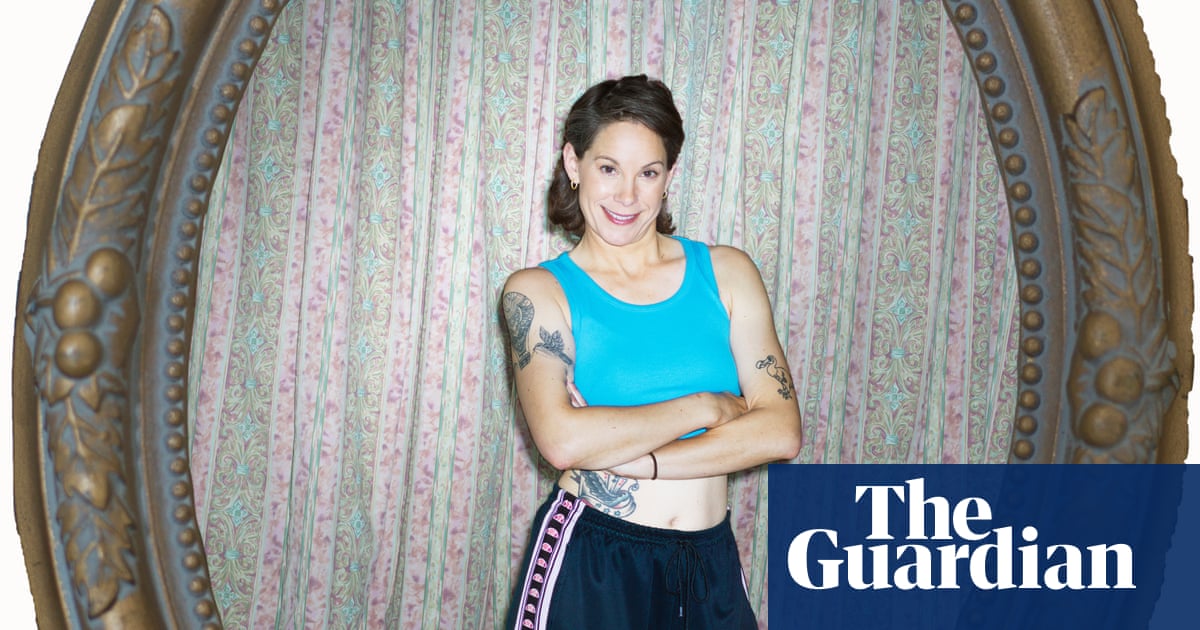
“I was very influenced by that film,” writer and director Mary Bronstein says, carefully. She’s a fascinating conversationalist, frank and open but watchful. Byrne is more reserved. Both are darkly funny, all the time. They look Hollywood-polished, in this central London hotel, but fair play, they’ve just come out of a photoshoot. “Eraserhead is about a type of parental anxiety that only men can have,” Bronstein says. “And this is a film about a parental anxiety only a woman can have. In Eraserhead, he can leave and that’s his angst. Linda cannot leave. That’s hers.”
The fundamental terror of the film is that it doesn’t just say the unsayable, it puts you right in Linda’s frame, feeling things you’re not allowed to feel. What if loving your kid is actually destroying you and all you want to do is escape? “Can you love something so much that you smother it?” Bronstein wonders. “I’m trying to express things that are very uncomfortable, but that are very true, and are seen as very ugly because they’re considered a betrayal of your child. But it shouldn’t be seen as a betrayal to say, ‘I can’t take this any more. I’m really upset. I’m really angry. I’m really frustrated. I don’t know what to do.’ None of that means that you don’t love your child.”
Seeing Byrne’s character unravel – “It’s not fair!” she explodes – is a bracing revelation about how narrow the parameters of acceptable motherhood are. “Even in the privacy of therapy,” says Bronstein, “she’s not allowed to say things like, ‘Why does that lady get to have a kid with no issues? And I have a kid with all these complicated issues?’”
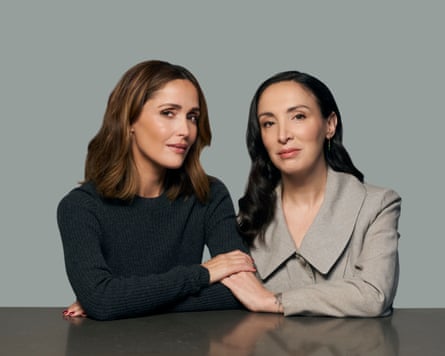
If I Had Legs draws on Bronstein’s own experience generally, but also specifically – in the sense that her daughter, who she has with US film director Ronald Bronstein, had a period of grave illness. (Now 15, she has recovered.) Bronstein’s directorial debut, the 2008 camping comedy Yeast, was acclaimed. Motherhood, she says, “took a bite out of my career, and a bite out of my life, and it took getting to crisis point where I totally disappeared into being my daughter’s mother, before I could ask, ‘Who is this person I don’t know any more? It was a true ego-death situation and that’s where the horror elements of the film come from. What I came to is, ‘Oh, I’m an artist. I’m a storyteller. I’m a film-maker. That’s what I am. And I’m going to radically try to do this with nobody’s permission.’ It took the total dismantling of my life to take that back.”
The nature of the daughter’s illness in the film remains mysterious, partly because, Bronstein says: “If you spell it out too much, it becomes one of those stories about a mother running around trying to cure an illness.” The key example of that genre must be 1992’s Lorenzo’s Oil, and it would be impossible to overstate how different that film is from this one.
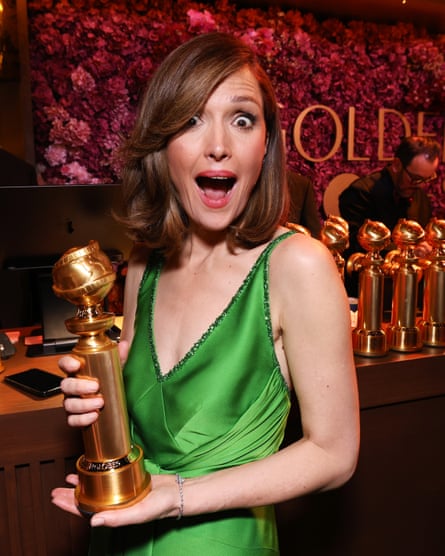
One US reviewer compared Byrne to Charlize Theron in Monster. It’s an amazing parallel to draw, because Theron is physically unrecognisable in that movie, hunched and hulking, while Byrne looks the same as she did in Bridesmaids, the 2011 comedy in which she plays the nervy, impossibly fragrant, way too perfect new best friend. Both women laugh at the comparison. “Not to take anything away from Charlize Theron,” Byrne says, “but that wasn’t ever the idea.”
“I’m gonna embarrass you now,” Bronstein says. “Rose is a beautiful woman. So Linda, unavoidably, is a beautiful woman, who’s going through a really bad time. What does this person look like when she’s not taking care of herself? When she’s not wearing makeup? When she hasn’t slept? So it’s a de-evolution, but it’s nothing like Monster.”
It’s as if the ugliness of the idea – the maternal experience as selfish, unhinged – has put a filter over what some viewers see. Linda is also not interested in sex, at all. She has to move into a motel at one point and meets a young man, played by A$AP Rocky. “Those were some of the hardest scenes,” Byrne says. “He’s such an enigmatic, charming guy and so gorgeous – and Linda is constantly dismissing him, being actively rude. My brain was, like, ‘He seems really nice. Are we sure she wouldn’t want to just have a chat?’ But she’s closed for business.”
Bronstein takes up the theme: “I’m also subverting the idea of going into a man’s bedroom. What usually happens in a movie? Yeah, it’s not happening here. She doesn’t even have access to that side of herself.” Which is, I suggest, part of why motherhood occupies this bizarre place in the collective consciousness. “Mothers are held in this high regard,” says Bronstein, “at the same time as being completely dismissed. It’s very confusing. ‘Am I the most valuable thing in society, or am I at the bottom?’”
One piquant twist is the fact that Linda, in the middle of a florid nervous breakdown, is herself a therapist, and we see her with a client who has postnatal depression, completely unequal to the situation. “Yes, she definitely shouldn’t be practising,” Byrne says. “When I read that in the script, I thought, ‘Well, that’s a pivot.’”
Bronstein has no beef with therapy, has been in and out of it since she was 14, has had good ones and bad ones. “My previous therapist said to me, just as an aside, ‘My therapist said …’ and my ears completely closed at that point, because all I was thinking, all I was obsessed with, was, ‘This guy has a therapist?’ But then, of course he does, because that’s ethical practice – then that guy has a therapist, who also has a therapist. Where does it end? Can you skip to the head therapist? It’s like the man behind the curtain in The Wizard of Oz. There is no wizard. There is no head therapist. Everybody is somebody like Linda, just a human being struggling.”
Nobody, they say, ever asks about one of the film’s most challenging scenes, except for one schoolkid in a Q&A: Linda agonises over an abortion she had in the past, running through futile what-ifs, that maybe if she hadn’t done that, her daughter wouldn’t be ill, or she would have a different daughter, who wasn’t ill. “And I think that you can be politically pro-choice,” Byrne says. “Obviously I am. But at the same time, you acknowledge that it’s a difficult thing and it remains a trauma for some women.”
“There are a lot of movies where people talk about abortion,” Bronstein says, “and I wanted to express something that I felt was authentic, and maybe not what people want to hear: which is that you can have an abortion, and get on with it, and that’s what you’re supposed to do. But for some people, it stays with them.”
This isn’t, however, a film designed to get liberals to pore over their fine differences. Nor is it agitprop about the structural injustices of motherhood within late capitalism, though Byrne is droll and caustic about the US context, summing up its attitude thus: “We care about the baby when you’re pregnant, but once it’s out, you’re not going to get any time off work, you’re not going to get any day care, if you want any time off work, you have to claim having a baby as a disability.”
The profound political challenge of this film is to the patriarchy, since the impossible contradictions and iron-clad taboos around motherhood are ultimately a way of making femaleness impossible. Was it tough to get it made? “I heard a lot of Nos,” Bronstein says, “and they were all qualified with, ‘What if we pulled back here?’, or, ‘What if we didn’t do that?’ I’m no dummy. I knew what they were saying. People were afraid that no one was going to like Linda. And that, for some reason, is very scary.”
“We always said to one another,” Byrne adds, “the audience doesn’t have to love Linda – but we have to.”