4 hours ago
8
4 hours ago
8
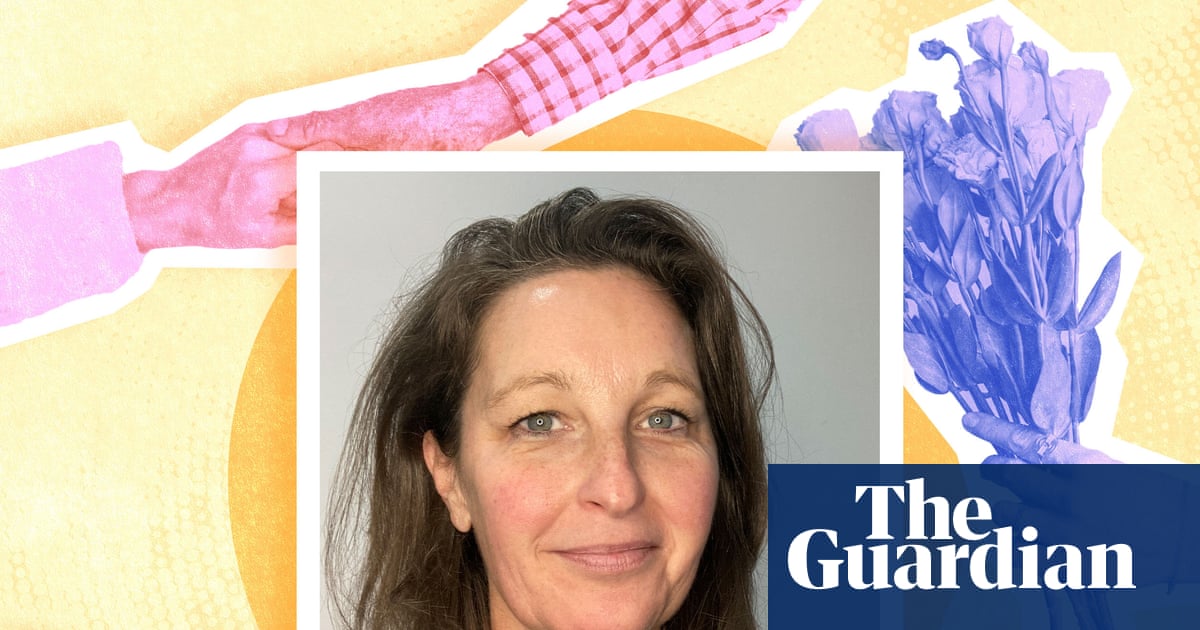
Liz Hicklin had missed the ferry that could change her life. Pelting rain had made the drive to the Sorrento terminal perilous. Sitting in the car park, watching the boat glide off, she chastised herself. Go home. Don’t be ridiculous. You’re 92.
She got on the next ferry.
This decision would prove to be a sliding doors moment. As Hicklin, now 95, says: “I really should be knitting” – but instead she debuts her first play at Melbourne fringe festival this October: Sylvia Plath Stole My Boyfriend, about her romantic relationship with a young Ted Hughes.
By getting to the Queenscliffe literary festival that day, Hicklin managed to track down the ABC radio presenter Jacinta Parsons. The pair had met fleetingly months before at Clunes booktown festival, where Parsons, author of A Question of Age and A Wisdom of Age, hosted a panel about ageing. Hicklin was a spirited audience member (later that day she won a poetry slam) and the two women started talking. Upon being reunited in Queenscliffe, Parsons eventually became Hicklin’s manager.
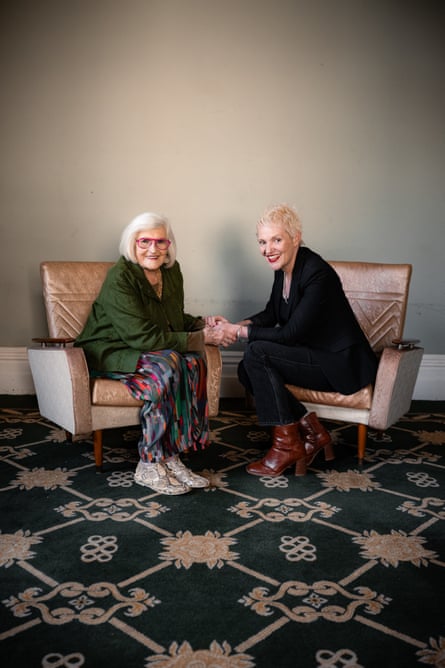
When the three of us meet, we’re surrounded by art and books in Hicklin’s apartment in a residential care home on the Mornington Peninsula. Parsons buzzes in and out, making phone calls. In private, Hicklin says: “Jacinta’s changed my life completely. I’m living life again.” Whenever Parsons sits down, the dynamic switches into a double act.
“I’m going to talk about you while I’m looking at your face,” Parsons tells her, cupping Hicklin’s cheek. “Look – you’re so anxious that you’re turning on me like a dog.”
“You’re an academic and I’m so run of the mill,” Hicklin protests. It’s a recurring theme, as if being self-educated later in life disqualifies her from being taken seriously.
While Parsons, as co-director, used Hicklin’s wealth of writing to populate the play, Hicklin is “used to being in control” and worries that there’s too much Plath. “Who’s the drawcard here, Sylvia or me?” she wonders.
Hicklin never met Plath, her romantic rival. There’s a hefty compendium of Plath’s poetry sitting on her side table but she doesn’t particularly rate it. She met Hughes, who served as the British poet laureate for 14 years, when studying nursing in Cambridge. They read poetry to each other in local pubs, writing feverish letters whenever apart.
“It was like I was blossoming, she says. “I’d get on the bus to Hebden Bridge and immediately feel different, as though they felt things more deeply in Yorkshire. It was his magic touch – that he touched many women with, as we learned.”
Amid their romance Hicklin took the opportunity to travel (“a woman’s got to keep her options open”) first to Canada, then Australia. “I went around the world trying to recreate Ted Hugheses but they didn’t match up,” she says.
The pair kept writing to each other, with Hughes describing his own travels. “His whole life was trying to conjure up a living that would give him time to write,” Hicklin says. “One idea was to run a boarding house. His uncle Walt ran a trouser factory, so there was that idea … and another was to be a mink farmer.”
Eventually, the letters dried up. When Hicklin sent Hughes a Christmas card from Melbourne she received a reply from his mother: “I don’t think you know, dear, that Ted married Sylvia Plath, a Fulbright Scholar.”
Hicklin took to her bed and cried for three days.
After Plath’s suicide in 1963, Hicklin was visiting her parents when Hughes and his new partner, Assia Wevill, arranged to visit. “All these years I dreamt of meeting Ted again, I’d hoped I’d be willowy thin,” she says. “He rang the doorbell with Assia, and she was very London literary, shabby chic. I felt very colonial in my eight-months pregnant state, my arms covered in flour.”
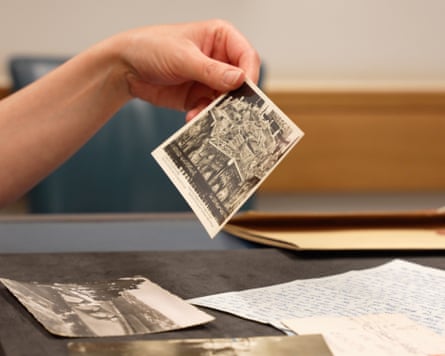
It was the last time she saw Hughes but she kept his letters and postcards, and two of his unpublished poems, eventually selling the originals to the British Library. Hughes may have called both Hicklin and Plath “Bunny” but it’s possible that only Hicklin got the nickname “Winklepumpkin”.
“It was only a short time in my life – of course I’ve milked it,” she says drily. “I’m certainly not like these comedians that seem to talk about nothing. How do they get away with it? But they do.”
Sylvia Plath Stole My Boyfriend is an upbeat 50-minute show with a gameshow theme. There’s a voiceover from the Sale of the Century host Pete Smith (now 87 himself) that serves as Hicklin’s inner critic; Plath (played by a co-director, Sarah Sutherland) is the gift-shop showgirl.
The play includes other eras of Hicklin’s life, such as raising a family in Melbourne. “We jogged along but I did have an affair,” she says of her marriage. “It was like Mad Men. Our friends were my husband’s work partners, so they weren’t my choice. Our husbands were in advertising, so they were members of clubs, out until midnight. You kept their dinner warm over a pan of hot water. There was nothing to stimulate you on the radio, which was your only companion.”
Tragedy also stalked Hicklin, including the suicide of her two daughters. The play asks if we can ever truly make sense of life, even with the wisdom of age.
Parsons has taken time off from the ABC to work on a documentary in which Hicklin’s story “becomes the micro in a macro look at ageing”. She’s already made trips to Hicklin and Hughes’ old haunts, even persuading the current resident of The Beacon, Hughes’ former home in West Yorkshire, to let her in. “It’s been pretty fucking surreal, in a way,” Parsons says. “Just walking in someone’s shoes and connecting those pieces of their lives.”
For Hicklin, who vividly recalls her walks with Hughes on the Yorkshire Moors – when he would mimic an animal in distress so that owls, stoats and rabbits gathered around him – the videos Parson sent back to her in Melbourne reignited the romance.
“I even recognised the window that I’d look through at the shivering sheep,” she says. “It was magical for me.”
In Australia, the crisis support service Lifeline is 13 11 14. In the UK and Ireland, Samaritans can be contacted on freephone 116 123. Other international helplines can be found at befrienders.org