3 months ago
61
3 months ago
61
As someone whose childhood holidays consisted of narrowboating along the Grand Union canal or wandering the harbour-side at Whitby looking for vampires, I have never been on a skiing break. The idea of plummeting down a hill on anything but a plastic sledge is totally alien to me. And yet, my wife and I have been gripped by the Winter Olympics, especially the snowboarding and freestyle skiing events. And I think I know why. Those events are really channelling the look and feel of the wintery sports sims I’ve always loved – especially those that arrived during a golden period in the mid-1990s.
This was the era in which snowboarding was exploding in popularity, especially among twentysomethings with disposable incomes and no responsibilities – which coincidentally was the games industry’s target market at the time. Perhaps the first title to take advantage of this trend was Namco’s 1996 arcade game Alpine Surfer, which challenged players to stand on a snowboard-shaped controller and swoop as quickly as possible down a mountainside – it was one of the most physically exhausting coin-ops I ever played. Later that year came the self-consciously hip PlayStation sim Cool Boarders, and then in 1998, my absolute favourite, 1080° Snowboarding on the N64, with it’s intuitive analog controls and incredibly authentic sound effects of boards cutting through deep, crisp snow.
What I think is bringing these classics back to mind is the highly immersive presentation of the events at Milano Cortina. Most obviously, there’s the innovative use of first-person view drone cameras, which provide live chase-cam footage from behind and slightly above the competitors. Watching the snowboard cross events, in which four competitors race against each other over steep, ramped courses, now looks and feels almost exactly like playing the Race mode in 1080° Snowboarding, which was viewed from a similar angle and pitted players against AI-controlled boarders. In both experiences, you’re right there among the riders, pushing and jostling for the perfect racing line.

Meanwhile, the use of stroboscopic analysis and 360-degree replay systems that together let broadcasters freeze, zoom in on and slow-mo very specific moments, also mimics the highly elaborate replays that modern 3D sports sims revel in. A decade ago, sports channels such as ESPN started to pull inspiration from the Fifa Football games by using CGI to enliven replays and on-screen stats, bringing viewers closer to the action and helping them understand the skills and tactics on show. Could the Olympic Broadcasting Services be breaking out their retro consoles for similar inspiration?
The BBC is also channelling – perhaps unknowingly – this era of video games in its Olympic commentary. For the freestyle events, the corporation is using ex-competitor Tim Warwood and veteran extreme sports presenter Ed Leigh. The duo has brought a huge amount of technical knowledge to the events, but also a sense of relaxed, playful fandom, recalling the wildly enthusiastic in-game commentary used in the Cool Boarders and SSX titles, where experienced voiceover actors such as Mark Hildreth (Metal Gear Solid 4: Guns of the Patriots) and Mel McMurrin (Twisted Metal), yelled all the 90s boarder slang they could muster. SSX even featured famed beatboxer Rahzel bringing his range of sound effects to the mix. Those games recognised pro snowboarding not just as a sport but as a culture, like skateboarding, with its own music, language and fashion sensibilities – and the Milano Cortina games are reflecting that.
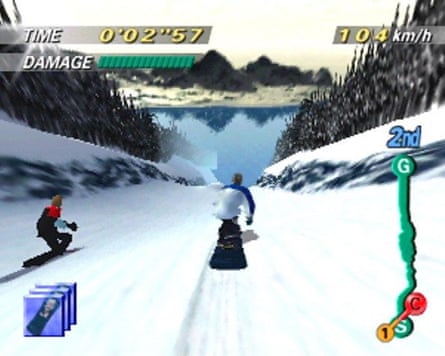
In 1999, Activision released Tony Hawk’s Pro Skater, the series that truly cemented the relationship between street/extreme sports and video games – but the snowboarding titles got there first, and it has been curiously emotional to find their analogue in the Milano Cortina coverage. After watching Huw Nightingale and Charlotte Bankes take the gold in the snowboard cross event on Sunday evening, I dug out 1080° Snowboarding and gave it a shot. Although the graphics are dated, it still has that lovely feel of smooth movement through deep snow, the camera lurking just behind the boarders as they zigzag down the narrow slopes. Games borrow from sport and viceversa, and this symbiotic relationship has no doubt proved profitable for both. But it can also create unexpected moments of magic and nostalgia – and that has certainly been the case at Milano Cortina, even for those of us who have never stood on a snowboard, let alone at the peak of a frosty mountain run.
What to play
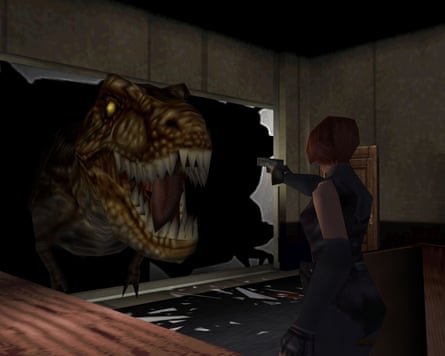
Released in the shadow of the Resident Evil series, Capcom’s dinosaur horror adventures share a lot of similarities with their zombie stablemates: groups of spec-ops soldiers placed in remote locations with minimal ammo only to be attacked by a variety of dangerous monsters. Now, both Dino Crisis 1 and 2 have been rereleased on Steam allowing veterans and newcomers to discover and reassess these overlooked classics.
Director Shinji Mikami, who also created Resident Evil, refers to them as “panic horror” games in contrast to the slower-paced “survival horror” of the Resi titles. Taking cues from Jurassic Park, you’re are continually stalked and ambushed by giant reptiles in wild moments of huge-toothed violence, but there are periods of tension too. Of the two, I prefer the original which more closely resembles Mikami’s Resident Evil titles. The sequel produced by another Resident Evil veteran Kobayashi Hiroyuki dials up the action and bloody intensity. The rereleases update the visuals but don’t mess too much with the formula. I’m hoping they will foreshadow a long-awaited reboot for the series.
Available on: PC
Estimated playtime: 15-20 hours each
What to read
-
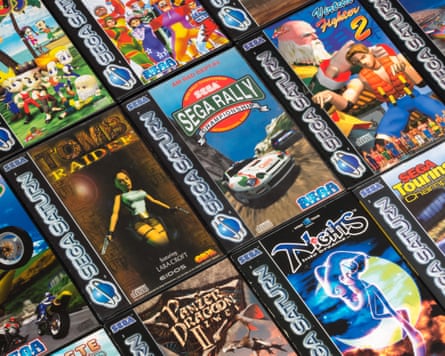
On Sunday, the news broke that Sega’s hardware mastermind Hideki Sato has died. Sato joined the company in 1971 and oversaw the development of its arcade technology as well as all of its home consoles, from the Master System to the Dreamcast. His aim with home machines was always to bring the excitement and vibrancy of the arcade experience into people’s living rooms – a technical challenge he undoubtedly achieved, especially with the Mega Drive and Saturn.
-
If you want to escape screens for a while, but still read about them, there are two new academic books on video games I’d recommend. Animal Crossing: New Horizons: Can a Game Take Care of Us? by UC Santa Cruz professor Noah Wardrip-Fruin is a fascinating study of what made Nintendo’s cutesy life sim so popular during the Covid pandemic. The author brings in his own family’s experiences, adding a touching personal element to the analysis. Also out is King Pong: How Atari Bounced Across Markets to Make Millions by Raiford Guins, which examines the success of Atari’s first arcade game and how it effectively invented an industry.
-
Sticking with print publications, the latest issues of the wonderful Forgotten Worlds zine are out now, looking at Japanese games mags of the 80s and 90s, and the current state of gaming zine culture – well worth a look.
What to buy
My lovely Pushing Button subscribers,
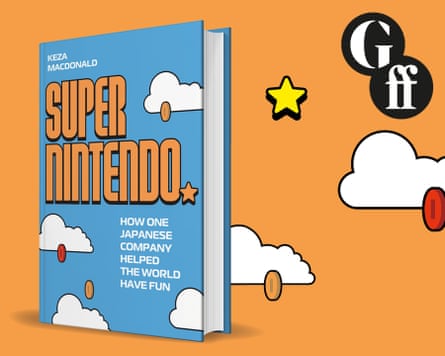
From a Kyoto playing-card maker in 1889 to the creator of Mario, Zelda and Pokémon, Nintendo’s story is one of reinvention, creativity and play. That’s why I’ve written a book about the company that was so formative in my gaming life. In Super Nintendo, I explore how this singular developer shaped the modern video game industry – and why its games have meant so much to so many. Drawing on interviews with its leading creators and lifelong fans, this is more than a nostalgia trip: it’s a story about why play matters, and what Nintendo can teach us about ourselves. If you’ve enjoyed reading this newsletter, I hope you’ll consider picking up a copy – and there’s 20% off at the Guardian Bookshop if you click here.
Keza MacDonald
What to click
-
Super Nintendo by Keza MacDonald review – a joyful celebration of the gaming giant
-
Hazardous substances found in all headphones tested by ToxFREE project
-
What is Pokopia? Inside the calming Pokémon game that ditches battles for gardening
-
Reanimal – you will never turn your back on a pelican again as long as you live | ★★★☆☆
Question Block
This week’s question comes from Graham D, who has a problem that’s close to my heart:
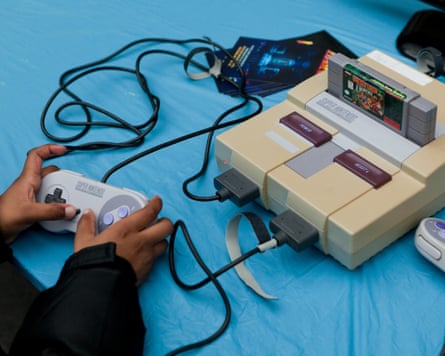
“I’ve just been clearing out my parents’ loft and found a bunch of my old games consoles in a cardboard box, including a very discoloured Super Nintendo Entertainment System and an original PlayStation. I dusted them down and miraculously they’re still working. Now I’d really like to maintain them properly – but how do I do that?”
As the owner of about 20 vintage gaming systems, from a Prinztronic Tournament TV Game (one of the many Pong-style consoles released in the late 1970s) to a Sega Pico (a garish green electronic reading toy for children), maintenance is a constant obsession of mine. Your main concerns are environmental – you need to keep the machines at about 18C and no more than 50% humidity. I have a dehumidifier that comes on automatically when the number creeps up to 51. Wipe them regularly with a decent microfibre cloth that removes and retains dust, or use a small vacuum cleaner attachment to suck dust from the grills and other vulnerable places. Also, give your consoles plenty of room for ventilation when switched on – don’t stack them on top of each other, or put them in cubby holes.
If you put them back into storage, I’d advise airtight plastic containers, with a silica gel pack or two to take care of any moisture (these will need to be replaced – I do it quarterly). Sadly, there’s always a chance that an internal component will fail at some point – your SNES is likely to be over 30 years old, after all. If you’re not ready to let go, there are a growing number of vintage console restorers online. You and I are certainly not alone.
If you’ve got a question for Question Block – or anything else to say about the newsletter – email us on [email protected].